































The fund industry confab held this week was the first time that Nobelux, the Nordic-Belgium-Luxembourg chamber of commerce, has organised a sustainable investments conference in the Grand Duchy, said the group’s chief, Mathilde Hildenfeldt. The aim was to connect the two responsible investing hubs.
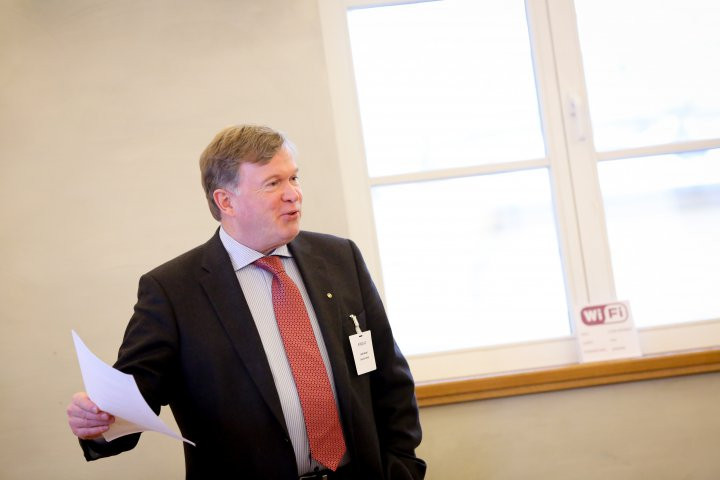
Keynote speaker Henrik Malmsten said sustainable investments are becoming “mainstream” in Sweden.
Malmsten founded the first Swedish cleantech fund nearly a decade ago, and today serves as chair of Sweden’s sustainable investment forum (Swesif) and as an advisor to Finland’s Ålandsbanken Investment Funds.
Ten years ago, the sector saw itself as out to “save the world” by solving environmental problems. Today, it is an entrepreneurial space using technology and powerful computer-driven analysis to address challenges “in front of the pipe” and targets investors who expect better than an average returns.
“So the mind-set has changed”, in Malmsten’s view.
Nevertheless, he argued for wider use of the one-page summaries--that show exactly what type of investments are excluded from a particular fund and what types are not--that are commonplace in Sweden and “take retail investors five minutes to understand this type of fund.”
All of the large Swedish banks and the national pension fund “have implemented this ‘sustainability profile’”, Malmsten said.
“Money talks”
Swesif surveys have shown that women are more concerned about ethical and environmental questions, but the business is still dominated by men, Malmsten noted. Also, twice as many fund managers were concerned about negative media coverage than about environmental catastrophes in the future.
A further complication is that while brokers are pressured into giving more information about the sustainability of companies in their portfolios, they are typical not paid extra for such research. “Money talks. It’s important for investment managers to show the sell-side, if you don’t do this, we’ll cut you or your fees.”
Another Swesif survey found that 40% of investment analysts agreed that “low environmental, sustainability and governance risk will generate higher returns”.
While that’s a positive step forward, Malmsten notes that 60% gave a negative response.