Every culture has its bogeymen, the mythical creatures used to scare children into behaving as society expects. In Luxembourg the personification of this is Housécker.
According to legend, this wicked sidekick of St. Nicholas visits beatings upon those kids who have been naughty rather than nice, or he leaves a broom made of sticks dipped in vinegar with which parents can meet out physical punishment.
Housécker is a deliciously Luxembourgish name, its emphasis on the harsher second syllable instantly conjuring up images of something unpleasant and leaving kids of a certain age in tears at the very threat of his visitation, never mind the site of the hirsute blacked up raggedy man.
Legend has it that the name derives from the town of Housen (Hosingen), a rebel stronghold during the Peasant’s War (the Klëppelkrich in Luxemburgish) of 1798--that popular yet ultimately futile uprising against the French occupation of the Lowlands which started in Luxembourg.
The dark figure, always represented by a blacked up face, long-haired wig and a scraggly black beard, has its much more benign equivalent elsewhere in northern Europe, most notably in the Netherlands and Flanders where he is known as Zwarte Piet (black Peter) and in parts of France as Père Fouettard. In Germany he is known as Knecht Ruprecht, the male name was often used as a reference to the Devil and the “knecht” indicates his role as a servant.
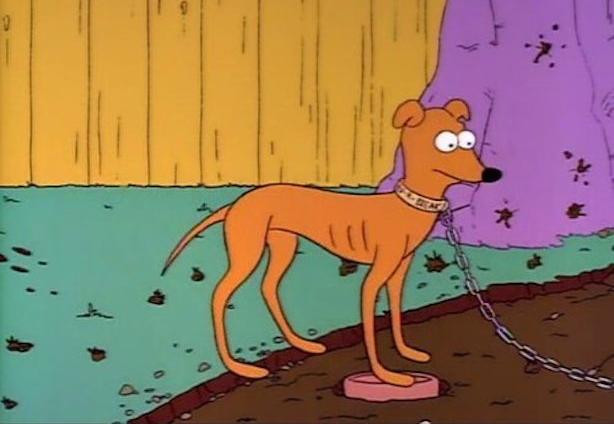
The producers of the German version of The Simpsons even decided to name Bart’s dog Knecht Ruprecht--presumably to mirror his boy owner’s mischievous character--rather than the original and rather more affectionate English Santa’s Little Helper.
Sadly the Luxembourg version of The Simpsons eschews any reference to Housécker and goes down an even more literal route, calling the dog Dem Kleeschen säi Mupp (Santa’s dog).