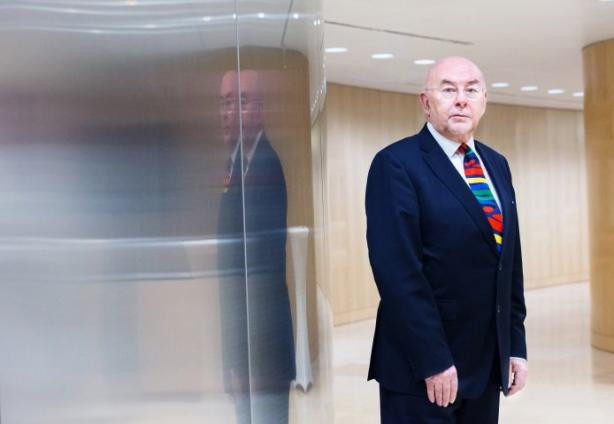
There was a lot of fellow-feeling during a panel discussion on “The fiscal sovereignty challenges facing small countries” organised by the Ireland Luxembourg Chamber of Commerce Monday evening. However, there was a dissenting voice from the CEO of the development aid charity Oxfam.
On the whole the panel members believed that small nations are unfairly singled out for criticism. There was near consensus that larger countries appear to feel that there must be some kind of trick for the likes of Ireland or Luxembourg to become rich.
“Tax planning in a globalised world will always exist,” said Ruairi Quinn, a former Irish finance minister. “Our tax system is open, clear and legal with no favours to anyone.”
Further explanation was given by Kevin Cardiff, the current Irish member of the European Court of Auditors, who was previously a senior finance ministry official. “Many tax adjustments that can have a major impact for a specific company just involve the removal of obstacles, a change that does no one any harm,” he said. This, he pointed out, is the essence of having the regulatory agility which comes from being small.
He also added: “There is no country that does not have an agenda when it sets a tax.” In other words, the tax outcomes we have today are the product of laws made by democracies.
This did not satisfy Jim Clarken of Oxfam who sees “developing countries losing out on tax revenue which could otherwise go to providing vital social and economic infrastructure”. Delano spoke to him before the event, to ask whether this was more a question of governance than tax, as can be see by the recent progress made by certain Asian and African countries. “That may be so but it is not our decision to make,” he insisted, saying that rules need to be devised “to prevent tax disappearing from countries in need”.
He welcomed on-going moves to try to do something (particularly the OECD’s BEPS initiative) even though he feels this does not go far enough. Indeed, the apparent outcome of this trend is for multinational companies to increase their presence in places like Luxembourg and Ireland. Thus businesses are underlining that they are headquartered in these countries and that their tax arrangements are valid.
Moreover, is tax really lost when it is avoided, or is it just delayed? Tax will be paid at some stage when the profits either generate a dividend, or new investment is made, or the company shares that will increase in value are sold. While conceding this point, Clarken pointed out that: “the benefit is often not felt in the country where the wealth is generated.”
The event was videoed and can be seen on the ILCC website via this link.