Despite the sluggish economies in its major markets, the Grand Duchy’s satellite champion has seen a revenue and profit boost this year. Revenue from July through September at Betzdorf-based SES was up 8.7% over the same period last year, to €467.7 million, the company said on Friday.
That beat a Reuters poll of investment analysts taken before the earnings announcement, which had forecast SES would record €452 million in revenue.
For the full first nine months of the year, the company announced revenue of €1.36 billion, an increase of 6.1% over the prior year, and profits of €456.4 million, up 2.2% from the January-September 2011 period.
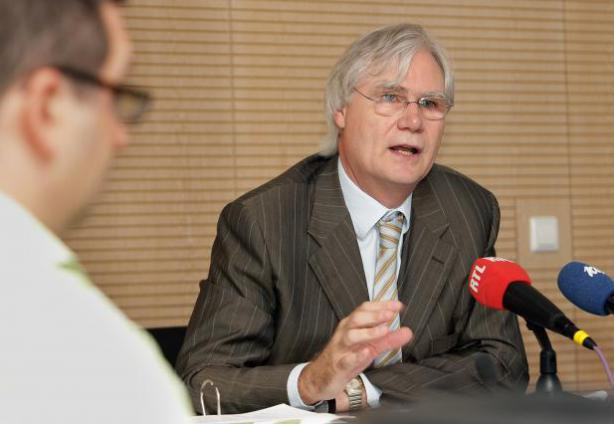
“Despite the impact of the end of analogue TV broadcasting in Germany at the end of April, strong underlying growth has resulted in revenue growth of 1.6%” for the year to September 30, CEO Romain Bausch (photo) said in a statement. “New business and renewals have further increased our backlog of future contracted revenue to an all-time high of €7.2 billion, underlining the confidence and trust that our customers place in us.”
During the first nine months of the year, SES successfully launched three satellites, bringing its total fleet to 52. Two have already entered service and the third--named Astra 2F--is set to go online later this month. It will serve the UK and Ireland and sub-Saharan Africa.
However, the satellite operator said that Paris-based rival Eutelsat “commenced arbitral proceedings against SES” claiming that Astra 2F’s use of certain frequencies would breach a 1999 coordination agreement. “SES strongly disagrees with Eutelsat’s position and will vigorously defend its right to use these frequencies from October 4, 2013.”
In addition, the firm signed new long-term contracts with two of its major customers, international broadcasters BBC and Canal+, the French pay TV giant which has given all of its business to SES.
The company said in the coming months it expected “continued growth, in particular in the Western European TV markets” as well as in emerging economies.