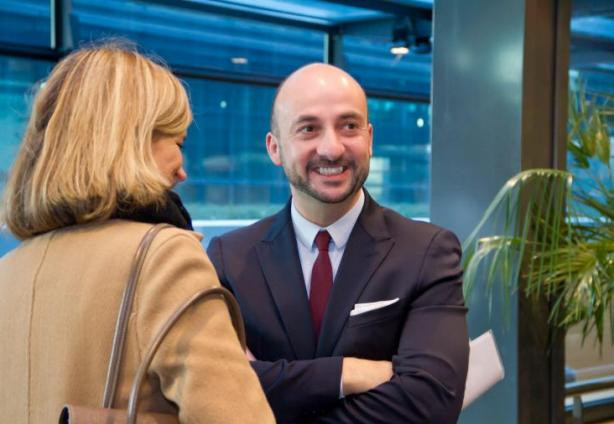
During his first official speech since taking office, Etienne Schneider outlined his plans for the coming two years, which are broadly similar to his predecessor. He called for a “return to balanced budgets or even a structural surplus, although it will be difficult in times of low growth.”
“Returning to balanced budgets and keeping our competitiveness is not only a necessity at a national level, but an imperative to face the new European economic governance rules, which will quickly be imposing increasingly severe constraints,” Schneider told the conference, which was held at the Chamber of Commerce.
The minister said the first steps had been taken with preliminary talks over adjusting the system of automatic wage inflation. “The vehemence and virulence of the debates [over salary indexation] are largely due to the excessive pressure on wages by the cost of housing. If we want to calm the discussion of salary adjustments, it is necessary to address this cost,” he said, without mentioning any specific proposals.
Schneider also announced that he had opened negotiations with representatives of the petroleum sector to regulate the profit margin on fuel until 2014, to help reduce the impact of energy prices on inflation.
In addition he supported a fundamental reform of the legislative framework that regulates the sale of petroleum products, the creation of a new natural gas power plant, doubling renewable energy production by 2015, and the development of electric mobility in the Grand Duchy.
Schneider, previously number two at the ministry, took over from Jeannot Krecké on February 1. He is expected to serve until the next national elections, due in June 2014, and his agenda generally echoed that of Krecké’s. “You’ll understand that I will carry on the economic policies of this country in the footsteps of my predecessor,” Schneider said. “No revolution, no change of course.”
Although it is highly unusual for Luxembourg minister to resign mid-term, Krecké announced his retirement from politics late last year. He cited personal reasons, but had previously expressed his frustration in public with the slow pace of reform.