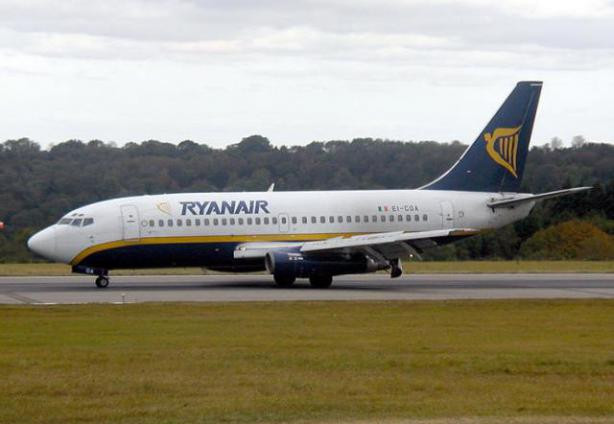
The “financial consequences” of aiding stranded airline travellers cannot override European rules that “aim to [ensure] a high level of protection for passengers”, the EU’s top court has ruled.
Closed airspace
Much of northern Europe’s airspace was closed for seven days in April 2010 and restricted until mid-May in the wake of the Eyjafjallajökull volcano eruption. Denise McDonagh was unable to return from Faro to Dublin for more than a week and claims that Ryanair provided no assistance during this time. She filed a suit in Dublin Metropolitan District Court seeking about €1,130 in compensation to cover meals, accommodation and transport to and from the airport.
The Irish tribunal then asked the Luxembourg-based European Court of Justice if closed airspace following a volcanic eruption was a situation that went “beyond ‘extraordinary circumstances’” that would exempt airlines from having to look after delayed passengers under European law.
Ruling against Ryanair
On Thursday, the ECJ judges ruled that it did not, and that Ryanair should have provided assistance or reimbursed passengers’ expenses during the delay.
“EU law does not recognise a separate category of ‘particularly extraordinary’ events, beyond ‘extraordinary circumstances’, which would lead to the air carrier being exempted from all its obligations”, the court said.
As for Ryanair’s argument about the extremely long time period involved, European regulations do “not provide for any limitation, either temporal or monetary, of the obligation to provide care to passengers whose flight is cancelled due to extraordinary circumstances. Thus, all the obligations to provide care to passengers are imposed on the air carrier for the whole period during which the passengers concerned must await their rerouting.”
The judges pointed out that “air carriers should, as experienced operators, foresee costs linked to the fulfilment of their obligation to provide care” and are free to “pass on the costs incurred” as part of their ticket prices.
The case (C-12/11) will now be returned to the Irish courts for final adjudication and a determination of the exact monetary figure that Ryanair might owe.