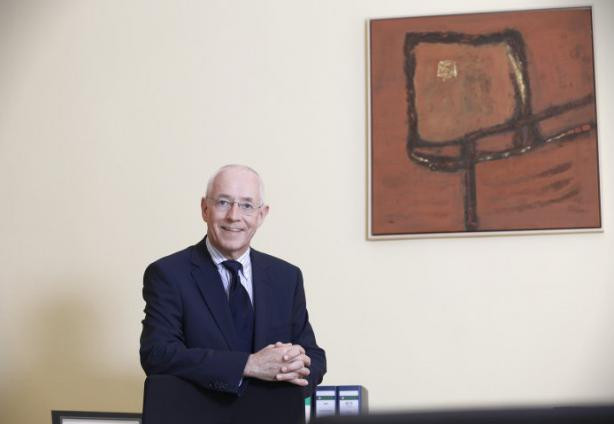
Like all seats of higher learning worth their salt, the University of Luxembourg has ambition to be a key player in various fields of research. Its new vice-rector of research, Prof. Dr. Ludwig Neyses says that in areas such as biomedicine and security and trust, but also increasingly in education and European law and in business and finance, the university is doing just that.
“And we are a key player for and in the country,” he adds. “All these fields are intimately linked to the economic development of Luxembourg.” Even areas that would not appear to have an immediate economic impact are vital for the long-term development of the country, Neyses argues.
Aware of the university’s research reputation not only in his own field of biomedicine, but also from reading articles in such renowned publications as Frankfurter Allgemeine and The Economist, Neyses jumped at the chance to take up the post left vacant by Prof. Lucienne Blessing.
He has worked and studied across Europe and in the United States--since 2001 he has been the chair of medicine/cardiology, Institute of Cardiovascular Sciences, the University of Manchester--but says the University of Luxembourg compares very well with other institutions. “People here are willing to listen and there is material to shape,” he explains.
Neyses is determined to continue attracting research talent. “Very good people are the lifeblood of the university,” he says. He believes the university is succeeding for a number of reasons. “Firstly, because we have created an environment in which they can thrive; secondly, because they can shape things in a new university and bring in their own ideas… whereas in some of the older institutions it is difficult to move things.”
The launch of the university’s new open-access platform, Orbi, in the spring of this year is also bringing added value to research conducted at the university and has already attracted interest from other university libraries. “It is early days, but first indicators are that our citation and visibility is really increasing. And that has a positive spin on our impact.”
In addition, the university has what Neyses calls “an excellent external funding situation”, attracting large amounts of money from national research funds in Luxembourg and a rapidly growing number of grants from the European Commission and European Research Council.
Indeed, third party funding has risen by over 25% over the last year. “And we have substantial internal funds, which are very competitive, but do provide unique opportunities for our people. And, of course we have very competitive salaries, and we are not afraid to say that.”
The university also enjoys the luxury of having six endowed chairs from external sources--four from private companies and one each from the cities of Luxembourg and Esch-Alzette.
“That is very high for the size of the university and for its young age, and truly a success and a testament to our rooting in local society. The motto would be ‘we are not an ivory tower, we are a lighthouse’, and I think we show that.”