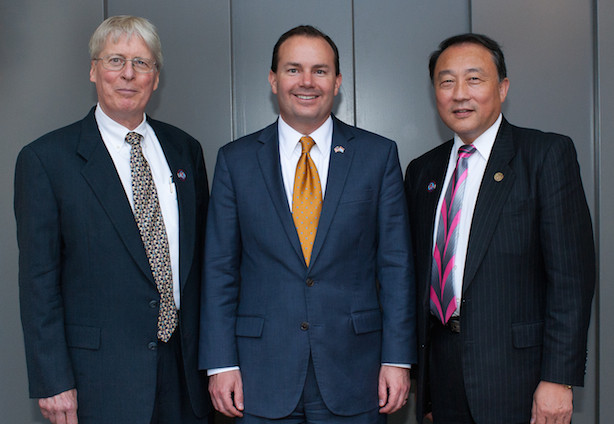
“FACTA [Foreign Account Tax Compliance Act] makes the unfair presumption that Americans living abroad can’t be trusted on tax,” US Republican senator Mike Lee told a 7 October American Chamber of Commerce lunch in Kirchberg.
Supporters of the law say it helps stop tax evasion. Opponents believe it will not achieve its aim, that it infringes the personal right to privacy and harms investment.
“Americans wouldn’t put up with this law at home, so why should the 7 to 8m of our citizens living abroad have to suffer?” added the senator for the state of Utah. He was heading a Republican party delegation which has also taken this message against this US law to Paris, London and Geneva.
He pointed to four main objections. He believes increased regulation complicates investments flows, with potentially damaging side effects on trade and growth.
As well, he sees US citizens and businesses facing increased difficulties accessing financial services abroad. Also, this regulation has increased costs for banks, a burden which will eventually be born by clients.
On top of this, he objects to the US obliging financial institutions to supply personal financial data to the IRS.
The US congress estimated in 2010 that $100bn in tax revenue was being lost by individuals stashing savings abroad. FATCA was the result, which obliges foreign financial institutions to report the savings of all US citizens to the tax authorities, the IRS.
Along with most countries, Luxembourg feels it cannot duck this and will legislate this autumn. The first automatic information exchanges are planned for the second half of 2015.
End of bank secrecy
FATCA is often quoted as one of the driving factors that has led to Luxembourg and other international financial sectors deciding to end banking secrecy. However, sceptics believe the move will have minimal benefits which will be outweighed by the costs and unintended consequences.
For example, the Luxembourg Bankers’ Association reckons each of its members have had to spent €800,000 on average to conform.
In response to Lee’s visit, the Democrats Abroad issued a press release. They admitted there were teething troubles with FATCA and called for an exemption from FATCA for accounts held by US citizens in their legal country of residence.
Saying the Republican senator’s European tour was motivated by the desire “to raise money”, Kathryn Solon, the international chair of Democrats Abroad, said: “let’s fix FATCA and let it do what it was meant to do--catch tax cheats.”
Senator Lee admitted that there was little chance of the measure being repealed soon, but promised to keep fighting because “when our rights are impaired we should challenge this.”
This message was warmly welcomed by the audience of local business people. Yet with there being advanced plans for a European version of FATCA, the likelihood is more of the same.