The Grand Duchy wants to be China’s preferred EU financial partner as the Middle Kingdom expands its role in the global markets; how to make that happen was a major focus during the first “Luxembourg Renminbi Forum”.
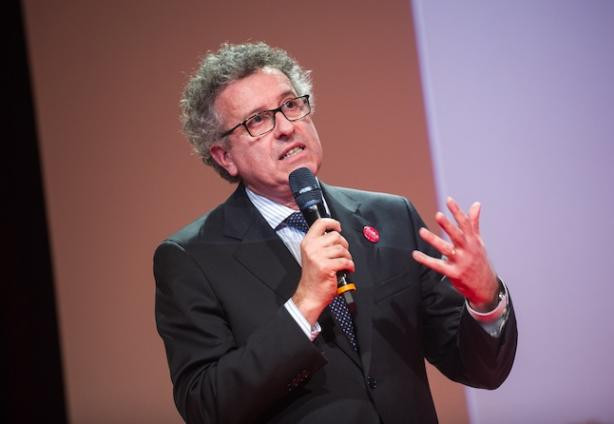
In his keynote speech on Wednesday, Pierre Gramegna, the Grand Duchy’s finance minister, championed bilateral ties and his government’s effort to make Luxembourg Europe’s leading offshore trading centre for China’s currency, the renminbi.
“Different financial centres have different strengths. And there are different fields in which Luxembourg has strong advantages,” he told a Chinese journalist attending the conference, which was organised by Luxembourg for Finance, a government-backed promotion agency.
Gramegna will lead a trade mission to China this coming July.
Mainland China’s currency controls and quotas on fund sales have traditionally limited Chinese investors ability to place money abroad, although Beijing has been steadily liberalising its regime over the past five years.
Many financial industry commentators see London as the leading European destination, with Luxembourg also facing stiff competition from Frankfurt, Paris and Switzerland.
However, the Grand Duchy has already established itself as a key contender. There are more than 220 billion yuan (about €27 billion) in assets under management in Luxembourg-domiciled investment funds, the largest pool of renminbi-denominated bank deposits in Europe is found in the Grand Duchy, plus there has been a notable number of bonds issued via the Luxembourg Stock Exchange.
Last year the UK was granted a quota to invest directly in the mainland’s securities markets, and Luxembourg’s government is now lobbying Beijing for similar standing.
Some speakers at the forum downplayed the rivalry. “I do not think there is a real competition between countries,” said Didier Mouget of consultancy PwC in Luxembourg during a panel discussion. “Countries will have to play the card of complementarity between them. Luxembourg may therefore occupy an important role based on its achievements in the field of money or banking for example.”
Reserve currency
Chinese policy makers also want the renminbi to develop as an international reserve currency, partly as a hedge against the US dollar.
“Having become an important trading and payment currency, the renminbi is now taking the first steps toward establishing itself as an international investment currency,” Bloomberg News reported Yves Mersch as saying.
The proposed introduction of direct trading of the euro and renminbi will “bring benefits for the euro area and China,” said Mersch, who is a member of the European Central Bank’s executive committee and former head of Luxembourg’s central bank.
Luxembourg for Finance estimated that 300 people from China and EU countries attended the conference, which was held at the Philharmonie in Kirchberg.