Christian pilgrimages conjure up images of hardy souls traversing difficult terrain and covering hundreds, if not thousands, of miles to reach the holy site of their dreams. In Luxembourg the distance required to travel to pay homage to a statue of Mary, Consoler of the Afflicted, is usually not so energy sapping. But pilgrims have been walking into the city since at least 1624 and since 1666 Mary has been the patroness of the city.
Since 1921 the pilgrimage has lasted two weeks and involves thousands of pilgrims flooding into the city for special services at the Notre-Dame cathedral.
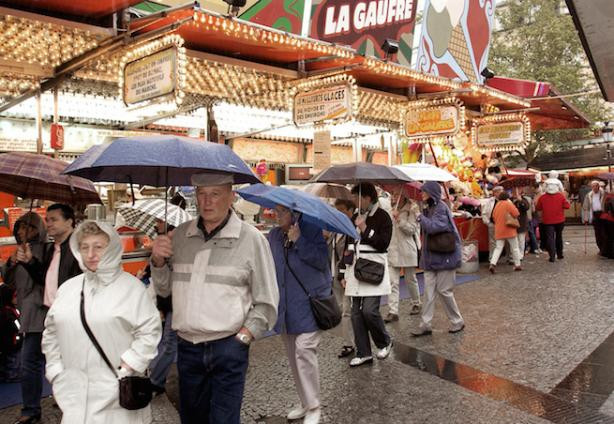
Even if the majority of visitors to the cathedral no longer walk into the city, all those weary pilgrims need sustenance. So food and drinks tents and stalls are set up on the place Guillaume II--the Knuedler--during the Octave period. The traditional speciality is baked fish in a light batter, served with a generous portion of fries and washed down with a crisp Luxembourg white wine such as an Auxerrois or Riesling.
But being a weary pilgrim clearly affects judgement, and visitors to the Octave market also gladly pay money for the awful tat on sale--and we’re not talking about kitsch religious iconery, but everything from t-shirts bearing the images of rock groups to cheap costume jewellery. One year there was even a stall selling realistic looking air pistols.
It is clear that for many visitors the Octave is no longer a purely religious event, but one that is undertaken out of a sense of peer pressure or duty and rewarded with a day off school or work and a decent fish dinner.
For anyone seeking a more challenging and spiritually rewarding pilgrimage, walking the Camino de Santiago may be a better bet.