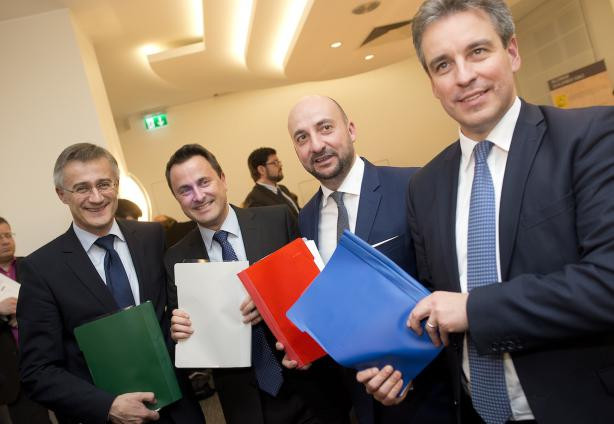
Later on Wednesday, Grand Duke Henri will swear in the 18 members of the new government--15 cabinet ministers and three secretaries of state. That is after he has accepted the resignation of the old government and handed service recognition medals to former ministers, including long-serving prime minister Jean-Claude Juncker.
The official appointment of the government follows meetings on Tuesday evening of the respective party members of the three coalition partners. They voted in favour of the government’s policy programme, set out in a 202-page document that was made public on Monday after leaks to the media.
The watchwords of the Bettel-Schneider-Braz government are austerity, modernisation and economic growth. In its preamble to the 200-page document outlining its policies, the government says: “this common project will be centred around the management of state and public finances, durable policies, the promotion of economic growth, sustainable development and social cohesion, the fight against unemployment and societal progress.”
The government aims to balance the budget by undertaking screening reviews of spending in all government departments. Boosting the economy by making Luxembourg more competitive and by continuing to promote economic relations with China and the Gulf states while at the same time fighting unemployment is also part of the programme.
One of the lesser-publicised policy proposals is the setting up of a system of micro-credits for young entrepreneurs or the unemployed who want to start their own business.
Among the more concrete proposals are the means testing of social security payments such as child support, more flexibility for parental leave and free access to childcare facilities for the under-3s.
The government has also pledge to hold referenda on four key topics in 2015--including the thorny subject of financing religious institutions, a limit on the number of terms of office a minister can serve (an idea first mooted by Etienne Schneider), and on lowering the voting age to 16 (from 18).
Luxembourgers will also get to vote on whether they wish to allow non-nationals to vote in future parliamentary elections.