Pain is hugely important. It tells us in the clearest terms to change what we are doing and seek help. However, once the problem is identified and being dealt with we want the soreness to go away.
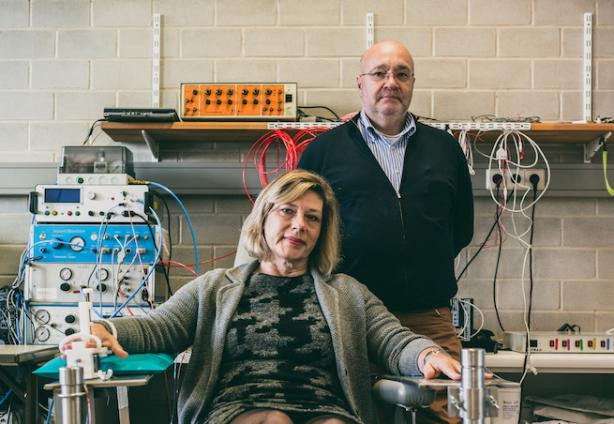
Most of us reach for anaesthetic drugs, but it would be healthier, cheaper and maybe more effective if we could train our brains to ignore nagging aches. A clue to how this is possible has been discovered at the University of Luxembourg. It came from work by Fernand Anton, professor of biological psychology, and his PhD student Raymonde Scheuren, the lead researcher in this study.
Most of us are aware that a new pain in another part of the body cancels an older one. For example, many people react to stubbing their toe by biting their knuckle. Scientists have proven that we all have this reflex, a response which makes sense as it awakens us to a new, potentially more dangerous threats. The university research probed this phenomenon further.
Shock experiments
Volunteers agreed to have a constant series of electric shocks administered to one of their feet. They then plunged a hand into a bucket of icy water, and the sharp cold largely blanked out the stinging being inflicted elsewhere. The novelty of this experiment was that each time the volunteers dunked their hands, a telephone ringtone sounded.
This was repeated several times, a process which conditioned the brain to associate sharp coldness in the hand with the noise. After a while, simply playing the ringtone was enough to reduce pain in the foot. The fact that the electric shocks hurt less was confirmed by the volunteers themselves and through the researchers’ pain measuring technology.
This effect wore off quite quickly as the mind realised it was being tricked. However it shows the potential for us to train ourselves into having a higher pain threshold. Further research is needed to find out if this effect is due mainly to the mind asking the body to release pain-deadening hormones, or if the key is a more subtle mental trick.
This is probably one of the ways athletes are able to break through the pain barrier as they push their bodies to the limit. It may also explain how other researchers have found that sacred images can reduce pain in people with religious faith.
This research might also go someway to explain psychosomatic disorders. Many people feel pain despite there being no physical cause, a condition which is thought to be due to mental stress. “Similar learning effects may be involved in the enhancement and maintenance of pain in some patients,” says Scheuren.