Every morning, there’s a crowd of people outside the offices of Luxembourg’s Reception and Integration Agency (OLAI), waiting for it to open. The majority are applicants for international protection who come to collect vouchers so they can buy essentials. Since 2012, cash help for asylum seekers has been limited to €25 per month.
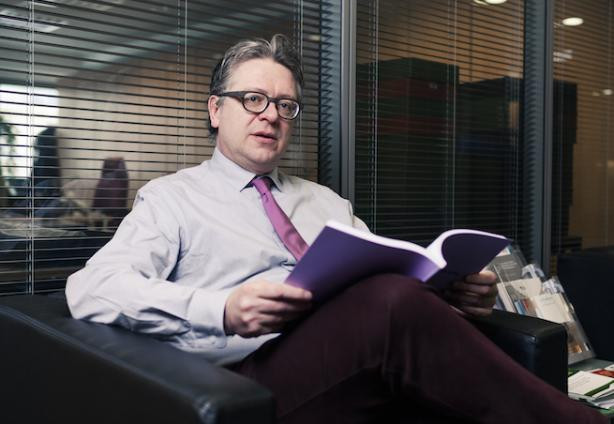
Inside, surrounded by mountains of files, is Yves Piron. He was called upon last September to head a steering committee in charge of restructuring the agency after a report showed flaws in organisation and administration. On 27 January this year he was appointed new director of OLAI, finally allowing him to become “fully operational”.
Refugee applications
There is a lot do to. One of the key problems Piron has to address is the management of asylum seekers. “In 2011 and 2012, Luxembourg had a huge influx of applicants for international protection,” he explains. “It’s not the case anymore; we’re down to around 1,000 asylum seekers a year compared to double then. However, our housing facilities, which have 2,000 beds, are still filled to the brim and our teams have never been increased. We have only six social workers and two educators--and to make matters worse, they have to spend half their time counting and controlling vouchers instead of doing their job in the field!”
Even though OLAI “only” houses 1,400 of the asylum seekers--half of which are children or young adults--and the Red Cross and Caritas take care of the rest, the situation does indeed seem ludicrous.
A few days into office Piron consequently proposed two draft laws to comply with new European directives, accelerate procedures for asylum seekers and give them a larger autonomy after six months, in order to become more responsible for their life and money (not vouchers). Also included in the bills is a proposal to increase OLAI staff by 19.
“One of the reasons for our strained housing situation is that some procedures can take years. Another is that half of the 2,000 people housed are, in fact, no longer applicants for international protection,” explains Piron. “They have been rejected, but they are still here, living in our structures. Their return, voluntary or forced, is complicated and above all, not OLAI’s mission. This has been a problem for years.”
Several hundred rejected asylum seekers do leave the Grand Duchy voluntarily each year, but simultaneously many also arrive already knowing they will be rejected. “A lot of time has been wasted and OLAI hasn’t been adequately responsive to the situation,” he says. “We must also prepare to take care of a larger number of very vulnerable newcomers, who have suffered immensely through war, torture, rape… This requires another type of treatment. There is no doctor in Luxembourg, for example, who is specialised in dealing with torture victims.”
In addition Piron wants OLAI to improve communication with the communes who welcome asylum seekers. “The only link with the communes are the children,” he says. “We are adamant that the children attend Luxembourgish schools locally, where they live.”
Successful integration--and not only that of asylum seekers--is another of OLAI’s major missions, and for this too Piron has a lot planned. Luckily, on top of being a resourceful man, he is also a patient one. He knows reforms take time.