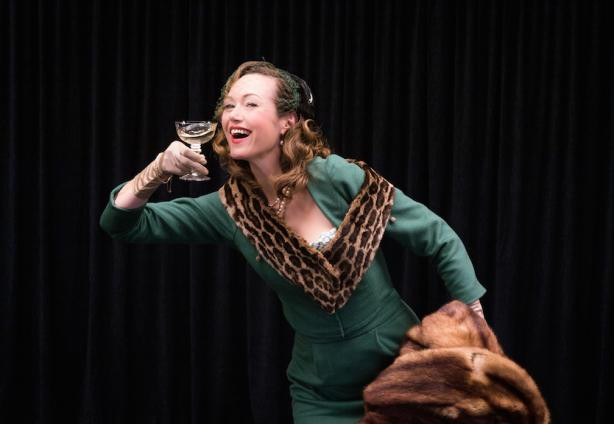
The life of the legendary socialite Perle Mesta, the “hostess with the mostest”, who became the first ambassador of the United States to Luxembourg in 1949, was the basis for Irving Berlin’s hit musical “Call Me Madam”. The show, with a book by Howard Lindsay and Russel Crouse, enjoyed a run of 644 performances at the Imperial Theatre on Broadway starting in October 1950.
It later ran for 486 performances at the Coliseum in London and was subsequently made into a film starring Ethel Merman as the fictional ambassador Sally Adams. Adams is a “glamorous grande dame and tenacious businesswoman from Oklahoma” who must use her wiles to negotiate her way around the politics of Lichtenburg--the fictional name given to Luxembourg--and the complex link between an imminent royal wedding and a much-needed loan to the impoverished country.
Surprisingly, the musical has never been performed in Luxembourg. But that is changing with a production by the Mierscher Kulturhaus, in cooperation with the Cube 521. The show, directed by Claude Mangen, features a mixed international and local cast and music by the renowned Orchestre de Chambre du Luxembourg.
Mangen says that “Call Me Madam” is a real musical, not a show “with cover versions of ABBA songs”. He is also fascinated by the show’s oblique historical references to early 50s Luxembourg--the Schueberfouer, the parliamentary elections in 1954, the arrival of American chemical giant DuPont De Nemours, the construction of a dam to create the Upper Sûre lake and even a mention of a famous cheese, which is undoubtedly meant to be Kachkéis.
Ambassador Adams also receives several phone calls from the president--Mesta was famously close and a great supporter to Harry Truman, who had appointed her ambassador, and she was also friends with Dwight Eisenhower.
The show is packed with catchy Berlin melodies, romance and intrigue and is a splendid, if rather rose-tinted, time capsule of what life was like in the Grand Duchy some 60 years ago.