Luxembourg was ranked 22 out of 144 countries in this year’s Global Competitiveness Index, released by the World Economic Forum on Wednesday. That is up one notch from 23rd place in 2011, but down from the 20th spot in 2010.
According to the WEF, the three most competitive economies in the world are Switzerland, Singapore and Finland. The top ten was rounded out by Sweden, the Netherlands, Germany, the US, the UK, Hong Kong and Japan. China was ranked number 13, Belgium took 17th place, and France--at number 21--was just ahead of Luxembourg.
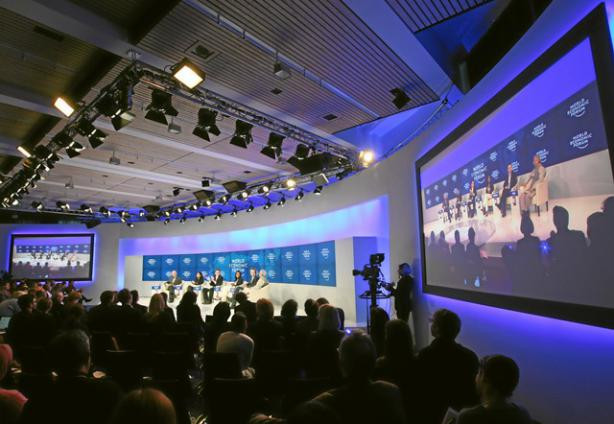
The organisation--known for its Davos conference (photo)--publishes the well-regarded annual report based on extensive surveys of economic indicators and polls of business leaders in each country. In the Grand Duchy, the research was coordinated by the Luxembourg Chamber of Commerce.
Certain traditional advantages--notably confidence in policy-making, efficiency of the legal system, labour relations, the government budget and the degree of the development of the financial sector--had “eroded” Luxembourg’s ranking, the chamber told the press.
“On the other hand, the Grand Duchy undeniably progressed in the field of logistics and technology infrastructure, which should be welcomed.”
Indeed, Luxembourg was placed 12th worldwide on the “quality of overall infrastructure” with the different measures of telecommunications and transport infrastructure all ranking in the global top 30. However, when it came to the “availability of airline seat kilometres per week,” the Grand Duchy came in 119th worldwide.
Regional shift
The WEF report observed that the most competitive geographic regions remained in North America and in parts of Europe and parts of Asia. At the European level, the economic performance gap has shifted from the former Cold War frontlines to a north-south rift, the report said. “With six of the ten best-performing countries, Northern and Western Europe is a competitiveness hotspot. The assessment is considerably bleaker when looking at Southern and Eastern Europe.”
The report included a “competitiveness hot-spot map” that “reveals the ‘competitiveness divide’ within Europe. Indeed, the lack of competitiveness of several of its members is among the root causes of the current difficulties in the euro zone.”
The authors added that “the map also shows that within the European Union the traditional distinction made between the 15 original members and the 12 countries that joined after 2004 does not hold from a competitiveness point of view.”