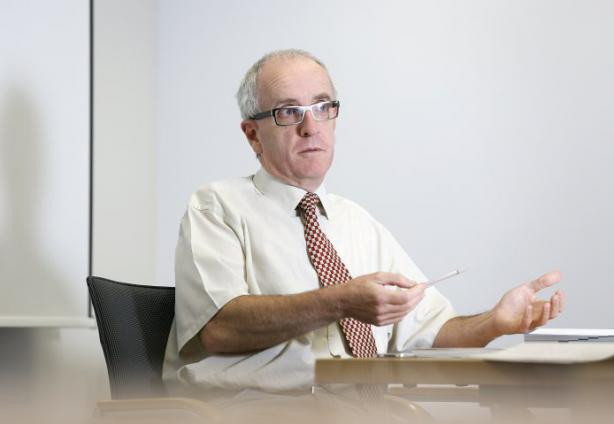
“Twenty years ago I may have hosted ten conferences in the run up to these elections,” says Pierre Lorang. “Now I host over a hundred.”
Lorang is the head of the labour inspector’s employee representative division; in essence, the main man behind the assurance of employee rights in the workplace.
“Fundamentally speaking it’s my job to establish a dialogue between companies and their employees as the law demands,” Lorang explains. “It’s not exactly something companies can opt out of.”
On November 13, any enterprise in Luxembourg with 15 or more employees will ask their workers to vote towards a company delegation, over a strict period of a month and a half.
That delegation will then act as a direct line of communication between company workers and managers.
“People need to be represented by their fellow colleagues,” Lorang says. “That way they know they can talk to someone who actually understands their needs. And then in turn, it’s easier for management to communicate directly with five to ten delegates as opposed to 500 employees.”
The origins of Luxembourg’s social elections date back to the end of the First World War. Its purpose was to ensure proper protection to returning veterans within the country’s predominant mining industry. But industrial diversification and globalisation has seen the old law develop to encompass all trades.
This year’s elections, for example, will see the total participation of 3,500 companies, as opposed to the mere 300 that were involved in 1993.
Those figures are, somewhat ironically, an indication of the country’s failure to inform workers of their rights to representation in 1993, as only a third of all registered companies participated in social elections.
“Back then we would just sell a 50-cent, 20-page pamphlet to companies who wanted it,” Lorang says. “Now we actively ensure that all enterprises are catalogued and informed of their professional responsibilities.”
The elections involve anyone that has worked in Luxembourg for at least six months, regardless of their nationality. And with foreign residents alone making up 44.5% of Luxembourg population, it is not surprising that the state has had to evolve to accommodate the rights of all workers.
“Many companies seem to struggle with the time allocation we set,” Lorang says. “Since the elections only occur every five calendar years, not very many seem to remember how the last round of elections was organised.”
Failure to comply with the election timetable simply results in an election re-run, a scenario that costs company time and money. But despite the elections’ high tempo and stressful demands, Lorang insists that the hard work pays its dividends.
“Managers need to understand that the system hasn’t been put in place to fight them, but to help them develop instead,” Lorang says. “Because at the end of the day, a healthy staff gives a healthy return. And a healthy return represents a healthy company.”.
Luxembourg’s political circus might have dissolved the parliament ahead of the general election overshadowing other events, but the country’s social elections are very much alive and kicking.