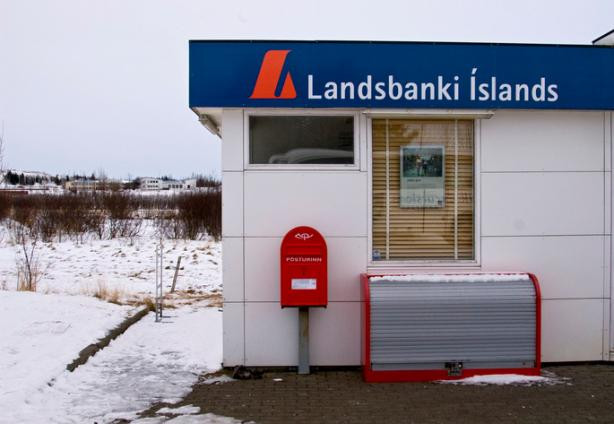
The EFTA Surveillance Authority, supported by the European Commission, brought action against Iceland before the EFTA Court in Kirchberg, alleging that Iceland failed to properly compensate Icesave account holders in the Netherlands and UK when its Icelandic parent bank, Landsbanki, failed in 2008.
The bank had more than 400,000 British and Dutch clients with deposits of €3.8 billion at the time of the collapse. Accounts were frozen for almost two months before the British and Dutch bank insurance schemes stepped in and compensated savers, and the EFTA regulator is seeking reimbursement from Iceland.
The regulator also charged that Iceland’s deposit insurance scheme favoured domestic Landsbanki savers, which is a breach of European rules.
Iceland argued that it was responsible for regulating but not financially underpinning its deposit guarantee bureau. It also said that force majeure should limit its liability, saying that the global financial crisis was a circumstance beyond its control.
The EFTA Surveillance Authority monitors the compliance of EFTA states--Iceland, Liechtenstein and Norway--with European rules. The three countries plus the EU27 form the European Economic Area.
The Luxembourg-based EFTA Court handles cases brought by the EFTA Surveillance Authority against EFTA members, and provides guidance to courts in EFTA countries similar to the European Court of Justice’s role within the EU27.
Along with Landsbanki, Icelandic banks Glitner and Kaupthing also swelled with billions of euro in cross-border deposits and then failed in the financial meltdown. The latter two banks are not part of Tuesday’s case.
The EFTA Court has not yet announced when it will deliver its ruling.