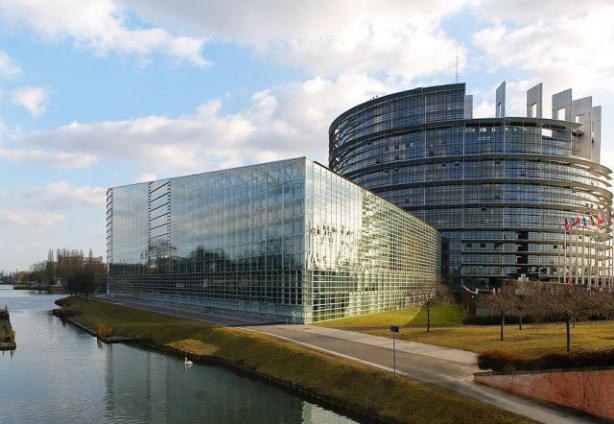
The European Parliament has lost its legal fight to combine two plenary sessions held in Strasbourg following a ruling Thursday by the European Court of Justice in Kirchberg.
European treaties require 12 plenary sessions, including budgetary sessions, to be held throughout the year in Strasbourg (photo), while other sessions are held in Brussels. Traditionally two sessions, lasting four days each, have been held in October, to compensate for the lack of any session taking place in August. This system requires MEPs and staff to shuttle back-and-forth one or more times per month, adding to the cost and complexity of running the institution.
In the spring of 2011, the parliament voted--by a majority of two--to essentially combine those two sessions. The parliament decided to schedule two separate two-day sessions, to be held in October 2012 and October 2013. The body also added sessions to its Brussels calendar, so the number of days sat remained the same.
The French government objected, and was supported by the Grand Duchy in its case before the ECJ.
On Thursday, the EU’s top court said France and Luxembourg were correct and annulled the parliament’s vote. European treaties clearly state--and member states have agreed--that 12 “ordinary” sessions “must take place on a regular basis” in Strasbourg, the ECJ ruled.
The cost of holding sessions in Strasbourg sessions is estimated at €200 million per year, according to the EUobserver website.
But the ECJ judges explained that “even if the disadvantages and costs engendered by the plurality of places of work--as described by the parliament--are acknowledged, it is not for the parliament or the court to remedy that situation; rather, it is for the member states to do so, if appropriate, in the exercise of their competence to determine the seats of the institutions.”
The joined cases were numbers C-237/11 and C-238/11 (France v Parliament).