Under Europe’s “Dublin II” rules, the member state where a refugee first enters the EU is generally responsible for handling the asylum claim, even if a migrant files an application in another country. This frequently involves transferring refugees between EU states, although there is a delay while the “competent country” is determined and the asylum seeker is re-located.
More than 100 refugees have been transferred from Luxembourg to other EU countries so far this year, for example, and the Grand Duchy has received more than 30, according to the immigration service.
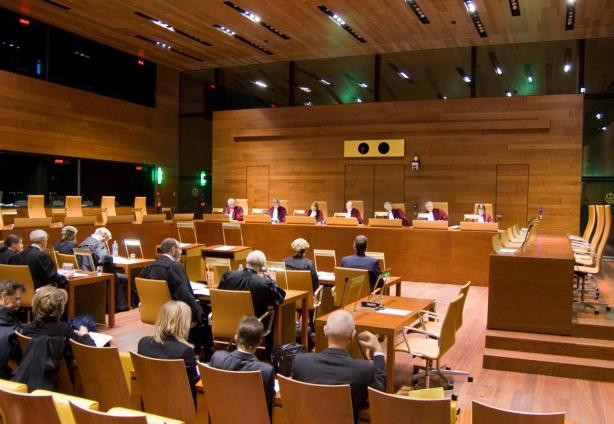
The case before the EU’s top court in Kirchberg stems from an application filed by two French NGOs, Cimade and the GISTI, to France’s Council of State. The groups objected to the French government’s suspension of the temporary subsistence allowance given to asylum seekers that Paris planned to transfer under the Dublin II protocol. France’s interior ministry had said that the receiving EU member state should be responsible for such payments, even if the applicant still remained in France during administrative procedures.
The Council of State asked the ECJ if that decision was in line with EU law.
In its ruling on Thursday, the ECJ said it was not, and countries are responsible while the refugees are inside their borders.
The court said EU nations are “obliged to grant the minimum conditions for the reception of asylum seekers even” if their government plans to transfer their application to another member state.
The ECJ also said this principle “applies from the moment the application is lodged and throughout the procedure for determining the member state responsible until the actual transfer of the applicant” is completed.
The matter now goes back to the French Council of State for final adjudication.
The case is number C-179/11 (Cimade and GISTI v Ministre de L’Intérieur, de l’Outre-mer, des Collectivités territoriales et de l’immigration).