It seems to be a paradox that as more and more information about nutrition and healthy diet becomes available, so more and more people are being classified as overweight or even obese. And the Grand Duchy is among the most obese in Europe, ranking third in a 2014 OECD report on the continent’s “Health at a Glance”.
Some 58.1% of Luxembourg’s population is overweight or obese, according to the OECD figures. Indeed, Luxembourg is cited alongside France, Denmark, Finland, Iceland and the Czech Republic as one of the countries where obesity has grown fairly quickly over the past ten years. And it is Luxembourg’s men who are the worst offenders, with some 66.3% classified as overweight compared to women at 48.1%, even though there is little difference in obesity rates among men and women on average across EU countries.
Hardship
The OECD report suggests that as well as the increasingly widespread availability of energy dense foods and more time spent being physically inactive, economic factors also play a significant role in the rise in obesity levels. “The economic crisis is also likely to have contributed to further growth in obesity,” the report states.
“Evidence from Germany, Finland and the United Kingdom shows a link between financial distress and obesity. Regardless of their income or wealth, people who experience periods of financial hardship are at an increased risk of obesity, and the increase is greater for more severe and recurrent hardship.”
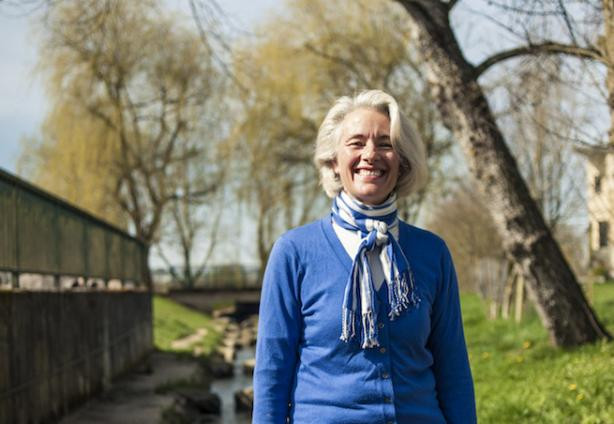
Camilla Sardelli, a Luxembourg-based nutritional therapist who graduated from the University of West London last summer, says that while there is plenty of information out there, it can often be confusing if not downright contradictory.
In the 1970s, for example, American scientists were convinced that fat was the cause of heart disease, whereas British scientist John Yudkin argued in his now revered book “Pure, White and Deadly”, that it was refined sugar that was the problem. The fat argument won the day; especially as the food industry saw an opportunity to create a new market for low-fat yogurts, spreads and other products.
Such was their success that on a recent trip to the States Sardelli claims it was difficult to find full fat yoghurts in any supermarkets. “And so I think a lot of people ended up with a diet that was high in carbohydrates but too low in protein and healthy fats,” she says.
Convenience food
But social conditions also play a role in poor diet. Sardelli argues that life became more stressful in the 1980s and people “realised that something had to give.” For many it was the easy choice to plump for convenience food, which was more often than not processed. “White bread, pasta… a lot of things with added sugar, because when you take fat out than you add sugar or salt to make things more palatable.”
Policies to prevent the spread of obesity include everything from public awareness campaigns, to raising taxes and even bans on certain types of foods or drink. “Better informed consumers, making healthy food options available, encouraging physical activity and focussing on vulnerable groups are some of the fields for action which have seen progress,” says the European Commission.
Sardelli, who gave up work at the EIB to raise her family before changing career to her current passion, agrees that there is an urgent need for education about food and nutrition. “Ideally this would come from a mix of parents and the schools. What I would like to get across to people is that food is information.
With each choice we make, we either add something good to our body or we take away something. I know our parents said ‘we are what we eat’, but it is very important to realise that food has an influence.” That is not to say that we cannot make choices that are not necessarily healthy, she adds. “There should be room for a piece of cake or a glass of wine. You shouldn’t become a fanatic otherwise life becomes dull.”
Detached
Sardelli, who also happens to be the vice president of Slow Food Luxembourg, loves the plethora of farmers markets in the United States and the UK, promoting freshness and supporting local producers and their low carbon footprint. Taking children food shopping and discussing food is an important part of education.
As is the promotion of biodiversity--she is surprised, for example, that kale or Jerusalem artichokes are not so prevalent in Luxembourg, whereas they are common in the UK. “Ask quite a lot of people what a topinambour [another name for Jerusalem artichokes] is and they will not be sure and won’t know how to use it.”
Indeed, she thinks that too many people in western societies do not have even basic cooking skills, although the popularity in the last decade or so for television cookery programmes has reignited an interest for getting back into the kitchen. But even so, most people are unaware of the intricacies of industrial agriculture--as she admits she was herself, before she removed her rose-tinted glasses.
“We have become detached from food production,” says Sardelli. “We have outsourced that to others to free up time for ourselves to do other things. But nutrition is the very basis of our well being. Even without a roof over your head, you can manage if need be. But without food and drink you won’t survive that long.”