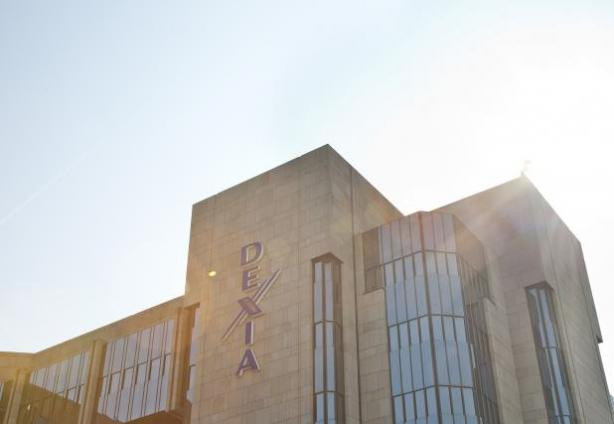
The Belgian banking group posted a net loss of €11.6 billion for the 2011 financial year on Thursday, largely driven by losses on Greek sovereign debt and the fire sale of some of its business units. Dexia also said its core tier 1 stood at 6.4%, below its 7.3% target.
Dexia’s shares had traded above €1.30 during the first half of 2011, but closed at €0.287 on February 23, representing a loss of about two billion euro in shareholder value.
However, “Dexia does not require any immediate capital injection, but the group may need further capital over time,” Fitch Ratings said following the earnings announcement. The agency maintained its A+ rating on Dexia, “which continues to reflect Fitch’s opinion that there would be an extremely high probability of additional support from France, Belgium and Luxembourg if required.”
Fitch also noted that “the bank’s latest state-support package is likely to be approved by the European Commission later this year, giving it access to 90 billion euro of state-guaranteed funding. This should be enough to manage its legacy portfolio and allow Dexia to slowly run down its balance sheet without having to sell assets at a loss.”
Fitch also said Dexia’s Tier 1 ratio, a different reserve standard, were adequate “at present.”
Last October, the Greek debt crisis forced Dexia into a restructuring plan backed by the Belgian, French and Luxembourg states, which included the planned sale of all its operations in the Grand Duchy.
At the end of last year, it finalised the sale of Dexia Banque Internationale à Luxembourg to the Qatari investment group Precision Capital, with a minor stake going to the Grand Duchy’s government. However, the sale of Dexia Asset Management Luxembourg and its half share of RBC Dexia Investor Services have remained on the market.
Earlier this week a competitive ratings agency warned that the delay in finding a buyer for the group’s 50 percent holding in RBC Dexia could impact the custody bank’s business. Moody’s said it would “assess whether this delayed sale process has affected the joint-venture standalone creditworthiness, particularly its franchise value and risk positioning.”