The number of payments mishandled by European institutions has grown for the fifth year in a row, the European Court of Auditors has reported. The ECA estimates that 4.8% of the EU’s €138.6 billion budget was incorrectly dispensed in 2012. That marks an increase from an “error rate for spending” of 3.9% in 2011.
“The estimated error rate has increased every year since 2009, after having fallen in the three previous years,” according to the ECA report, which was released on Tuesday.
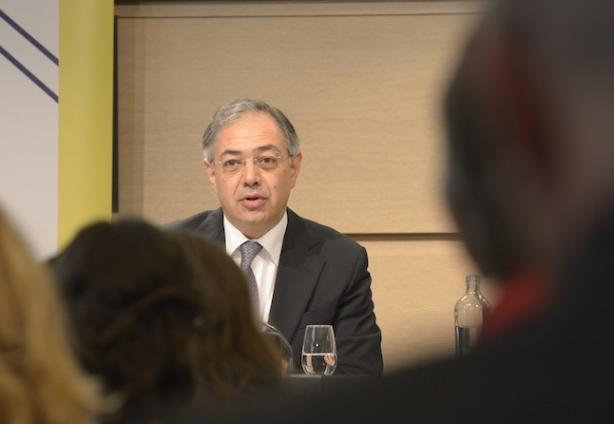
“All operational spending areas were affected by material error in 2012,” ECA president Vítor Manuel da Silva Caldeira said in a press statement.
The reports states that: “rural development, environment, fisheries and health remains the most error‑prone spending area with an estimated error rate of 7.9%”, out of its roughly €15 billion in audited spending last year, up from 7.7% in 2011. The ECA found the “regional policy, energy and transport” budget categories--representing around €41 billion in reviewed spending--had an estimated error rate of 6.8% in 2012, up from 6% the year before.
The largest budget category the EU auditors checked, more than €44 billion in agricultural subsidies, had an error rate of 3.8%, up from 2.9% in 2011.
Only the €10 billion “administrative and other expenditure” budget was “free from material error ”, with a 0% fault rate.
“Not a measure of fraud”
“The court’s estimate of the error rate is not a measure of fraud, inefficiency or waste associated with spending,” da Silva Caldeira said. “It is an estimate of the money that should not have been paid out because it was not used in accordance with the legislation concerned. Typical errors include payments for expenditure which was ineligible or for purchases without proper application of public purchasing rules.”
The report said that in a majority of cases involving joint programmes involving the EU and member states, such as farm aid, national government “authorities had sufficient information available to have detected and corrected the errors”.
Institutions pay more attention to process, and not policy objectives and actual results, in the ECA’s view. “For many areas of the EU budget the legislative framework is complex and there is insufficient focus on performance,” the report concluded.
For example: “The proposals on agriculture and cohesion for the 2014–20 programming period remain fundamentally input based (expenditure oriented) and therefore still focused on compliance with the rules rather than performance.”
The court was founded in 1977 and acts as the independent auditor and financial watchdog of EU institutions. Based in Kirchberg, it has nearly 900 staff.