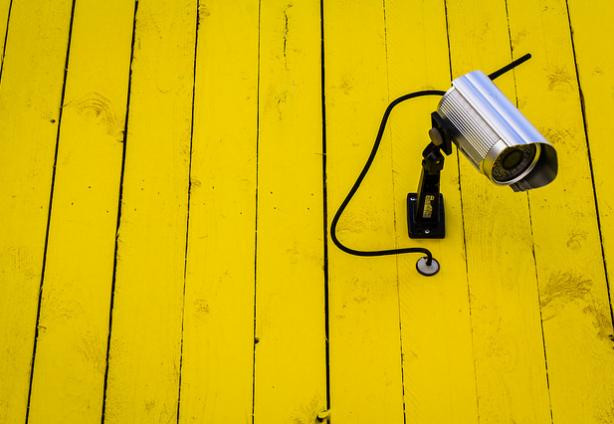
Be careful where you point home security cameras, Europe’s top court has warned. If video footage can identify people in a public space, then it falls under the EU’s two-decade-old data privacy directive, justices in Kirchberg said.
The case stems from the repeated vandalism attacks against the family home of František Ryneš in the Czech Republic. Ryneš then installed a surveillance camera that “recorded the entrance to his home, the public footpath and the entrance to the house opposite”, according to court documents. In October 2007 “one of the windows of Mr Ryneš’s home was broken by a shot from a catapult”. He handed video footage over to police, and two suspects were identified and criminally prosecuted.
But one of the suspects filed a complaint with the Czech Office for the Protection of Personal Data, saying he “had been recorded without his consent while he was on the public footpath” and the office agreed his privacy was breeched and fined Ryneš.
The Czech Republic’s Supreme Administrative Court, which is hearing an appeal by Ryneš against the data protection agency, asked the EU’s top court if this type of personal video surveillance was covered by European privacy rules and if so, then if it is permitted.
Not “personal” use
On Thursday, judges at the European Court of Justice said “yes” and “maybe”.
Since people could be identified in a public space, the data is not “personal” and so EU privacy regulations indeed apply, the justices ruled.
However the Czech tribunal and all member state courts “must, at the same time, bear in mind the fact that that directive makes it possible to take into account the legitimate interest of the person who has engaged in the processing of personal data (‘the controller’) in protecting the property, health and life of his family and himself,” according to the ECJ.
The matter now returns to Prague where the administrative court will deliberate this question.
Wider application
Following the ruling, German Green MEP Jan Philipp Albrecht, vice chair of the European Parliament’s civil liberties committee, which is working on a revamp of Europe’s 20 year old data privacy rules, told The Register: “Those monitoring their property with video cameras and filming public spaces have to comply with data protection rules. They are allowed to record the public sphere only as far as absolutely necessary and proportionate for precise security interests.”
Yet Richard Cumbley, a partner at Linklaters law firm in the UK, told Reuters that the decision “could technically apply to people filming pigeons in London’s busy Trafalgar Square.” The news agency also quoted him as saying: “While the decision just looks at CCTV systems, it is likely to be relevant to a range of other technologies such as social media, smartphones and wearable technology.”
The case was C-212/13 (František Ryneš v Úřad pro ochranu osobních údajů).