The euro zone’s new bailout fund, the European Stability Mechanism, has survived a challenge from Ireland before the European Court of Justice in Luxembourg, clearing the path for the agency to tackle the euro area’s sovereign debt crisis on January 1.
Thomas Pringle, a member of the Irish parliament, objected to the way EU political leaders created the ESM, telling an Irish court that the matter should have been put before member states’ parliaments, the European Parliament and the European Commission, and not only approved by the council of European government ministers. Pringle also argued that the mechanism’s mission intrudes on the authority granted to the EU in Brussels and European Central Bank in Frankfurt.
Ireland’s Supreme Court then asked the ECJ if the ministers’ agreement and the ESM’s charter were compatible with European law.
On Tuesday, the court said “that its examination has disclosed nothing capable of affecting the validity” of the European council’s decision, and that the ESM’s rules were sufficiently well crafted to avoid overstepping on the purview of other European institutions.
This is the second major legal victory for the ESM. In September Germany’s Federal Constitutional Court ruled the fund was not contrary to the German constitution.
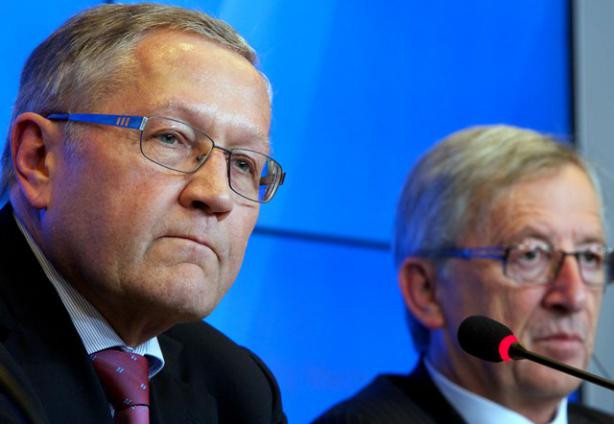
The ESM formally launched and held its inaugural board meeting in October. The Kirchberg-based organisation--helmed by Klaus Regling (photo, left), who is also chief of Europe’s temporary rescue agency EFSF--has a financial arsenal of €500 million to support troubled euro area governments, such as Greece and Portugal, and potentially Italy and Spain.
The case was handled under an “accelerated procedure” as the ESM is scheduled to begin operations next year. The Irish court referred the matter to the ECJ on August 3, with advocate general Juliane Kokott delivering her opinion on October 26, and the full panel of 27 ECJ judges delivering the court’s decision this week. Other complaints can take at least one to two years to reach this stage.
The case was number C-370/12 and the matter now returns to the Irish courts for final adjudication.