Every year, pupils in secondary schools throughout Luxembourg can spend a day in a gender-stereotyped environment to test their own vocational attitudes. Girls are typically offered placements in scientific, technical or industrial fields of work, while boys are geared towards childcare, nursing homes or healthcare.
Initially called Girls’ Day, the project was launched in 2002 by Christa Brömmel’s association Cid-Femmes, an information centre and library dedicated to women’s issues.
“Girls are influenced in their vocational choices very early on, be it in school, at home, through the media or by society in general. As long as we don’t change that, inequality will persist in the labour market,” she explains.
The boys were included in the project in 2006 but still don’t participate as readily as their counterparts.
“The so-called ‘women’s jobs’ are usually less paid and less valued, which in itself is not motivating for the boys, and many parents are unwilling to support their son’s choice, even for a day, to work in a nursery for example,” reckons Brömmel,
who handed over the organisation of the Girls’ Day Boys’ Day to Luxembourg employment bureau Adem and the education and equality ministries in 2010.
Furniture designer Norbert Brakonier is one of the professionals who will welcome students this year. “There are of course still fields where one gender dominates, but there are no jobs that are purely meant for one or the other,” he says. “We participate mainly because it is important for us to get young people interested in the crafts and show them what we do. The girls spend the day with us on the construction site and follow our projects.”
“Breaking down barriers”
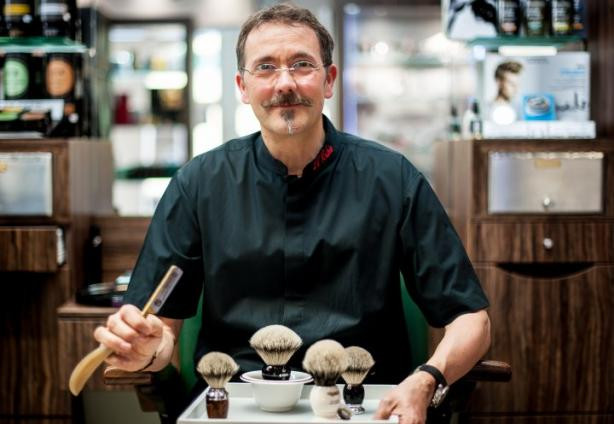
“Many people have misconceptions about a lot of trades, and lack respect for what they don’t know,” says barber and hairdresser for men Michel Rubio, who takes part in GDBD every year.
“That’s why I’m always eager to show the youngsters all the facets of my job--and there are many more than they imagine. They’re always interested in seeing my collection of razors and shaving brushes too, and how we make perfume and soap. To be honest I think it’s outdated to talk about women’s jobs and men’s jobs to promote gender equality, but it’s nice to help give these teenagers a feel of what our work is,” he states.
Brömmel admits that it’s more the discovery of the working world that attracts the students to GDBD than the actual act of “breaking down barriers”.
“It’s understandable, as they don’t get many opportunities to observe real work environments, but it wasn’t our initial intention,” she says.
“The project remains positive and important, but only takes place one day a year. It helps raise an issue but it won’t change anything. For better results, we need to provide other activities and earlier on, give teachers training in gender issues, teach children that skills and desires count, not their gender, and of course include the parents.”
Because yes, education starts at home--and according to a recent study, two-thirds of boys still think a woman’s most important role is to take care of it and cook for the family.