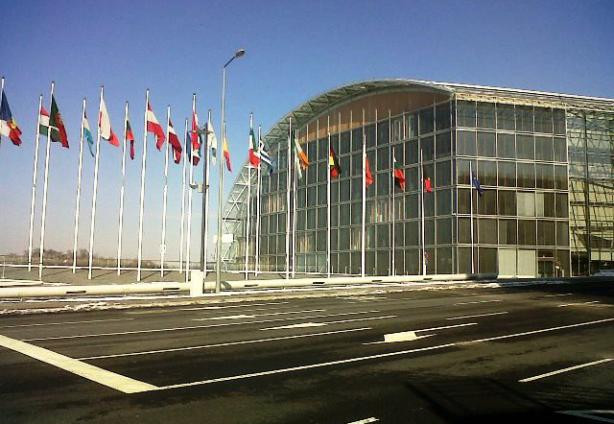
The European Investment Bank may have to pay millions of euro in new fees to Brussels or member state treasuries if the current version of a European Commission proposal is passed.
Under the present draft of the measure, the Kirchberg-based EIB, an EU-backed agency which funds economic development projects, would be liable to pay the financial transactions tax being introduced by 11 European countries, not including the Grand Duchy.
The EIB could have to pay “as much as 1.65 billion euros ($2.1 billion) in extra costs” if the so-called “Tobin tax” is implemented, according to a report last month by Bloomberg, which cited an internal commission memo the news service had seen.
A source who understands the bank leadership’s thinking told Delano that the EIB believes it is unfair that the bank would be expected to pay the FTT. That is because the strain on the EIB’s budget would come at the very same time the bank is being asked by the European Commission and EU governments to do more to help jumpstart the European economy.
In addition, an exemption has already been carved out for other EU institutions--such as the European Central Bank and European Stability Mechanism--and sovereign debt issues by member states, the source explained.
A spokeswoman for the EIB declined to comment for this article.
Unintended consequences
“The EIB issue is one example of the current FTT proposal’s potential unintended consequences”, Dan Alamariu of political risk consultancy Eurasia Group told Delano on Wednesday. While he could not predict the potential impact on the EIB’s budget, “the broader issue seems to be that many institutions, as well as EU states, increasingly realise that the current proposal will have costs well in excess of what the European Commission has initially estimated.”
“The current proposal has been largely driven by political and revenue-raising considerations, but as such unexpected costs become evident this strengthens the rationale for why the current proposal will be watered-down: the 11 EU states involved are unlikely to agree to an FTT that would have significant negative economic impact, especially given their difficult economic conditions,” according to Alamariu.
A spokeswoman for Luxembourg’s finance ministry also declined to comment for this article.
However finance minister Luc Frieden has previously stated that the Grand Duchy opposes a regional FTT, but could support one at a global level, due to the risk of capital flight and a “fragmentation” of the single European market.
No exemption is made for financial intermediaries--institutions that handle each of the interlocking steps in trades--creating a “cascading effect” of ever-mounting charges, he noted in May.
Such charges would ultimately be passed to consumers, investment fund executives have repeatedly stressed during industry conferences and press interviews.
As of this writing, a spokeswoman for European tax commissioner Algirdas Semeta had not returned Delano’s message seeking comment.
However, Alamariu said the EIB will probably be taken into account during future talks in Brussels. “Given its mandate and role within the EU, it is likely to gain some exemption from the FTT.”