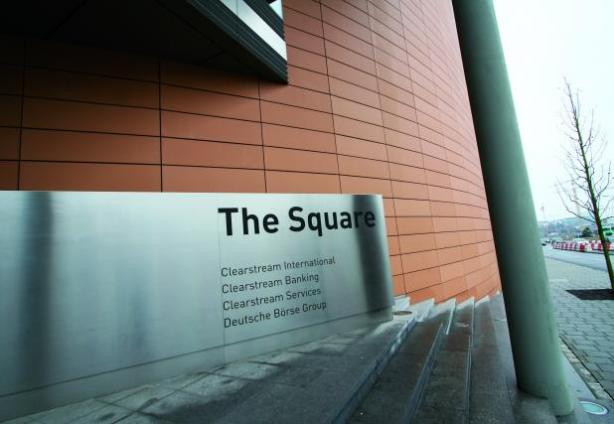
Deutsche Börse, parent of Luxembourg-based Clearstream, had hoped the deal would cement its place as a global trading powerhouse. But Brussels blocked the marriage on anti-competition grounds.
The deal “would have resulted in a quasi-monopoly in the area of European financial derivatives traded globally on exchanges,” the commission said in a press statement. “Together, the two exchanges control more than 90 percent of global trade in these products.”
“These markets are at the heart of the financial system and it is crucial for the whole European economy that they remain competitive,” Joaquín Almunia, the commission’s vice president and competition commissioner said.
The companies had proposed spinning off NYSE’s Liffe unit, which competes with Eurex, the Zurich-based exchange that is 50 percent owned by Deutsche Börse.
That “fell far short of resolving the concerns,” according to Almunia. “The divested assets would be too small and not diversified enough to be viable on a stand-alone basis.”
“The European Commission’s decision is highly regrettable and very hard to comprehend,” Manfred Gentz, chair of Deutsche Börse’s supervisory board, said in a statement emailed to Delano by a company spokesman. “It negates the existing, fast-growing global competition among exchanges and it contradicts reality in putting up a strict separation between the exchange-traded and OTC derivatives markets. For Europe, the decision squanders a great opportunity to create a globally competitive exchange based in Europe and Germany and with a strong US partner.
In October, Luxembourg’s financial regulator CSSF approved the merger, after Germany’s BaFin and three US agencies--CFIUS, DOJ and SEC--had already OK’d the deal.
The German company said it is business as usual for the moment. “Deutsche Börse will pursue and expand its proven business model,” Gentz stated. “It is a healthy company that will also be presenting very sound business results for 2011. There are no grounds for any fundamental shift in terms of our strategy, organizational structure or management.”