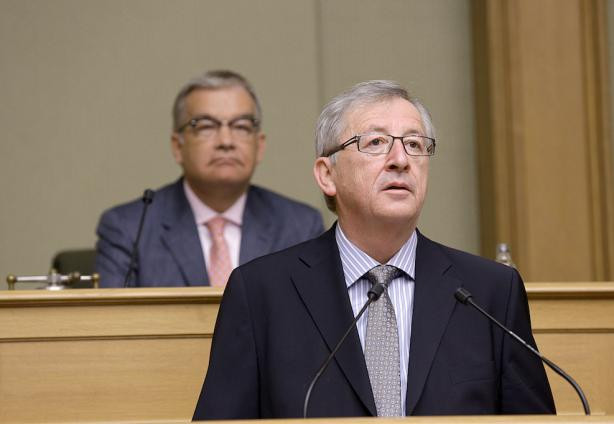
Wednesday afternoon the Chamber of Deputies will debate the report by the parliamentary commission of inquiry into the workings of the Luxembourg secret service (SREL). Prime minister Jean-Claude Juncker has already booked two hours of the planned eight-hour session to address parliament on his reaction to the commission’s report, which has laid much of the blame on his shoulders for failing to properly manage the SREL (as the minister of state, the SREL falls under his portfolio).
The report claims that the secret service was almost a law unto itself. It stands accused of phone tapping and bugging individuals at will--including the prime minister himself during a meeting with then SREL boss Marco Mille using his now infamous voice recording wristwatch--and colluding in all manner of corruption.
The fall out vice-chairman of the committee, François Bausch of the Greens, has already said that “the prime minister’s political responsibility is indisputable” when he commented on the report’s findings. He said that should Juncker fail to take personal responsibility of any kind, then the opposition factions will take the initiative--an indication that they may submit another motion of no confidence in the government and even in Juncker himself.
Last month similar motions against the government and former justice minister Luc Frieden failed because they did not receive the support of the junior coalition partner LSAP. However the chairman of the committee, LSAP deputy Alex Bodry (a former minister for the armed forces) has said he expects Juncker to deliver a “mea culpa” and a “strong gesture” from the premier.
Most commentators in Luxembourg are expecting Juncker to tell parliament that he did indeed neglect the secret service and that he will resign as a consequence. Foreign media, too, have reported that Juncker--at 18 years, the longest serving democratically elected head of government in the world--will step down and that a general election will be called.
The most likely date for the new election is October 20--meaning that the Grand Duchy will effectively have no government for three months (conveniently during the two-month parliamentary recess for summer).
Speculation will then turn to whether Juncker will lead his CSV party into the election. There is no obvious successor to the prime minister now that Frieden has also come under severe criticism from opposition parties for allegedly interfering in the Bommeleeër investigation.
But the party’s parliamentary faction leader, Michel Wolter (himself the subject of media outrage after supposedly calling for a radio station to reveal its sources in a leak linked to the Frieden allegations) has said that Juncker will be at the head of the CSV list whether elections are called for October or, as scheduled, for May 2014.