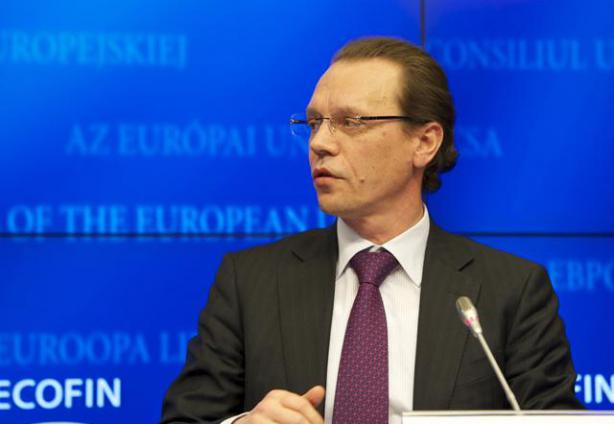
“The day of isolated tax policy is over”, Algirdas Šemeta, European tax commissioner, has said in a speech. He told an Irish think tank that more coordinated fiscal policies would boost both Europe’s competitiveness and its sense of social equity.
While conceding that tax systems and tax rates largely remain the purview of member states, “with our extremely interconnected economies, working in isolation doesn’t pay off,” Šemeta told the Institute of International and European Affairs in Dublin on Friday. “I truly believe that there is immense added-value to tax coordination at EU level.”
“Tax evasion and avoidance deprive member states of up to €1 trillion every year,” Lithuania’s European commissioner estimated. “This not only means the loss of much needed revenue, it also undermines fairness.”
Cross-border corporate tax
Šemeta called for action to be taken against “aggressive tax planning”: “Loopholes and mismatches in the single market should not lead to situations of ‘de facto’ non-taxation.”
In recent months, multinational corporations--including Amazon, Google and Starbucks--have been the focus of tax avoidance inquiries, with the EU, Britain, France, Germany and US--among others--placing the companies’ cross-border tax practices under fire.
Many of the firms under the microscope have regional operations in Luxembourg, which has lower corporate tax rates and simpler administrative processes than in many other EU countries.
“Improving the business tax environment is a central issue for competitiveness of the EU: investors need stability, legal certainty, less administrative burden and less compliance costs,” Šemeta said on Friday.
“That is why I proposed a common consolidated corporate tax base. Its purpose is to offer cross-border businesses cheaper and easier access to the single market, not to introduce any tax rate harmonisation.”
Valued added tax
Harmonised EU-wide VAT rates will come into effect in 2015, eliminating Luxembourg’s advantage in many types of cross-border sales. The European tax commissioner said that new EU rules on invoicing that went into effect on January 1 will help small businesses simplify their tax filings and improve cash flow. Šemeta said the European Commission would present “a proposal for standardising the VAT return” later this year.
Energy tax
The Grand Duchy may also have to review its petrol duties, which are lower than neighbouring countries. The commissioner told the Irish think tank that he has “proposed a review of the directive on taxation of energy products. It would introduce a formula putting all fuels on an equal footing taxing them on the basis of their energy content and CO2 emissions.”
Financial transaction tax
In addition, Šemeta argued in favour of the financial transaction tax currently being adapted by 11 European countries, not including the Grand Duchy, whose funds sector is nevertheless likely to be impacted by the future tax.
“We all know that member states and the EU intervened massively to rescue the financial sector. Meanwhile, this same sector carries a disproportionately lower tax burden than other sectors in our society.”
“The FTT will redress the balance, and ensure that the financial sector makes a fair contribution to public finances. In addition to this, it will deliver significant new revenues that could be channelled into growth-promoting measures, for the benefit of all,” Šemeta contended.