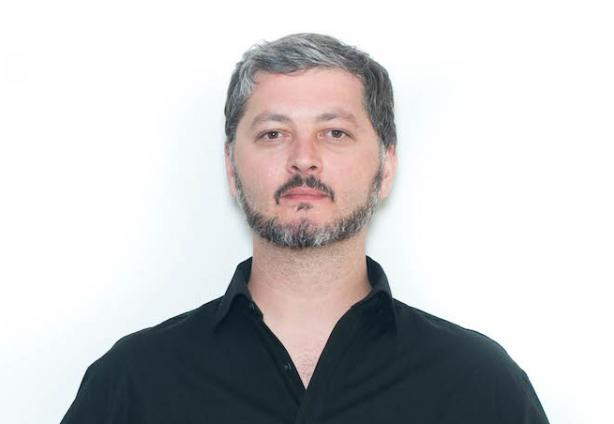
When I was asked to write an article about the views of AHA on the agreement between the government and religious institutions in Luxembourg and the [referendum] question, I had briefly considered this issue resolved because of the government’s decision to remove one of the essential questions for the Luxembourgish people from the ballot [ed. note: see this month’s cover story].
However, if you’re an avid follower of recent developments, things may look a bit different. Let me very briefly point out some of the main pillars of the current debate. On the one hand, the government has displayed a broad consensus towards an evolving society by significantly and outspokenly reducing faith-based ceremonies and traditions. On the other hand, as our society has moved forward in recent decades, rigid landmarks have persisted and it was only a matter of time before a critical mass would develop to claim a fairer and less discriminating policy towards every individual.
The ongoing debate surrounding the withdrawal of that important referendum question suggests that the churches were afraid of the revealingly low number of supporters the ballot would expose and therefore forced themselves into negotiations. Despite the pretence of a clear division between the secular and religious worlds, however, the Catholic church might still be up to something.
The recent agreement suggests that churches (mainly Catholic) will still be funded, while the amount will progressively decrease each year. For decades, there has been a mystery around the financial situation of the clergy.
The archdiocese itself is in debt, but hundreds of smaller associations, congregations and foundations have been hoarding financial benefits and property. Part of the new deal involves the creation of a global fund, where the assets, originating from taxes, of all these structures would be merged, thus increasing the transparency of the clergy’s financial situation. But then again, this has yet to be put into regulations.
Religious education
The removal of religious education in both primary and secondary school will be of the utmost importance for us as a civil society with secular tendencies. Religious practice in Luxembourg has always been tightly linked to the exposure to religious rites at young age, public schools being a place where the church could interact directly with juveniles and young adults.
Although the current roadmap foresees the creation of a new school subject roughly translated as “civic and social life”, including the teaching of religious beliefs without the missionary component, by the end of 2016, the Cercle de Coopération des Associations Laïques, a union of secular groups in which AHA is involved, states that some of the people behind the implementation of that curriculum remain utterly connected to the Catholic church.
Even the mediator, Jürgen Oelkers, a professor of pedagogy who was involved in the creation of a similar project in Switzerland, seems biased since he clearly favours an emphasis on religious instead of secular and global values as stated during his presentation in March 2015.
As we can see, a lot of work remains. It has always been one of our primary visions that one day, we could leave a society to our children or grandchildren in which science and kindness and not religion are used to find a purpose in life.
Jérôme Faber sits on the board of the Alliance of Humanists, Atheists and Agnostics of Luxembourg.