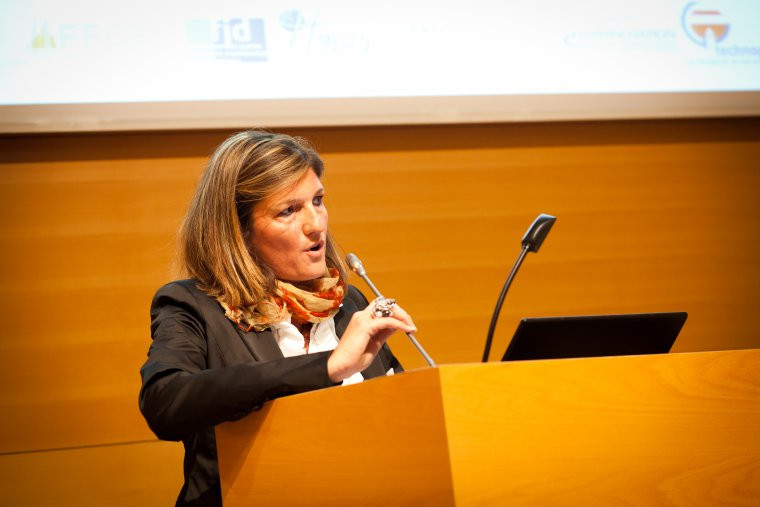


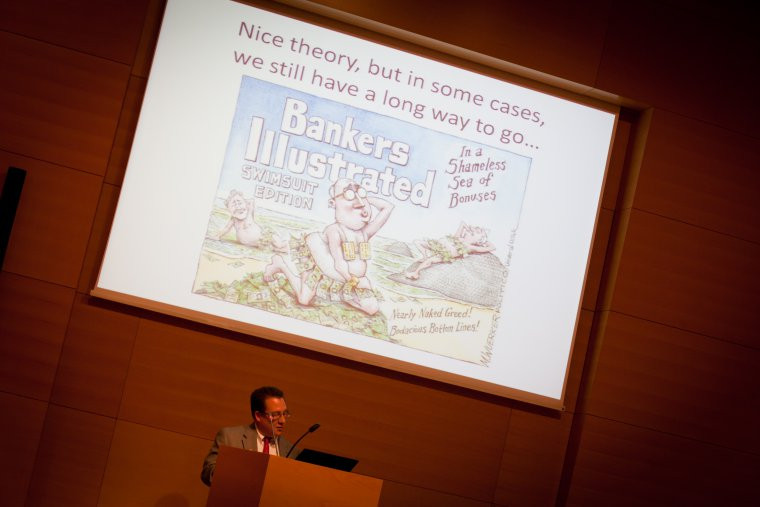

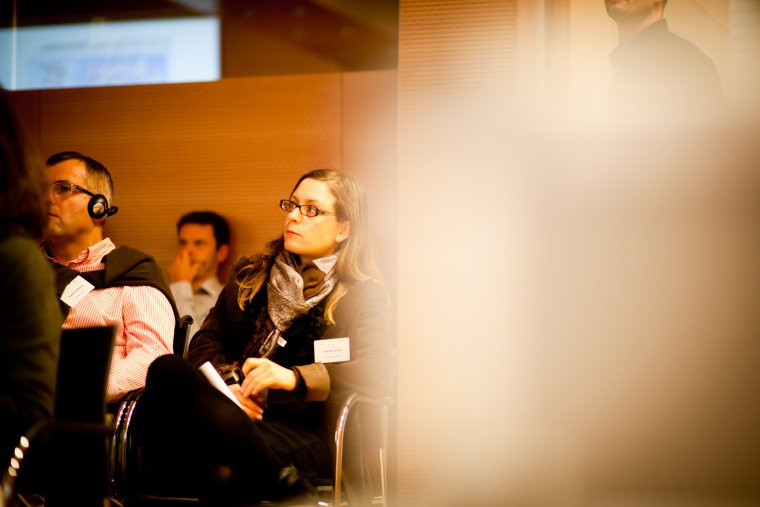
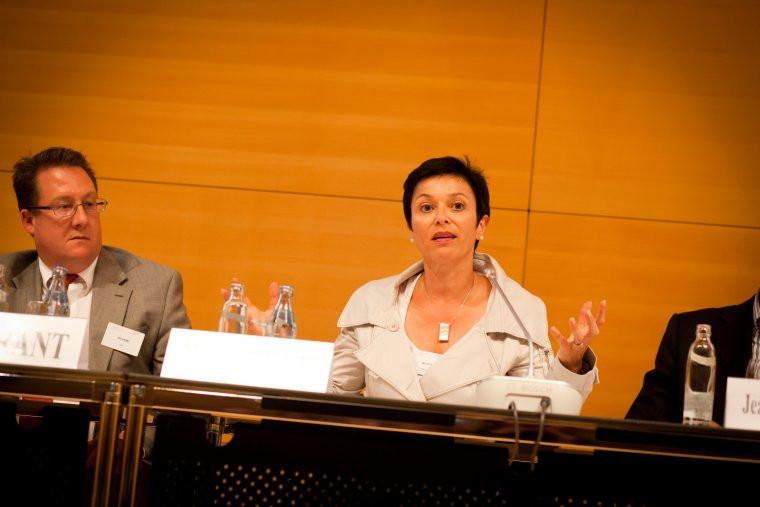

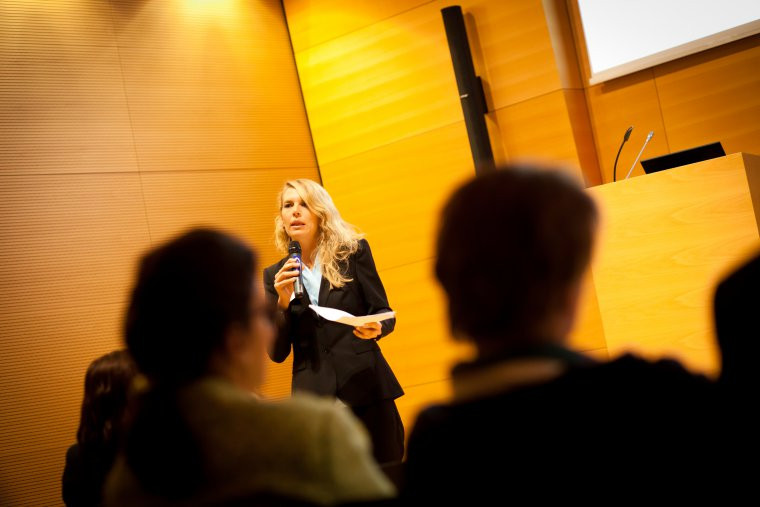

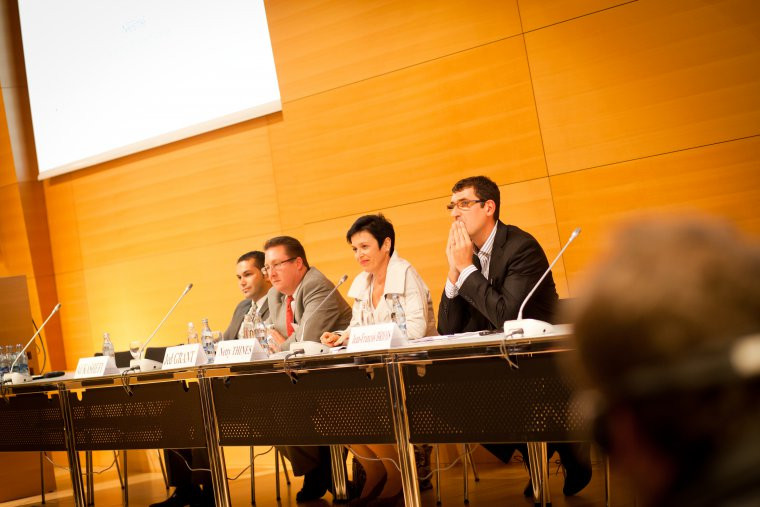


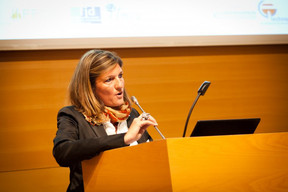

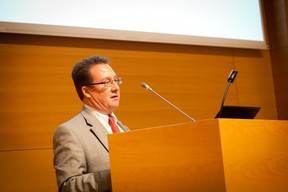
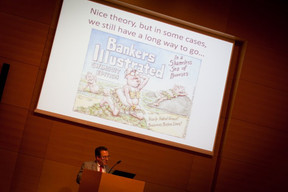

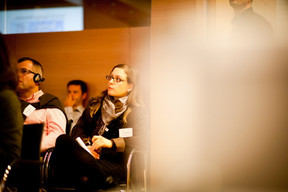
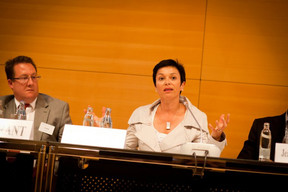



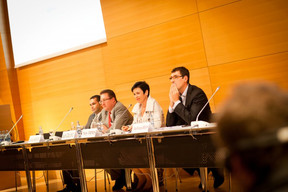


The conference brought together representatives from academia, business and from NGOs to exchange CSR best practices.
Since the early 1990s--and to a greater extent since the global financial crisis that started in 2008-- increased concerns about everything from the environment and working conditions in the developing world, to corporate scandals and economic uncertainty has turned CSR into a mainstream consumer topic, roundtable participants noted.
In fact, these days firms without a CSR programme are likely to be at a competitive disadvantage, one presenter argued.
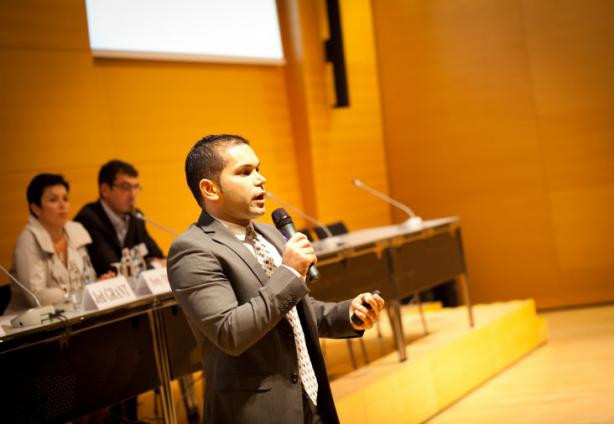
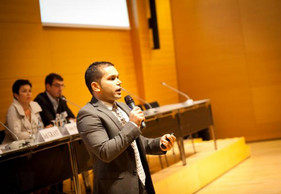
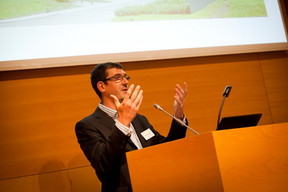
“Soon, maybe by 2014, if companies don’t care about CSR or include CSR as part of their business, they will lose the battle of competition,” keynote speaker Ali Kashefi, a PhD student at Bielefeld Graduate School of Economics and Management, told Delano before the conference. “So it’s important for companies to care about CSR and to include CSR as part of their business strategy.”
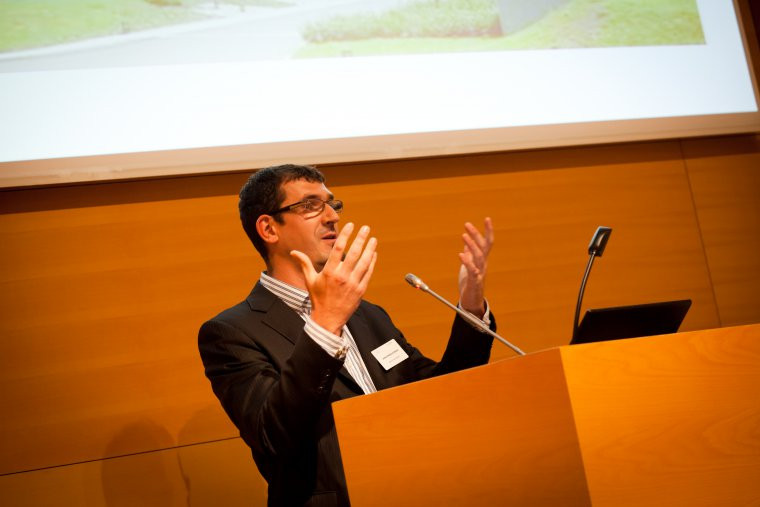
Kashefi (first photo above) said the aim of his presentation was to demonstrate how “you can create value for society and still make money and satisfy stakeholders. CSR is not [just] a cost, it’s not charity; it’s an opportunity and a source of innovation.”
He cited the example of the Toyota Prius, which emits ten percent fewer pollutants and uses 50 percent less gas, benefiting both the environment and consumers’ wallets. “So it creates shared value for business and for society.” It has been hugely successful for the Japanese automaker since its 2004 introduction, Kashefi observed. “Toyota gets a competitive advantage, and several companies, like Ford, are trying to follow and even license the technology from Toyota. [So CSR] could potentially be an opportunity for your company.”
He said that today small and medium sized firms can incorporate well-established principles into their own operations.
At the same time, CSR could be considered a threat if a firm’s programme is just “used as marketing.”
The conference was organised by the chamber’s BusinessMentoring programme with the European Network of Female Entrepreneurship Ambassadors Luxembourg (FEALU) and The Institute for Global Financial Integrity.