The number of international residents living in Luxembourg City increased from about half to nearly two-thirds of the total population between 2001 and 2011, with the numbers of French, Germans and Poles growing significantly, a pair of reports issued this month have found.
Indeed, only four of the city’s 24 districts was home to a majority of Luxembourg citizens, according to an analysis of the 2011 census by Statec, the Grand Duchy’s official statistics bureau, and the University of Luxembourg.
Non-Luxembourg passport holders represented 61,671 of all the capital’s residents, or 64.9% of the total population. That figure was up 49.9% from 2001.
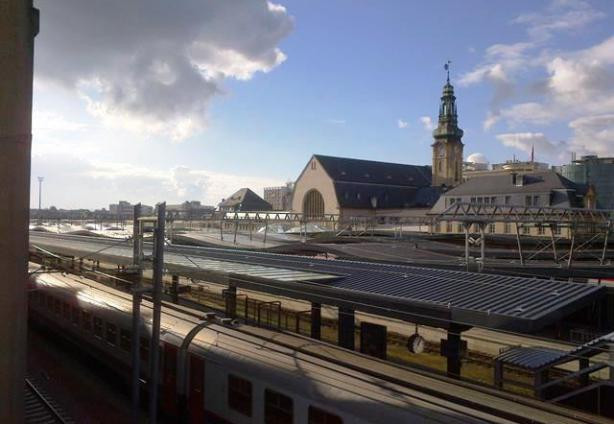
The Gare district was home to the largest proportion of international residents. In 2011, 81.6% of its inhabitants were foreign nationals, compared to 69% ten years prior.
Kirchberg (73.8%), Hollerich (70.7%) and Limpertsberg (69.9%) had the next highest proportions of foreign residents.
Cents had lowest ratio of non-native residents, 42.4%, although that figure more than doubled over the preceding ten years, the statistics agency and university said.
Hamm (46.8), Pfaffenthal (49.3%) and Cessange (49.8%) were the only other three districts that had an international population under 50% in 2011.
Luxembourgers still largest nationality
Overall Luxembourgers remained the largest nationality in the capital, representing 35.1% of the total population in 2011, although that figure was down by 6% over the preceding ten years.
The second largest nationality was Portuguese (14.3% of total residents, up 8% compared to 2001), followed by French (14.1%, up 105.1%).
The top ten was rounded out by Italians (6%, up 13.8%), Belgians (4.1%, up 38.9%), Germans (3.7%, up 53.7%), British (2.1%, up 42.7%), Spanish (1.8%, up 57.3%), Swedish (1%, up 55.2%) and Polish (1%, up 691.8%).
Limpertsberg highest educational level
Limpertsberg--home to the University of Luxembourg’s largest campus--had the highest average level of education, with 67.5% of its inhabitants successfully completing secondary or technical school, followed by Belair (65.6%) and Kirchberg (65.2%).
The figures only included residents aged 14 and over, excluding students.
The lowest rate was found in Pfaffenthal, with 23.4% of residents holding higher education qualifications, while the second and third lowest averages were found in Hamm (29.3%) and Bonnevoie-Sud (31.2%), and the city-wide average was 47.9%.
The foreigner-rich Gare district’s proportion was 42.2%.
In 2011, Luxembourg City’s total population was 95,058, although it surpassed six-figures last October.
Statec released both reports on August 12.