The EU’s top court has ruled against the UK’s secret immigration courts, saying the British government must prove the need to withhold evidence from the accused.
Britain’s regular courts are responsible for guaranteeing that defendants are “informed of the essence of the grounds which constitute the basis of” the cloistered tribunal’s decisions, and “of drawing the appropriate conclusions from any failure to comply with that obligation”, the European Court of Justice in Kirchberg has ruled.
The case revolves a French-Algerian dual national, identified as “ZZ” in court papers. Married to a British citizen since 1990, he lived in the UK from 1990 to 2005. However, in August 2005 the British government “cancelled his right of residence on the ground that his presence was not conducive to the public good”, according to court documents.
Thirteen months later, ZZ attempted to return to the UK, but was denied entry. He appealed this decision to Britain’s Special Immigration Appeals Commission, which hears cases that are decided on the “basis of information whose disclosure would be liable to prejudice national security”.
He is alleged to have been active in the Armed Islamic Group (GIA), a terrorist group that unsuccessfully tried to overthrow Algeria’s military dictatorship in the 1990s.
Persons making appeals to the SAIC are not entitled to appoint their own lawyers. Instead, the government names “special advocates” to represent their interests. The special advocates have access to the government’s confidential evidence, but cannot disclose this information to the accused without approval from the commission.
The SAIC dismissed ZZ’s appeal, giving a detailed explanation to his two special advocates in a “closed judgement” and a redacted summary in an “open judgement”, which was the only one delivered to ZZ.
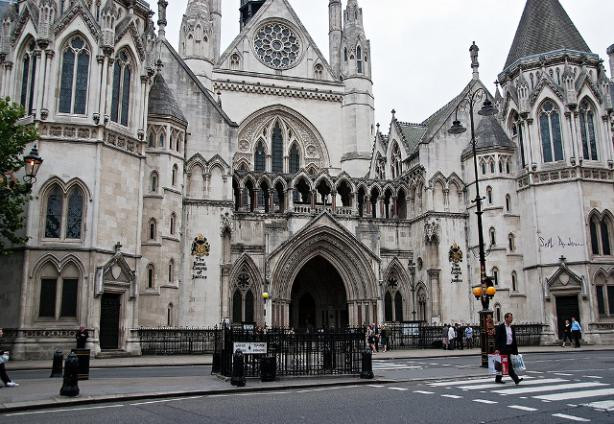
He then appealed the SIAC decision to the Court of Appeal of England and Wales (photo), which subsequently asked the ECJ “to what extent SIAC is obliged to inform the person concerned of the public security grounds which constitute the basis of a decision refusing entry” under European law.
“Must be informed”
On Tuesday, the EU’s top court said the norms of due process still applied to the secret immigration tribunals.
Under European law, “the person concerned must be notified in writing of a decision refusing entry, and in such a way that he is able to comprehend its content and the implications for him. In addition, he must be informed, precisely and in full, of the public policy or public security grounds which constitute the basis of the decision, unless this is contrary to the interests of state security.”
In order to legally withhold evidence, the ECJ judges said the governments of member states “must prove that state security would in fact be compromised by precise and full disclosure of the grounds to the person concerned”, and that there was no automatic “presumption” that national authorities are correct in refusing to detail thier evidence.
If state security is not endangered, and government authorities do not present “the missing grounds and evidence to the person concerned”, then national courts should examine the case only based on the publically available information.
On the other hand, if there are legitimate state security issues, then “the person concerned must be informed of the essence of the grounds on which a decision refusing entry is based, as the necessary protection of state security cannot have the effect of denying him his right to be heard and, therefore, of rendering his right of redress ineffective”, the court said.
The matter now returns to the Court of Appeal in London for adjudication.
The case is number C-300/11 (ZZ v Secretary of State for the Home Department).