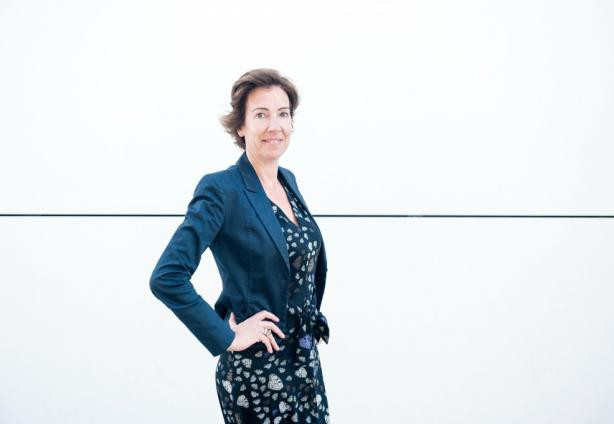
Natalie A. Gerhardstein: This year’s 3rd International Systems Biomedicine Symposium, jointly organised by the University of Luxembourg’s LCSB and the EuroBioForum Foundation, focuses on “Big data in health care--challenges, innovations and implementation”. How did the idea come about?
Erica Monfardini: For this year’s symposium, we wanted to include different stakeholders such as investors, researchers, industry players and policy makers. The LCSB has the acquired experience and network to bring high-profile speakers to this event.
Luxembourg is the perfect country for talking about big data in healthcare, and this is a unique occasion to prove that the country can serve as a pilot in this domain. We are small, fast and well integrated at the ICT level. The Fonds National de la Recherche Luxembourg [national research fund] has funded its first National Centre of Excellence in Research project on Parkinson’s disease, and the data coming out of that pilot project can be analysed and integrated so patients would ultimately profit from the project. This would also increase Luxembourg’s standing on the world map in biomedicine.
Why is the application of big data in healthcare lagging? Is privacy the main concern?
Big data in healthcare is, indeed, very complex, as it involves privacy and security issues, as well as the challenge of integrating data from many sources. Such issues can’t be addressed only by academic researchers and academia or industry players. It’s not simple to organise such an event or get all [the] stakeholders together: patients provide data, but data is normally owned by social security systems or hospitals. Therefore, policy makers also have to be [one of the] stakeholders who really want to work, and need to get involved, together in order to let the appropriate researchers handle the data and enable doctors to provide better care. Our symposium will approach such issues in a collaborative way.
Do you anticipate that this symposium will help attract top talent to Luxembourg in the biomedical field?
Yes, we hope to attract new talent. In Luxembourg we have a strong ICT industry. Systems biomedicine research is [at] the forefront between medicine and ICT. Industry partners and investors are important, but we also need the endorsement of policymakers. Very specific profiles are needed. For example, someone that has worked in a lab may have to also manage and finalise contracts with industry partners. It’s important for us to continue with the very active technology transfer function within the university and the LCSB--and we do our best not to work in silos but to truly promote interdisciplinary research.
Your professional experience combines science and business. How could these two fields work more seamlessly together?
This idea is something very dear to me, as well as to the LCSB. The collaboration of science and business is quite difficult to achieve because objectives are not always aligned. We need an entrepreneurial spirit not just within the LCSB but also within Luxembourg at large. That mindset relates a lot to education, the willingness to take risks and, with that, learning from mistakes. Of course, we need people who understand what potential customers want and who start the conversation on new technologies. But business acumen also requires a lot of motivation, as well as the understanding that innovation is a complex matter. We need to create an environment in which entrepreneurs can thrive while trying to understand how such endeavours can add value for multiple stakeholders.
ERICA MONFARDINI
She is director of operations at the Luxembourg Centre for Systems Biomedicine, part of the University of Luxembourg. One of her main objectives is to develop scientific innovations into biomedical and ICT applications through supporting entrepreneurship, the creation of spinoff companies and licensing of intellectual property. Monfardini graduated in veterinary medicine from the University of Milan in Italy and earned a PhD in veterinary medicine at the University of Gent.
EVENT
The 3rd International Systems Biomedicine Symposium will take place on 28-29 October. The conference will critically review current scientific knowledge in the field, as well as explore the life cycle and implications of big data in healthcare.