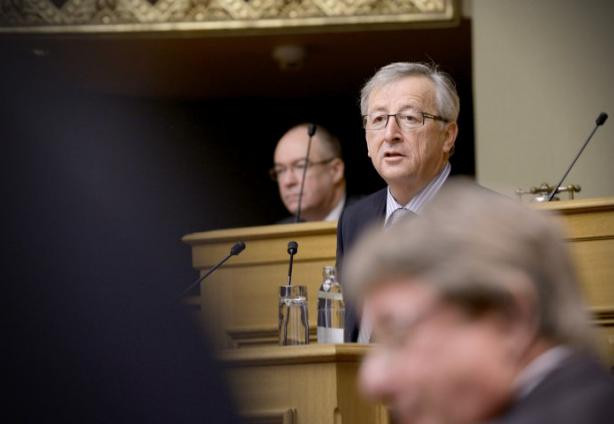
The Grand Duchy will begin automatic cooperation with tax authorities in the EU and US, the prime minister has said in his annual “state of the nation” address.
Starting on January 1, 2015, only Luxembourg residents will continue to benefit from the current, anonymous withholding tax system, Jean-Claude Juncker told parliament on Wednesday. Non-residents with financial assets in the Grand Duchy will no longer be protected by bank secrecy, he announced during a roughly hour and a half speech.
The government took the decision in light of the US tax avoidance scheme FATCA, which takes effect on January 1, 2014, as Luxembourg could neither opt-out of the American financial system nor stand idle while several other European countries have signed bilateral agreements with Washington on implementing the measure, he explained.
Of the 27 member states, only Austria would remain outside the information exchange system set-up via the ten-year old EU Savings Directive, although Vienna is currently debating the issue.
The prime minster reckoned that the Grand Duchy’s financial industry is prepared to change, and enhanced tax cooperation should not have a significant impact of the future of the sector, which represents more than a third of government budget revenues.
In recent weeks, the Grand Duchy’s financial sector has also come under criticism for being dangerously oversized, which the government has rebutted.
Budget
Juncker acknowledged that the government will be unable to achieve its goal of a balanced budget next year. He proposed spending cuts totaling between €250 and 300 million per year. The budget measures, which have not yet been officially proposed in parliament, would reduce the overall budget balance and the national government’s current account deficit to below 1% in 2016, he said.
The government does not intend to go beyond these reductions because the impact on growth and unemployment would be too great, Juncker noted.
Spending on research, innovation and the University of Luxembourg would be increased.
VAT
To help close the budget gap, value added tax will rise starting in 2015, the prime minister said. Currently 15% in most categories, Juncker said VAT would nonetheless remain lower than in other European states.
Under EU rules, VAT will be charged based on the customer’s country of residence rather than the supplier’s beginning in 2015, meaning that Luxembourg will, regardless of its own VAT rate, lose a cross-border competitive advantage in many cases.