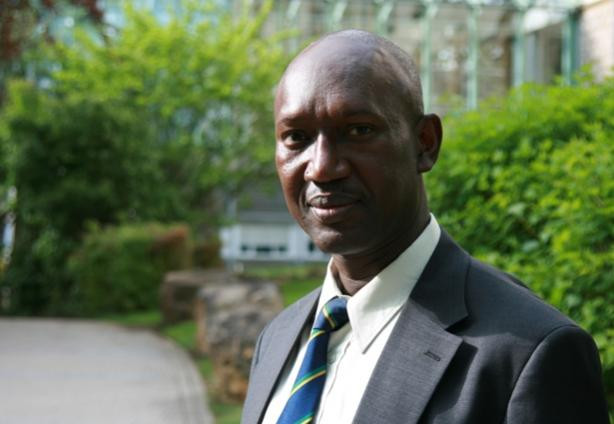
Dr. Issa Sacko--professor at the University of Bamako and director of international development think tank CEDIMES-Mali--finished his second guest lecture series at the University of Luxembourg on Friday. The professor spoke with Delano about economic relations between the EU and developing countries, and why Brussels needs to conclude the current round of trade talks.
AG: What is the objective of the economic agreements between the EU and the African, Caribbean and Pacific group of countries?
IS: One may say that between the EU and the ACP countries there are several agreements and conventions which don’t address the same specific objectives, although one can argue that the overall objective still remains the development of the ACP countries.
That said, it may be worthwhile to mention the Cotonou Agreement which replaced the Lomé Conventions [in 2000]. The main objective of the Cotonou Agreement is the sustainable development of the ACP countries and their integration into the global economy. These objectives require the reinforcement of regional economic integration and the eradication of poverty in the ACP countries.
AG: What is the main challenge and what is the main opportunity for West African countries, under the EU-ACP programme?
IS: I think that right now the main challenge is to sign the Economic Partnership Agreement between the EU and West Africa [ed. note: several rounds of negotiations have been scheduled to take place in Brussels throughout 2012].
The main opportunity ahead is to strengthen and deepen integration in West Africa. This could give more chances for the development of all countries within this region.
AG: At the same time, what is the main challenge and what is the main opportunity for European countries?
IS: The challenge for the EU is to sign an Economic Partnership Agreement with West Africa, which would serve as a real driver for development in this region. This is a deeply integrated region and such an agreement will trigger a real development process, which in turn will provide the EU with a partner in a win-win relationship.