The European Court of Auditors has approved last year’s EU accounts, but said more could be done to ensure spending met intended programme goals and made an impact, and that financial promises are expanding faster than Europe’s budget.
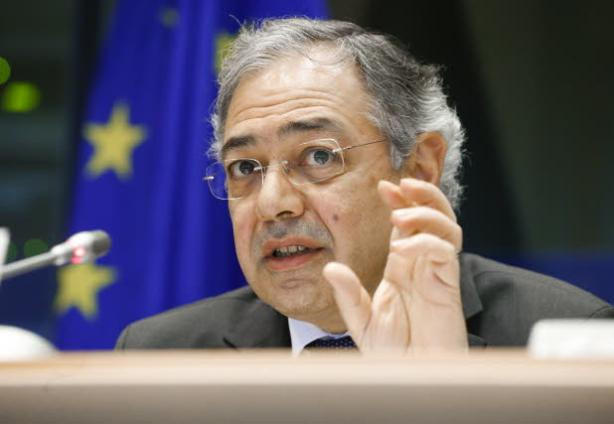
In 2013 EU institutions spent around €290 per EU citizen, or more than €148 billion, which “is more than 18 out of the 28 governments of the member states spend each year,” Vítor Caldeira, the ECA’s president, said in prepared comments to the European Parliament on Wednesday.
0.1% fewer payment errors
He told MEPs the ECA has “signed off a clean audit opinion on the reliability of 2013 EU accounts prepared by the [European] Commission.” Last year’s estimated “overall error rate for payments” was 4.7%, down slightly from 4.8% in 2012, but still more than double the ECA’s benchmark of 2%.
In its 2013 report [PDF], issued Wednesday, the EU’s official audit agency said its estimated error rate “is not a measure of fraud, inefficiency or waste”, but merely represents the payments made without correctly following public spending rules.
European institutions on the whole meet their spending objectives, but Caldeira pointed out to MEPs: “our report says EU financial management was not yet good enough overall. The EU spends its budget but there is still significant room for further improving how those funds are spent.”
He called for European officials to increasingly focus on the effectiveness of European spending. Over the past seven years, Caldeira said, “the managers of EU funds focused primarily on spending the money available, secondly on complying with the rules, and only then--and to a comparatively limited extent--did they focus on achieving results and impact.”
Growing liabilities
He also warned of a budgetary backlog, with €322 billion in “outstanding financial commitments and other liabilities” at the end of last year, and that “the figure is likely to rise as the 2014 budget provides for more commitments to be made than payments.”
“These ‘overhanging’ financial obligations are a matter of particular concern because, for the first time, payment ceilings are set to remain broadly stable in real terms for a number of years,” Caldeira warned.