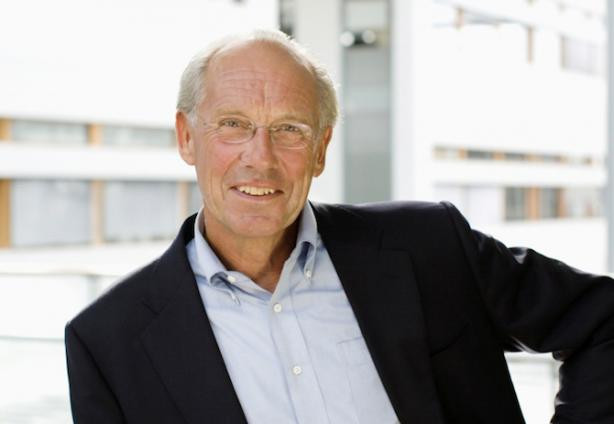
BI Norwegian Business School professor Jørgen Randers, one of the most influential environmentalists of our times, will be in Luxembourg this Wednesday to give his global forecast for the next 40 years at a conference organised by Mouvement Ecologique at the Coque at 6:30 p.m.
Last week, he spoke about why he wrote 2052--A Global Forecast for the Next Forty Years and economic development. Today Randers addresses the cities and countries of the future:
How do you think the United States will fare?
JR: “I think the United States is in for a long period of stagnation. Forty years down the line, the purchasing power of the average American will be more or less the same as it is today. This stagnation will make it simpler for other nations to catch up with the United States. For example, I believe that the per capita consumption in China in 2052 will be at least two thirds of that of US citizens. For all practical purposes they will be ‘equally rich’.
“The reason for this is first that the United States is the most mature economy of the world, and will have increasing difficulties in sustaining growth in its productivity. It is more difficult to increase productivity in services and care, than in manufacturing. But this is still what the United States must do.
“Secondly, the decision-making capacity of the American society is sadly lacking. The nation has developed an antagonistic culture, which makes it near impossible to pass even the most obvious legislation. Its deep distrust of a strong state will make the United States dysfunctional in an era where a strong government is what is needed.
“And thirdly, high levels of the internal inequity will make it even harder to achieve the peaceful restructuring--for example the shift from consumption to investment which is necessary to reduce the huge US national debt.
“So all in all, the US will move sideways over the next 40 years. And this will not be due to resource constraints or inclement weather. It will be due to inadequate societal decision making.”
How do you think the European Union will fare?
JR: “Europe will see many of the same developments as the United States, but much softened by a stronger tradition of strong government, helped by better social safety nets. Europe will be facing the same problems of maturing economies, accentuated by scarcity of some resources, but Europe’s ability to handle its challenges is stronger than that of the United States, I believe.
“This does not mean that the decision-making of the European Union is perfect and smooth, but it is still faster than the American variant. And Europe has a better, although far from perfect, ability to handle distributional inequity--as well as an economic structure that limits its external debt.
“As a result I believe that per capita consumption levels in Europe will grow some towards 2052, although not much. But Europe will lead the United States in shifting toward a climate-friendly economy.”
In 2052 you describe a group of countries as the BRISE group (Brazil, Russia, India, South Africa and ten other big emerging economies). How do you think they will fare?
JR: “These countries contain some 2.5 billion people and there will be great variation within the group, but I think that on average this group will progress at historical rates, so that its GDP will treble over the next 40 years, about the same as it did over the last forty years.
“This will feel like ‘progress as usual’ and will not be take-off China style--except in a few of the centrally controlled countries in BRISE)--nor will it make its citizens particularly rich by 2052.
“The advantage to the rest of the world is that this ‘normal’ growth rate will help limit the growth in the human ecological footprint, and help postpone the climate crisis.”
You describe in the book how we are currently “overshooting” the earth’s resources. How far will we overshoot before we begin to contract, and what will be the impact?
JR: “Humanity has already overshot a number of limits, and in some cases we will see local collapse before 2052. One example is the likely loss of coral reefs; another is the likely loss of the tuna. But the most worrisome overshoot is that caused by our ongoing overshoot in climate gas emissions--one approaching global collapse.
“We are emitting twice as much greenhouse gases every year as is being absorbed by the world’s forests and oceans. This overshoot will worsen and not peak until 2030 in my forecast. Only then will humanity begin to reduce its annual global emissions--because only then will the ongoing human effort to reduce energy use per unit of GDP and the carbon emissions per unit of energy be so successful that global emissions will go down in spite of continued growth in GDP.”
“The effect of this overshoot will be a significant increase of CO2 in the atmosphere, with consequent warming. And sadly, enough warming by 2080 that it is likely that we will trigger self-reinforcing climate change. For example, as the tundra melts it will emit huge amounts of methane, which will further warm the atmosphere and melt even more tundra. This process will not stop until all tundra has melted and the world has become ‘unpleasantly’ warm.
“Some will be surprised that I do not think humanity will overshoot conventional resource limits--for example oil, food, water--by 2052. The main reason is that I believe the human economy will grow much more slowly than most people think. Hence we will have better time to evolve substitutes for scarce resources. The lower-than-expected GDP means lower use of resources.”
Most of us have heard that population will grow to 9 billion by mid century. What does your forecast show?
JR: “I forecast the world population to peak at 8.1 billion in 2042. After that it will decline rapidly and be back to current levels by around 2075.
“Much of the decline will be due to increasing urbanisation. As more of the developing world industrializes, more and more of us will live in cities that will be increasingly densely populated. People living in cities, both in rich and poor countries, will choose to have fewer babies. The trend has already been clear for decades, and will accelerate as it becomes less and less attractive to have children--either because it makes life difficult for parents with formal jobs or because it simply increases family cost without increasing family income when you live in an urban area. The downwards trend in fertility will more than compensate for the gradual increase in life expectancy which will be caused by better health care.
“My forecast is similar to the lowest UN population scenario. For many it will be a surprise that several countries are already near or past their population peaks.”
Your book paints a very different picture of megacities of the future. Can you tell us a bit more about them, and how much of the future population will inhabit them?
JR: “Already 50 percent of us (3.5 billion) live in cities. By 2050, 70 percent (5 billion) of us will. So, almost all the population growth from now to 2050 will end up in cities. Many cities will be very big--twenty million people and more. Some will be well managed, many will not. People’s daily life will be strongly influenced by the ever-present internet and fantastic virtual entertainment. There will be sinking political interest in the rural parts of the country and in undisturbed nature. The well-managed cities will provide improved protection against climate change for its citizens, compared to the raw exposure to calamities by people in countryside.”
What can individuals do to both prepare for the future and help to avoid the most extreme impacts of these forecasts?
JR: “2052 contains 20 pieces of advice on what you personally might want to do in order to live better in the future world, where a society will make a number of silly choices. Where should you live? What should you for a living? What you should teach your children? Where you should invest? It tackles these and other questions.
“The book also reiterates the common calls for rational global action to reduce the risk of climate calamities and to reduce global poverty. At the very highest level this means: reducing the number of children--particularly in the rich world, where each child has a big footprint; reducing the ecological footprint--particularly the greenhouse gas emissions per person-year--and first in the rich countries which have the highest per-capita emissions; and building a low-carbon energy system in the developing world.
“The rich world should organise and pay for the construction of large-scale hydro, wind, solar, and biomass plants for production of electricity and heat in the countries where there are the highest needs.”
The full “2052--A Global Forecast for the Next Forty Years” series can be found here.