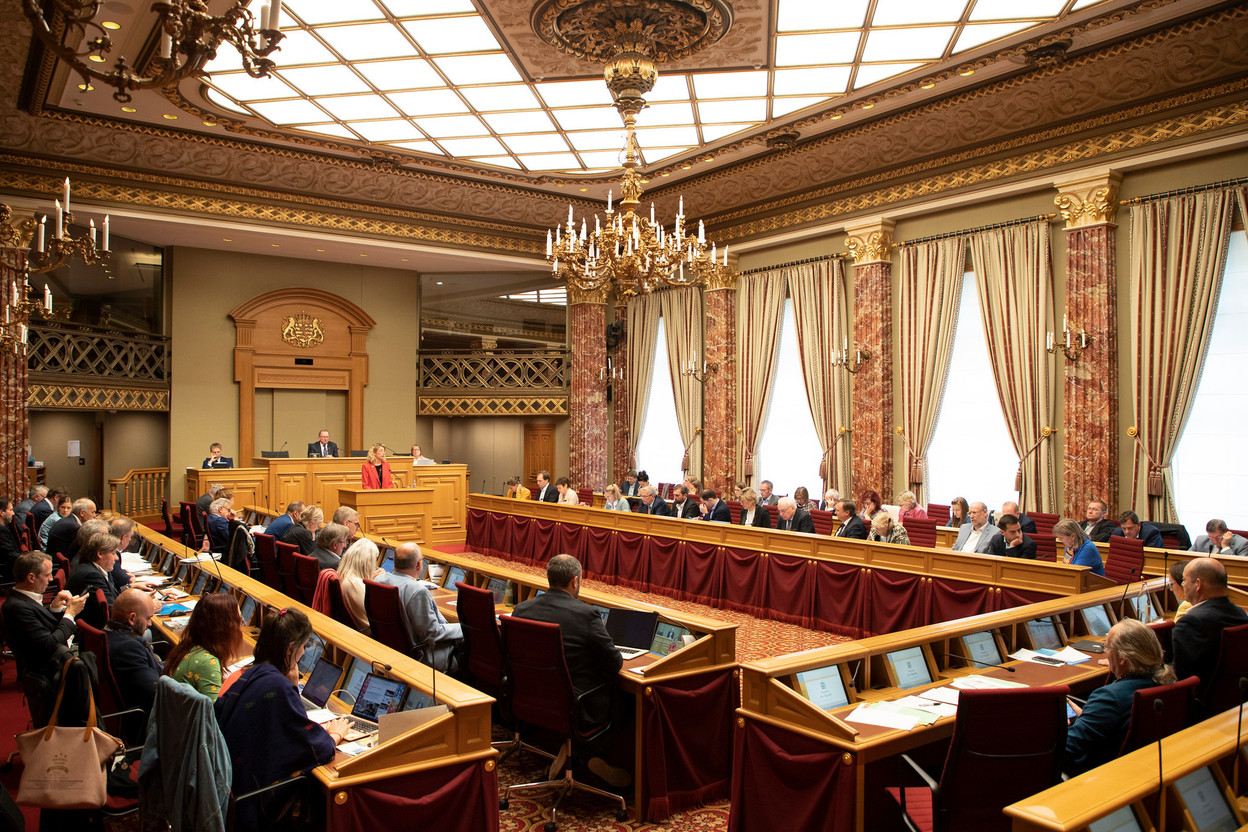
The new aid adopted on Tuesday by MPs follows the tripartite agreement of September. One concerns energy-intensive companies, the other allows bank loan guaranteed by the state. In both cases, it is largely an extension of existing measures, decided at the March tripartite meeting and then extended at the September meeting.
Law 8107 provides for new aid for energy-intensive companies to cover part of their additional natural gas and electricity costs incurred between January and June 2023. The amounts of aid provided for are modulated according to the energy intensity and the economic situation of the company. The more exposed the company is to the energy crisis, the greater the compensation granted.
Adaptation
The text provides for a change: companies are no longer required to be energy-intensive or experiencing operating losses due to rising energy prices in order to be able to access higher amounts of aid.
In addition, the law introduces a new aid for companies producing heat from natural gas, electricity and biomass, for companies purchasing this heat for distribution via their heat network and for companies producing biogas from biomass. These companies are not end-users of energy and therefore cannot benefit from the planned aid, but they are also unable to pass on the increase in energy prices to their customers. This new aid now allows them to offset part of their additional supply costs up to a maximum of €2m per group.
Extension of guaranteed loans
Law 8102 provides for a one-year extension of the state guarantee on bank loans to finance the current activities and investments of companies, which was implemented by the law of 15 July 2022. In this way, banks will continue to cover the liquidity needs of companies even when they are weakened by the energy crisis by lending them money for the coming year.
The vote of these two laws follows the adoption at the end of November of two aid schemes for businesses, also decided at the September tripartite: the first for very energy-intensive businesses, covering part of their monthly extra costs due to the price hike; the second for sectors heavily dependent on diesel--mainly transport and deliveries.
This story was first published in French on Paperjam. It has been translated and edited for Delano.