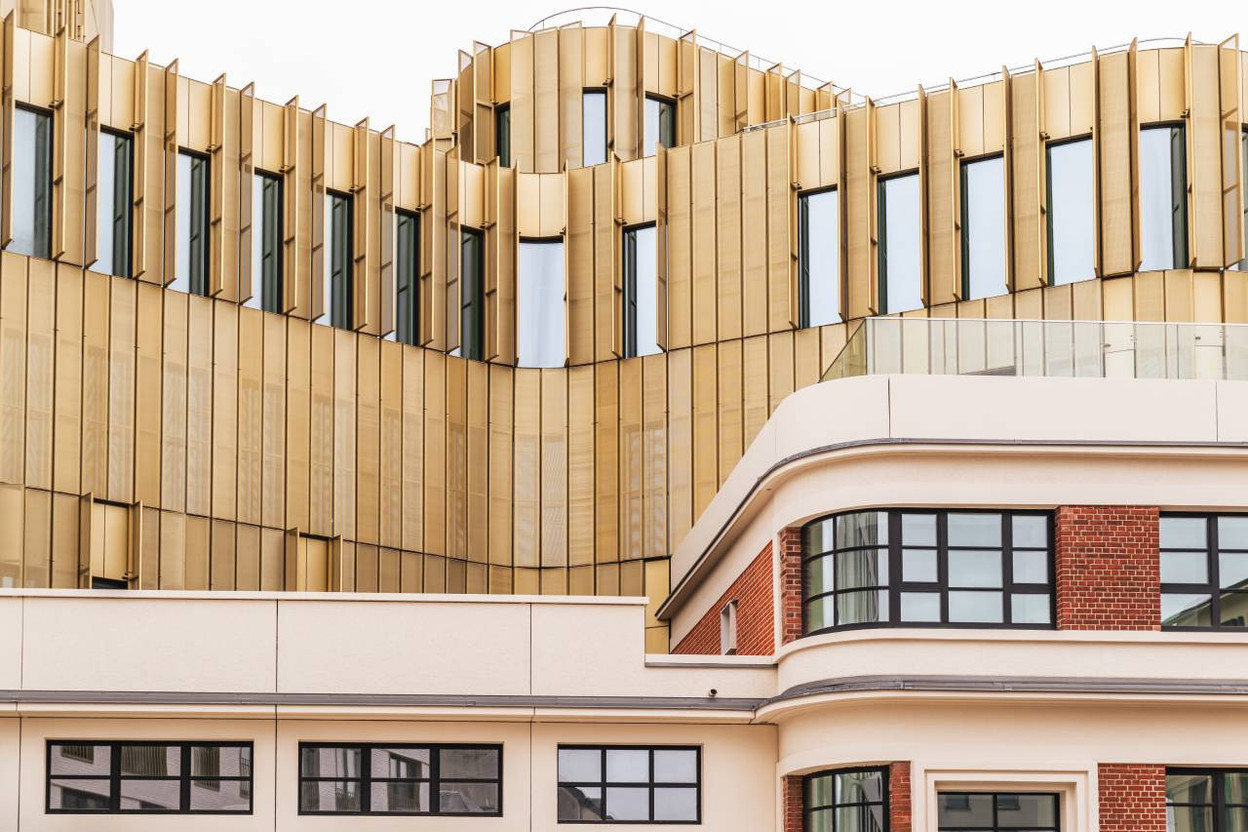
A few hundred metres from Luxembourg station, a 21-hectare industrial wasteland is about to change its face. Not tomorrow, but in a few years' time. For more than ten years, the GIE Nei Hollerich, which includes Paul Wurth Real Estate, Landimmo for the Landewyck group and the Fonds de compensation, has been overseeing the transformation of this site, which has long been closed to the public. The ambition is clear: to create a new mixed-use district of 390,000 m2 where 6,000 people will be able to live and several thousand office workers will be able to work.
Construction work is due to start in 2026, with the first building delivered around 2029, and the arrival of the first residents expected as early as 2030 thanks to the "Joséphine" project. The full development cycle will take around twenty years, depending on economic conditions. More than €30m has already been spent on planning, demolitions and studies. The total budget is approaching €1bn, with around €80m to €90m for infrastructure and the rest for buildings.
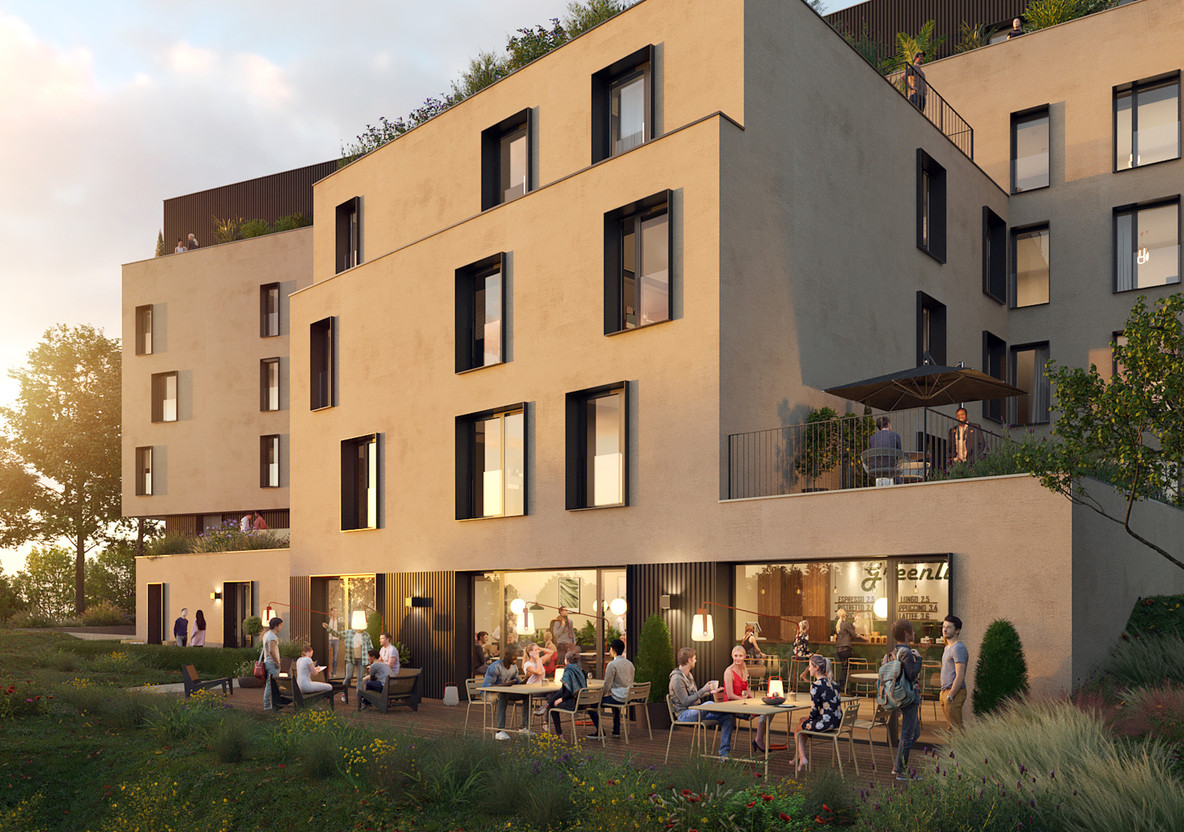
For future residents, Nei Hollerich promises a wide variety of housing, ranging from compact flats to family areas, with 10% low-cost housing. The designers are still considering the architectural forms. The neighbourhood will also be home to a local supermarket and small shops, crèches and restaurants, to ensure local life from the earliest phases.
The site's identity will be shaped by its industrial past, with the conservation of the Landewyck building, the former Paul Wurth hall and the park, which will become a public green space. "Here we are a kind of extension of an existing historic town with a transformation of an area that was never accessible to the public," explains Jürgen Primm, managing director of Landimmo. "People today, when they have the chance to access it, are surprised by the size and the little gems hidden behind a wall."
The financing reflects the scale of the project: around €80m to €90m are being spent on infrastructure - roads, squares, networks, drainage - while the construction of the buildings is estimated at almost €1bn for the 390,000 m2 planned. The GIE Nei Hollerich, created in 2013, does not own the land, but acts as coordinator and project manager for the infrastructure, with clear mandates from the various players. Paul Wurth Real Estate owns more than half of the land, the Landewyck group around 30%, while the Compensation Fund owns the remainder. Landimmo, a subsidiary of Landewyck, will build for its long-term assets, while other owners will opt instead to sell serviced plots.
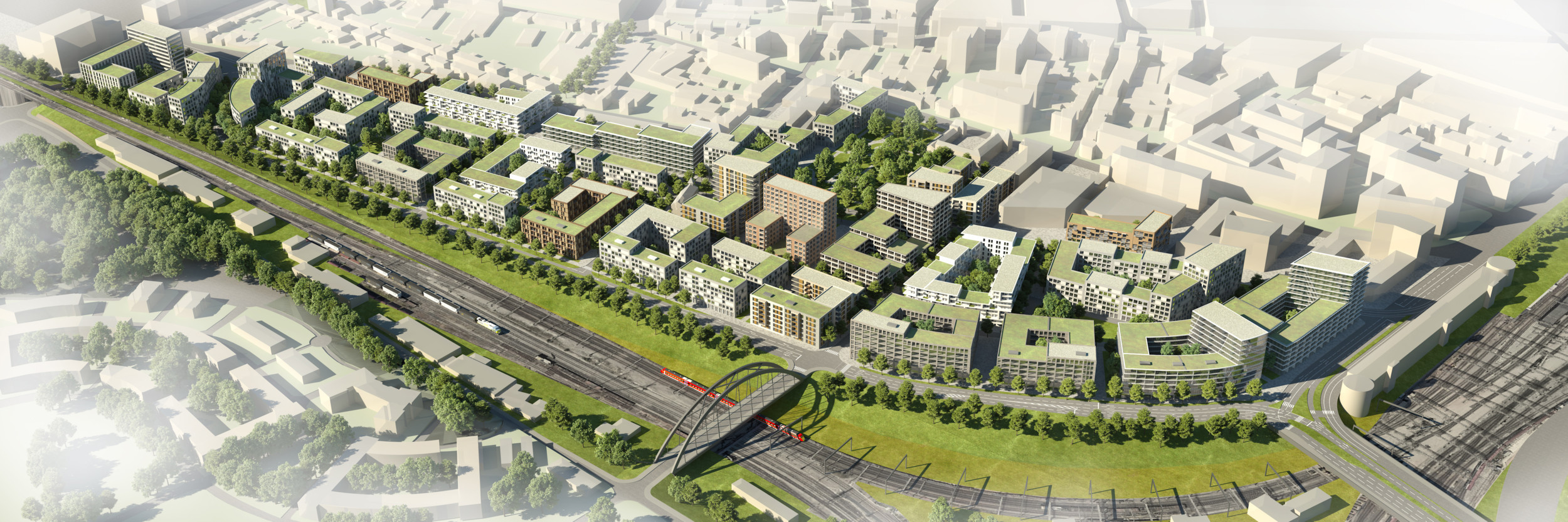
The Alsace bridge will be connected to the district with a new road. (Render: GIE Nei Hollerich)
Mobility is another asset: the future tram line, the reinforcement of the Hollerich stop by the CFL and the immediate proximity of the city centre will reduce the use of cars. Two visitor car parks integrated into the buildings are planned, but no on-street public car parks.
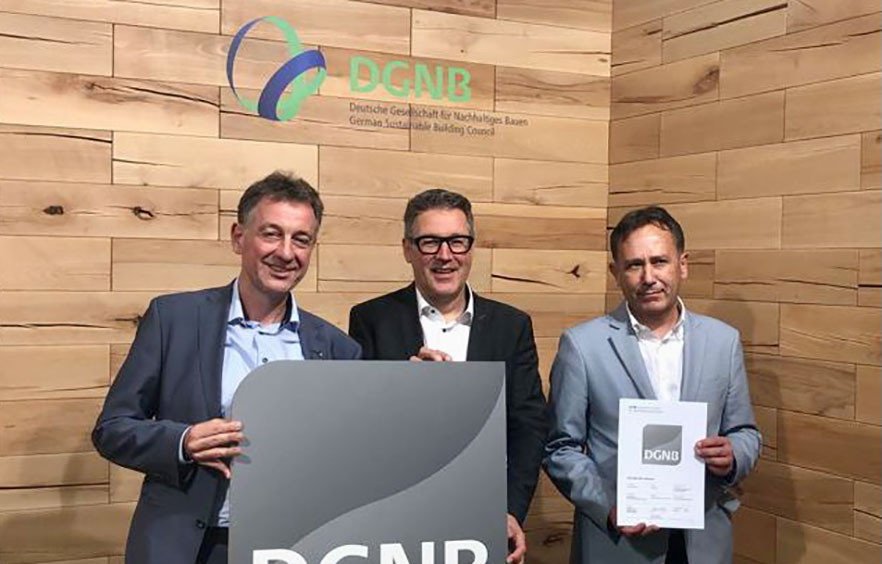
Finally, sustainability is at the heart of the project. Already precertified Platinum by the DGNB, the district will incorporate sustainable materials, solar installations, optimised water management, as well as vegetation and water bodies designed to limit urban overheating. "If all goes well, work will start at the beginning of 2026," explains Michael Paterok, senior project manager at Paul Wurth Real Estate. "The first building should rise from the ground in 2029 and the first residents will move in around 2030."