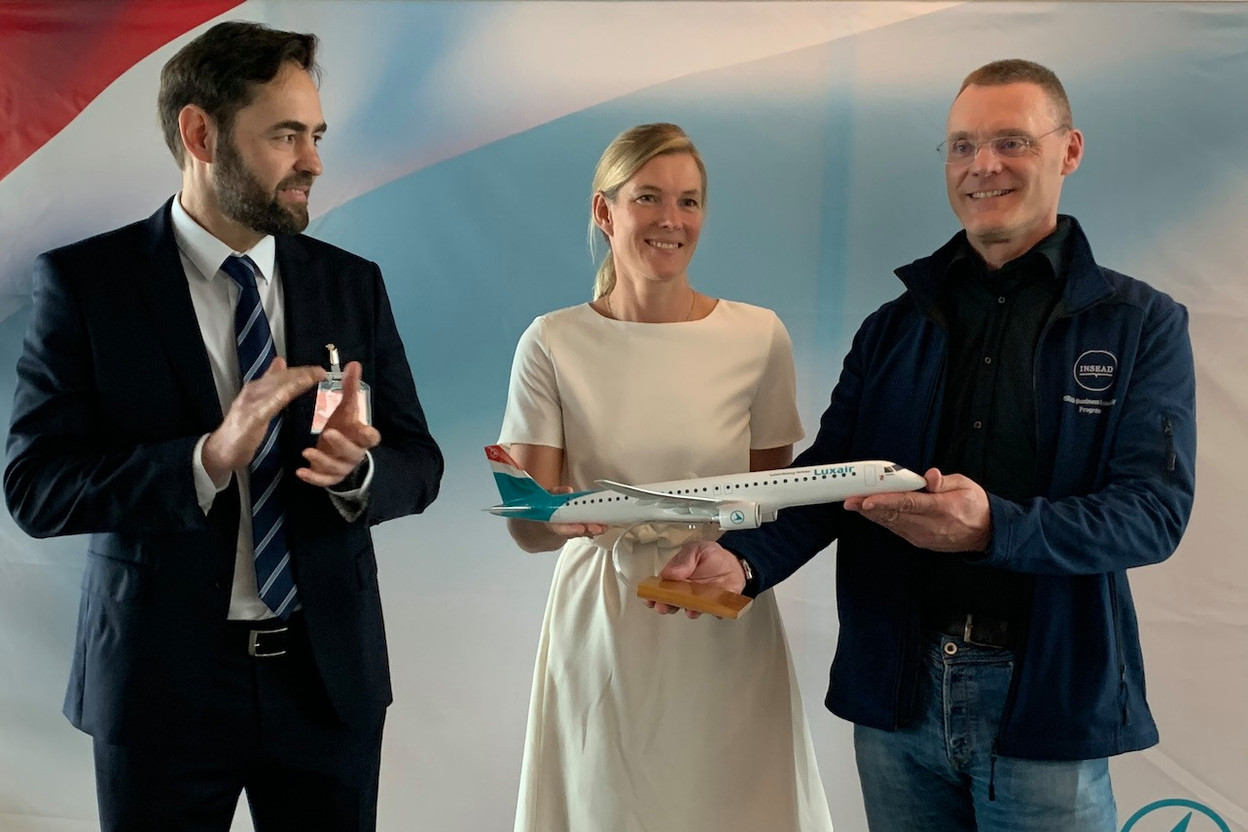
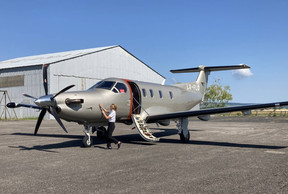
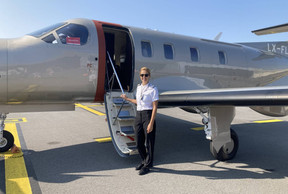
The event took place in the civil aviation terminal at Luxembourg airport. Many businessmen and women and company directors who use private jets to travel quickly to their meeting places--but also for leisure--pass through this small hall. Jetfly has been accompanying them on these exceptional journeys for 25 years, and has invited the press to discover their services. For this demonstration trip, an elegant Pilatus PC-12 is waiting for us on the tarmac. We’ll be heading for Épernay in France, a 30-minute flight.
“Jetfly’s business model is based on shared ownership of business jets,” explains Leslie Jacob, sales executive Luxembourg. Shared ownership makes it possible to minimise aircraft acquisition and maintenance costs whilst benefiting from the agility offered by this means of travel, namely moving quickly as close as possible to one\s needs thanks to accessibility to small airports or aerodromes.
Jetfly, a Luxembourg company
Based in offices at the Skypark in Findel in Luxembourg, Jetfly employs 500 people, including 250 pilots. It was founded in 1999, then bought in 2010 by Cédric Lescop (CEO) and Maxime Bouchard (managing director), backed by a group of investors. In addition to Luxembourg, the company is present in the UK, France, Switzerland, Germany, the Netherlands, Italy, Spain, Portugal, Austria and Belgium.
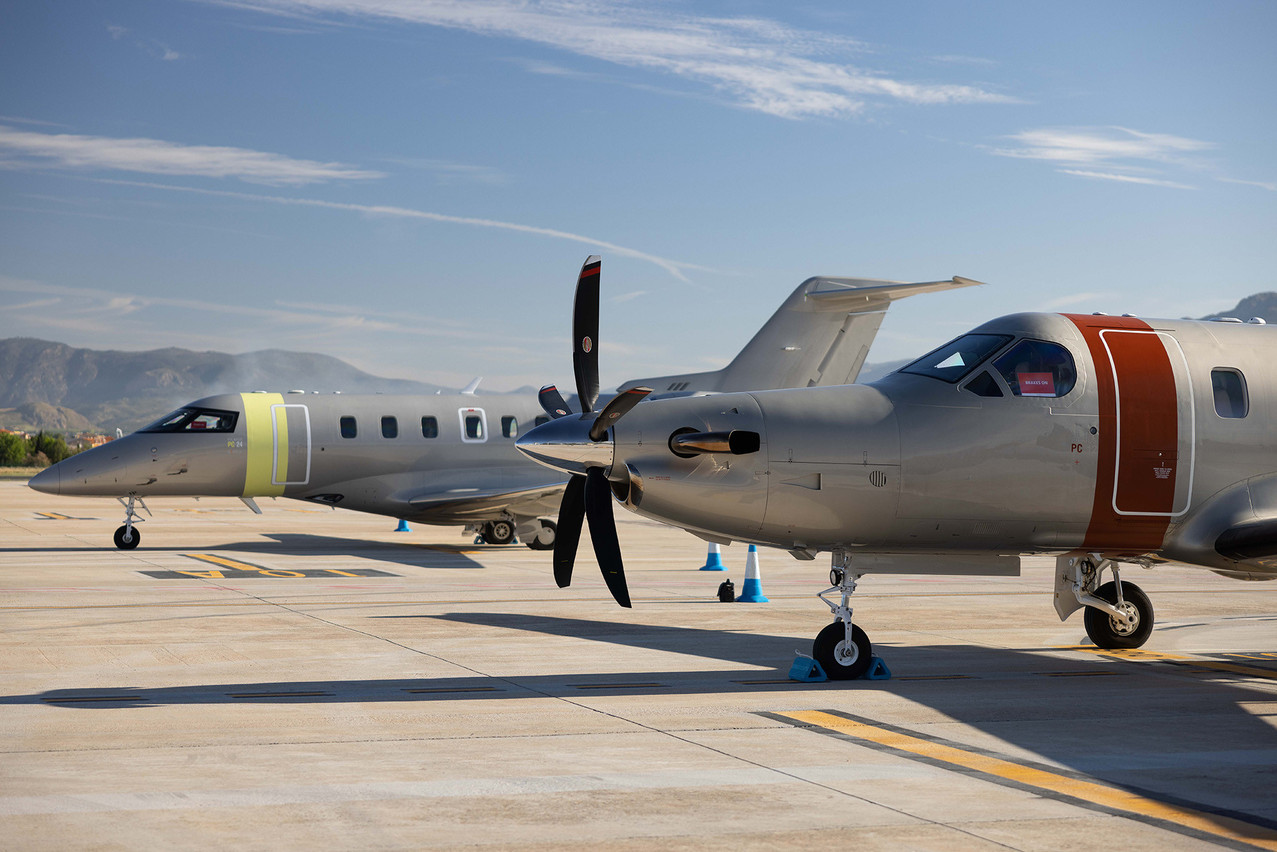
The fleet, exclusively registered in Luxembourg, flies in Europe and is currently made up of 70 aircraft, including 52 Pilatus PC-12 turbo-prop aircraft (which can seat six to eight passengers, ideal for flights of up to 1.5 hours), 15 Pilatus PC-24s (seating eight to nine passengers, ideal for flights to destinations as far afield as southern Spain or Portugal) and three Cirrus Jets (seating four passengers, ideal for short daytime round trips such as Luxembourg-Paris or Brussels-Luxembourg). The fleet is growing by an average of five new aircraft a year, all of which have already been sold before delivery. This dynamic means that all the aircraft are generally less than 10 years old, and therefore in very good condition. They are also serviced at one of the three Pilatus-approved repair and maintenance centres belonging to the group.
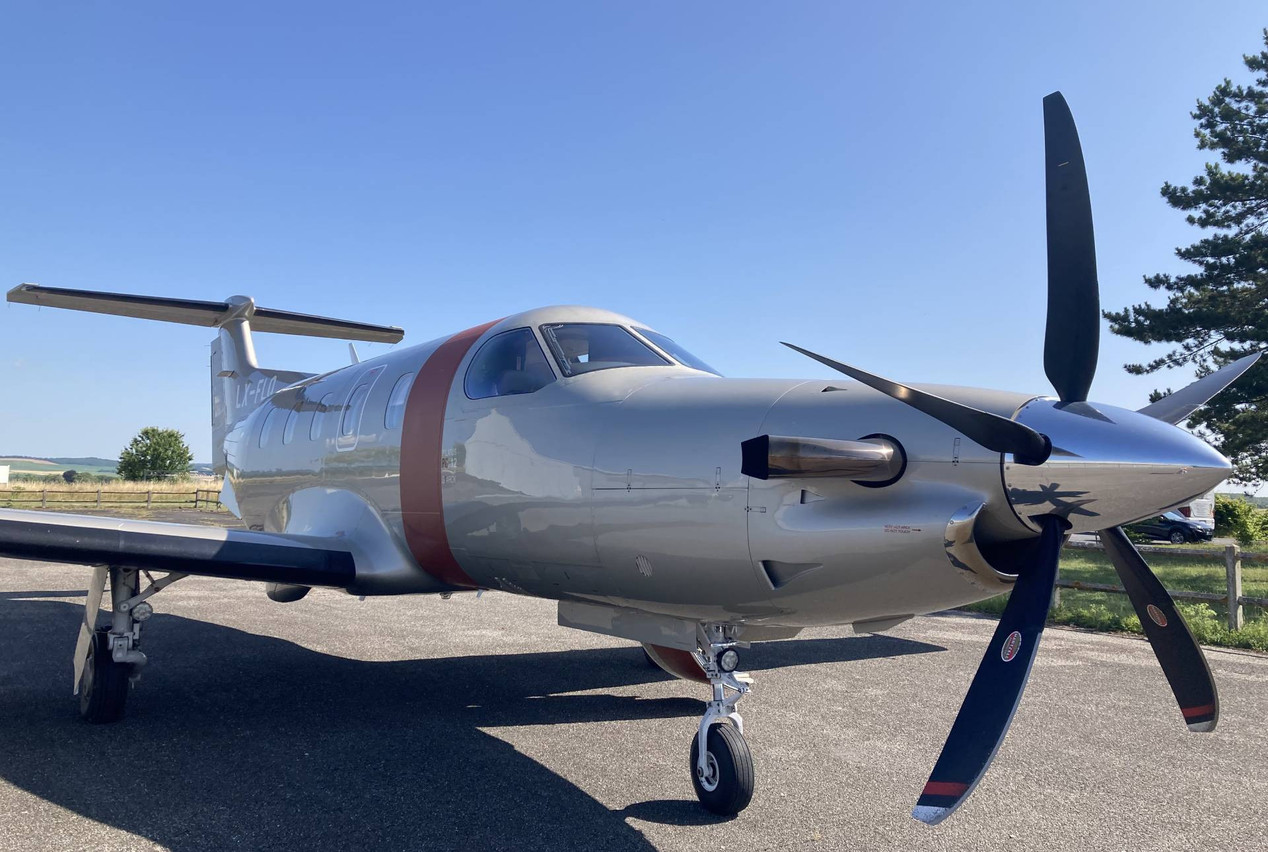
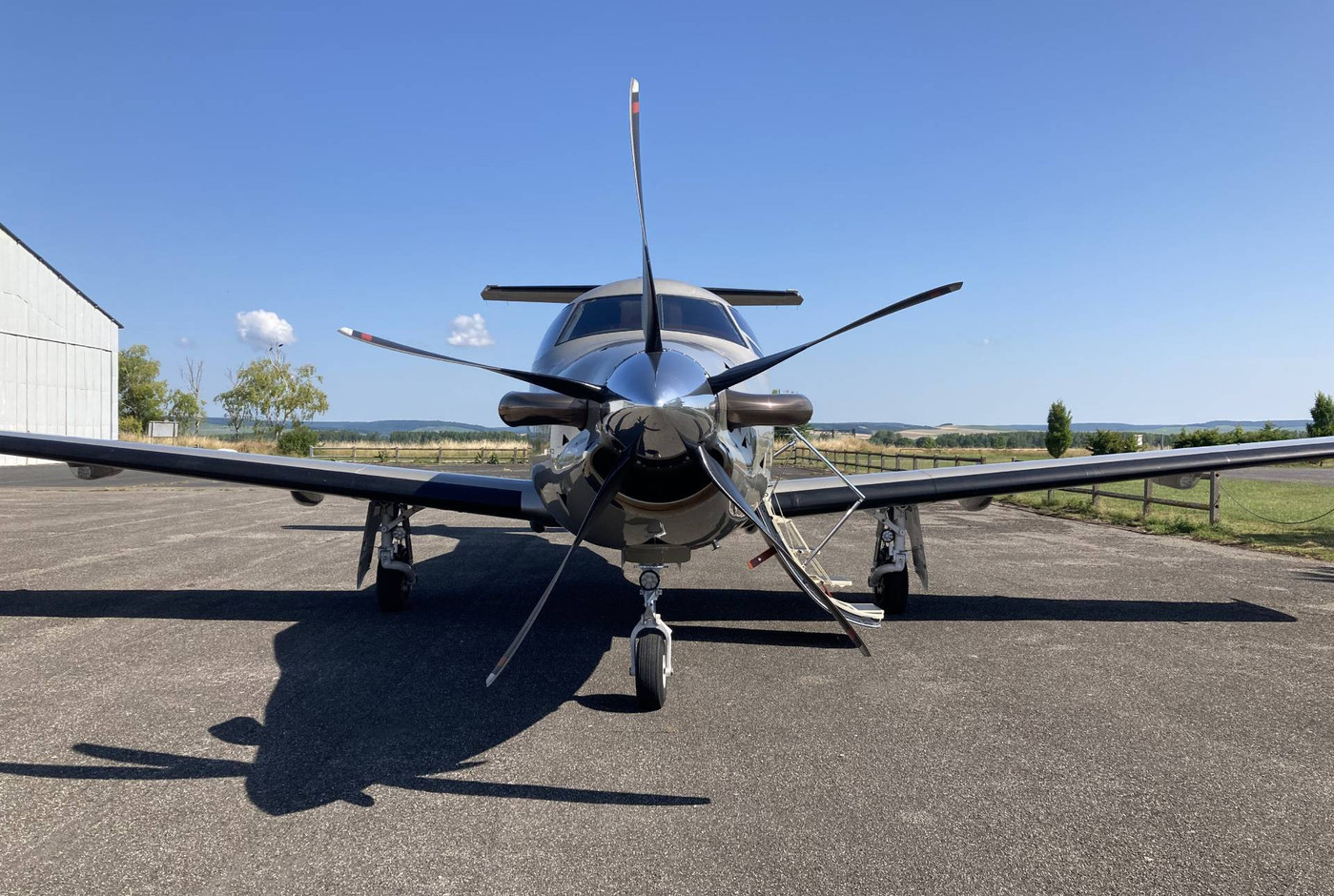
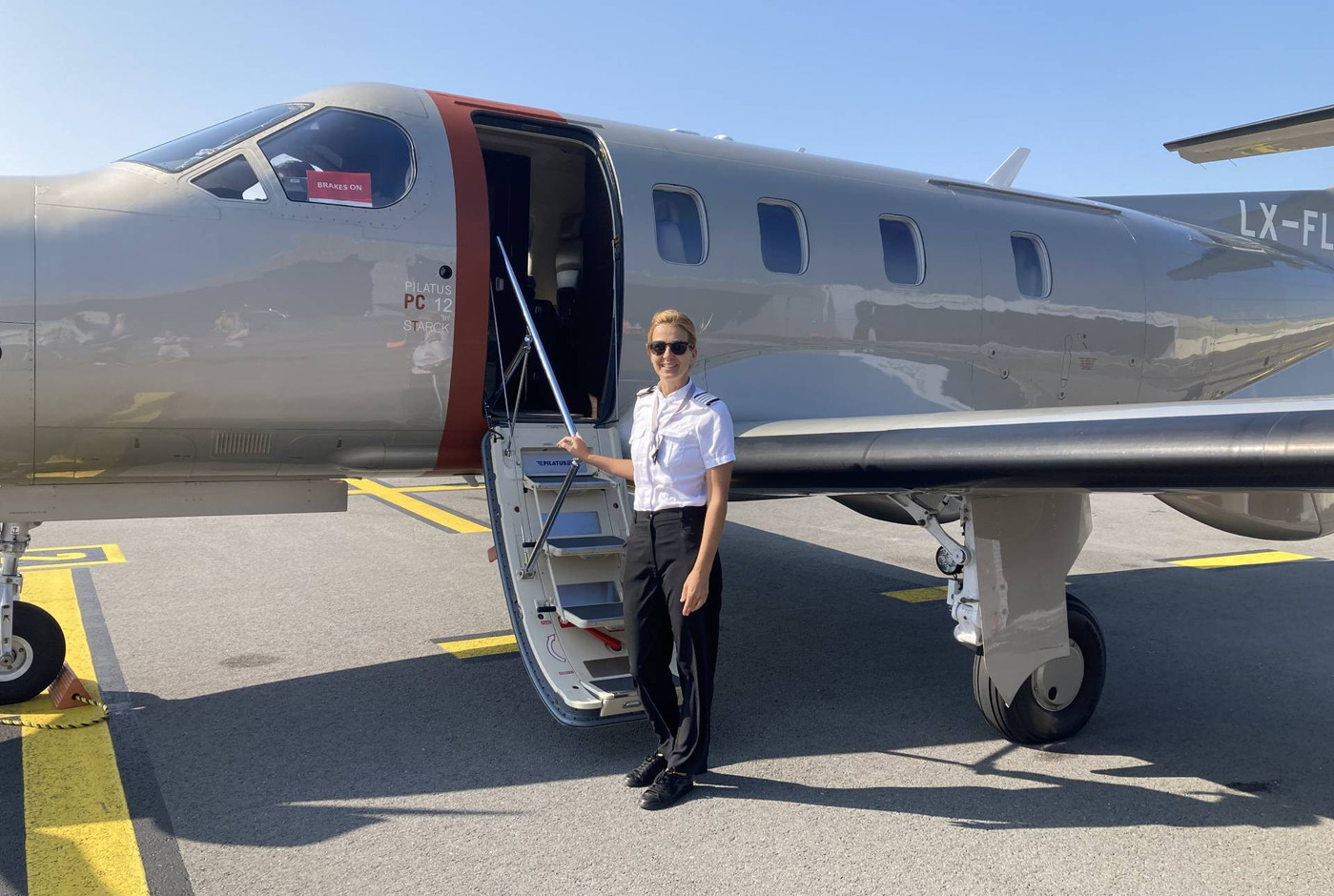
The PC-12’s understated elegance makes it different from other aircraft. Photo: Céline Coubray/Maison Moderne
$200,000 dollars
The principle of Jetfly is that each customer acquires a share of the aircraft corresponding to their flight requirements. This is a cheaper option than owning your own aircraft, because the acquisition and operating costs are shared with the other co-owners, whilst retaining the advantages of a private jet, which is available 24 hours a day.
To access this, a startup fee is required, corresponding to the acquisition of a minimum of 1/16 aircraft and which opens the rights for 15 to 35 hours of flight. This entry ticket amounts to $500,000 for a Pilatus PC-12, $1,100,000 for a Pilatus PC-24 and $200,000 for a Cirrus, the entry-level aircraft. “This ownership is valid for five years, renewable once, for a maximum of 10 years,” explains Jacob. After that time, you have to buy back a share of the aircraft to continue flying with them.
Once this step has been taken, customers must also pay for the flight hours flown and management fees, which comes to €5,000 per flight hour on a PC-12, €8,500/hour for a PC-24 or €4,500/hour for the Cirrus. If requirements are greater than the flight hours corresponding to 1/16 of the aircraft, the customer must then become the owner of a larger share (2/16 for 70 flight hours, etc.). “What’s interesting about this system,” explains the head of the Luxembourg market, “is that the billing system is optimised for customers, since only flight hours are billed. Positioning costs are borne entirely by Jetfly.”

A growing market
It’s also a growing business. “The average growth rate in Europe for our sector is 2%, but for Jetfly we are at 5%, with a growth margin of 10% in Belgium and 6% in France.” In total, private aviation generates $220bn worldwide, including more than $32bn in gross added value. It’s also responsible for the creation of 100,000 jobs in Europe. “Private aviation is a reflection of good economic activity. If markets are flourishing, then private jet companies are in greater demand,” Jacob points out. “We have 550 customers, including 30 in Luxembourg, and this number is growing by around 50 new owners every year,” says Jacob, who was previously in charge of the UK market.
“In Luxembourg, our customers generally own 1/8 of an aircraft, or 70 hours of flying time. It’s a bit special to operate here, because the country only has one runway on which we can land, that of the main airport. But it’s a city that’s very close to our hearts, because it’s where our head office is and where all our ground staff are based. It’s also an important hub for us, with an increase in flight requests. In 2019, we operated 300 movements and in 2024 we will be operating more than 400. The most popular destinations from Luxembourg are Paris-Le Bourget, Geneva, Brussels, London, Gstaad and Perugia. Fifty percent of our customers travel for business, 50% for leisure and 70% do both.”
250 pilots, including 21% women
In addition to the people operating on the ground to organise flights, 250 pilots are employed by Jetfly, 21% of whom are women. “That’s three times the average for other airlines,” says Jacob. “This uniqueness is linked to the fact that our CEO’s mother was the first woman pilot at Air France and that he is very attentive to the feminisation of the aviation professions. We also have a lot of female mechanics in our workshops.”
The teams are highly seasoned, with an average of 5,000 flying hours per head. These experienced professionals can also follow a continuous training programme at the group’s training centre. Moreover, 15 pilots are specially trained to fly and land in the mountains, in very specific conditions such as on the Courchevel runway in France, which is known to be complicated.
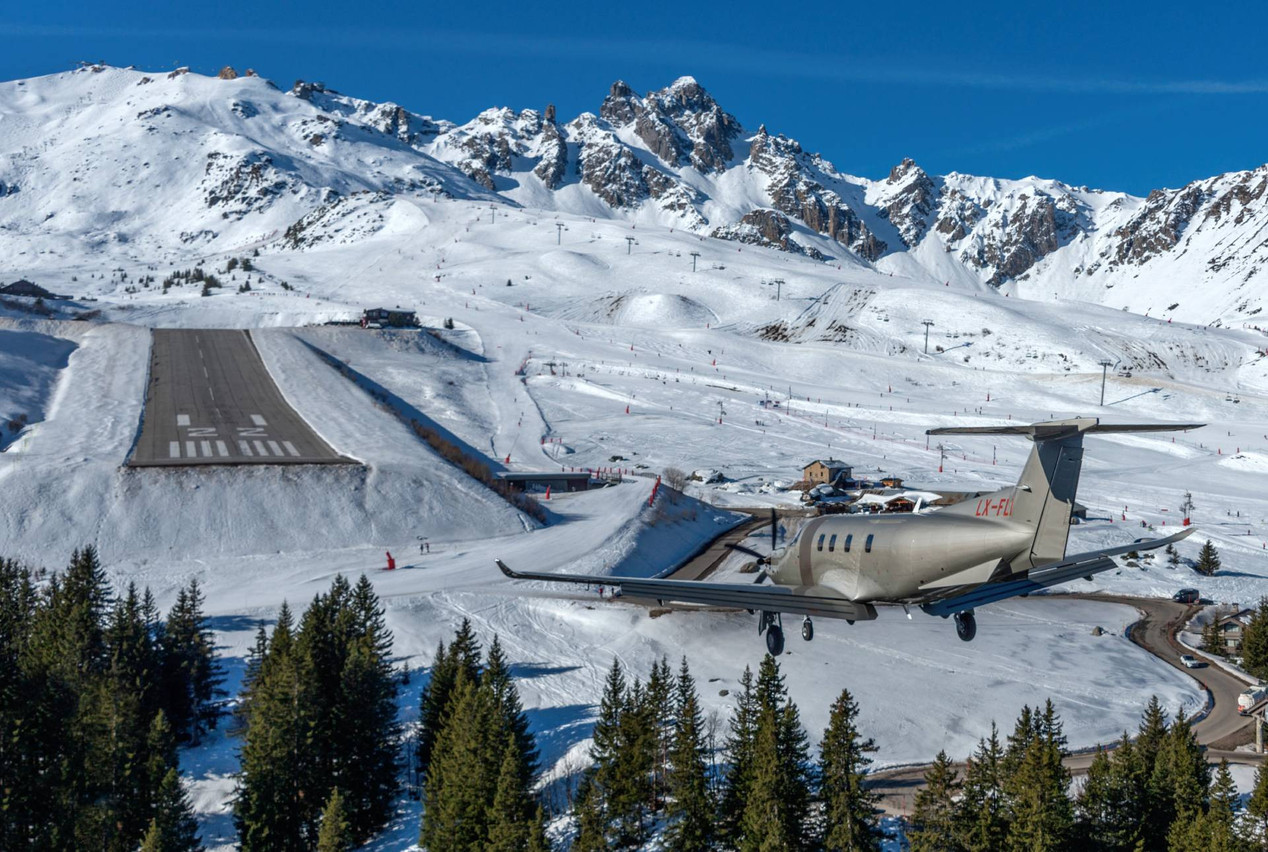
Because it is not flat, the Courchevel track is particularly complicated to practice. (Photo: Jetfly)
“Our pilots are not attached to aircraft. They move according to need, because it costs much less to move a pilot than to move a plane,” explains Marion Fabiani, head of the French market. In this way, aircraft remain at their last destination and are called when a need arises nearby. “Not having a base where the planes have to return is a more interesting solution from an economic and ecological point of view,” says Fabiani, who adds “the best flight is the one you don’t make.”
But recruiting pilots remains a real challenge. “It’s a demanding job that requires a lot of availability and isn’t suitable for everyone, especially if you have a family,” explains Fabiani. “But we try to improve their conditions as much as possible. For example, we organise schedules three to six months in advance, which allows pilots to organise their personal lives, such as making medical appointments. With us, they have to work seven days in a row, then have seven days off. Our typical recruits are pilots who were attached to a private company or former military personnel. This gives us a diversity of profiles that is very interesting.”
Jetfly’s aim is for its pilots to only have to worry about their flight. To relieve them of the associated tasks, a team of three people is dedicated to organising their logistics: booking hotel rooms for them to rest between flights, managing transport to the airports...
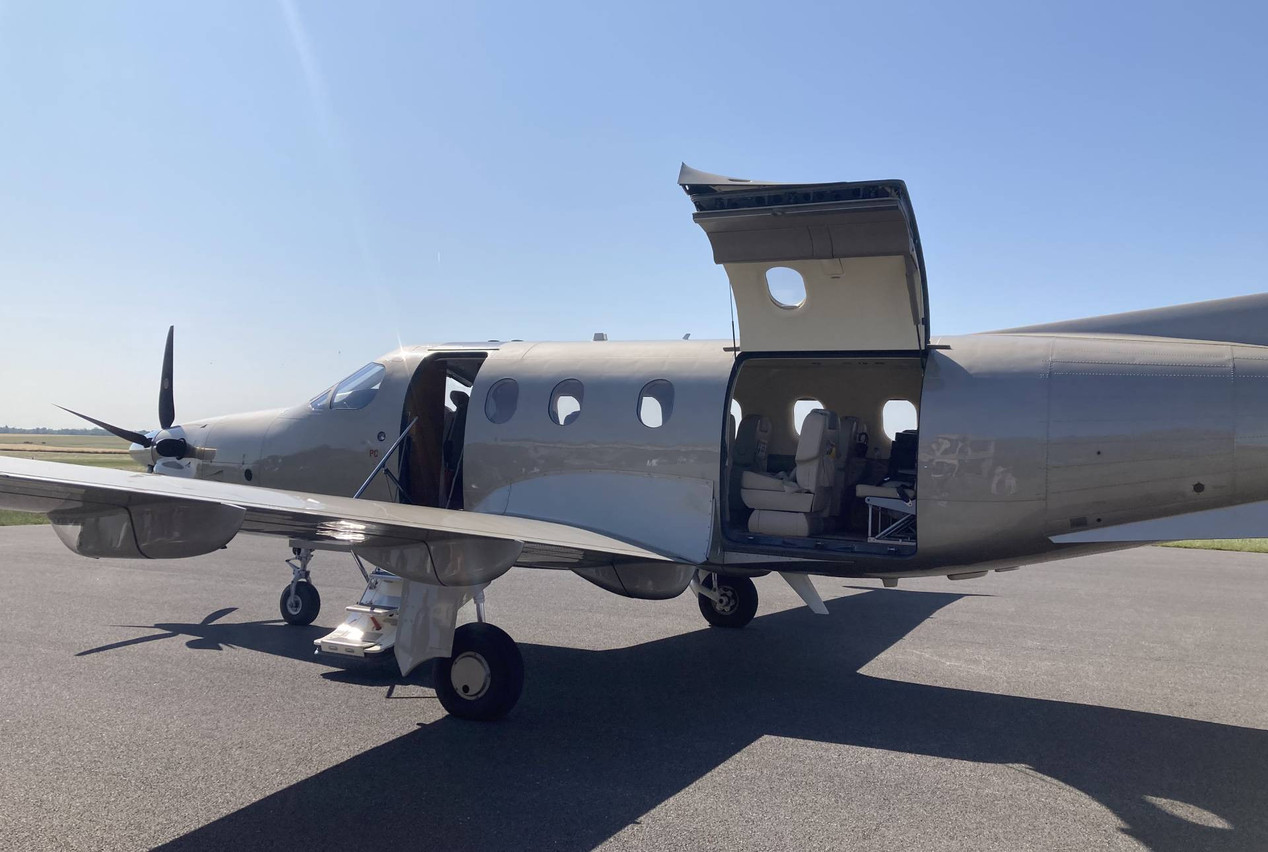
A cargo door at the rear allows the largest pieces of luggage to be loaded. Photo: Céline Coubray/Maison Moderne
Reducing ecological consequences
Aware that it operates in a polluting sector, Jetfly is taking steps to reduce the environmental footprint of its business and is aiming to become carbon neutral by 2035. “We anticipated these environmental issues by choosing the PC-12, which is the best performer on the market for a private aircraft, the best in terms of carbon emissions in its category,” says Jean-Baptiste Fabbricatore, Belgian market manager.
“Today, habits have changed, and so has ecological awareness,” he adds. “We no longer have the image of the businessman travelling alone in his jet. For example, we offer our members the possibility of using our aircraft free of charge when they are travelling empty, with no impact on their number of flight hours. They can also choose to open up their flight to other members to fill the remaining seats, thereby sharing costs and avoiding having to fly another aircraft to the same destination. This approach also has no impact on flight times for those joining the flight. These are good incentives to fly greener.”
Also, since February 2025, Jetfly has introduced a SAF (sustainable aviation fuel) programme. This fuel, made from a blend of used household oils, reduces the carbon footprint by 40%. “We can’t fill a whole tank with this SAF, because the maximum authorised is 50%. At Jetfly, we use up to 40% in our aircraft, as this generates a significant additional cost, of the order of three to four times more expensive than paraffin,” explains Fabbricatore. That’s +€345/hour for a PC-12 or €820/hour for a PC-24.
The company has also chosen to abandon the carbon offset system, due to a lack of sufficiently reliable traceability.
All the strength of a group
But Jetfly is also a group that masters the entire value chain of its business. Other companies are involved in meeting all the needs of this ecosystem: Fly7 manages fully-owned aircraft and occasionally offers them for hire; Captainjet charters aircraft according to customer requirements, including transatlantic flights; MyLittlePlane specialises in buying and selling aircraft (in 10 years, they have sold around 50 aircraft for a total budget of $50m); Fly7 Training is a Pilatus-approved and certified training centre that instructs Jetfly pilots, but also external pilots; finally, Jetfly Technik operates from three maintenance and repair centres (Zweibrücken, Geneva and Bournemouth), with 35 mechanical engineers who work on aircraft in the Jetfly fleet, as well as on aircraft outside the company.
And the ambitions don’t stop there: the next step will certainly be in America. In addition to the partnership Jetfly has with Planesense, allowing them to fly customers to the United States, Canada, Mexico, the Bahamas and the Caribbean, they want to develop a solution to offer transatlantic travel.
This article was originally published in French.