Steveker has done research on James Bond’s different adaptations in contemporary British pop culture. In her work she has looked at the longevity of the films and their cultural significance which has contributed to cementing Britain’s cultural influence worldwide.
Which stereotypes in the Bond films have disappeared over the years and which persist?
The very simplistic, very misogynist stereotype of the woman as a sex object, that has not entirely disappeared, but it has been toned down and it has been complemented by other representations of women. For example, if we think of Paloma, the woman Bond meets in Cuba: when we first see her, she seems to be a very beautiful woman, typical of Bond--almost all the women he is involved with in some way or other are beautiful so she's a beautiful woman. She’s got a very sexy dress on, and she is nervous and she seems to be a bit naive. So she seems to be ticking all the boxes of the stereotypical Bond girl but then she is allowed to develop because it turns out she’s a brilliant fighter. […] The film plays with this idea that all women in Bond are always there to please Bond, she kind of drags him into a wine cellar and he apparently thinks that she wants to have sex with him. But all she wants to do is give him a tuxedo. So, the film plays with this, makes fun of this idea that Bond is a sexual predator and that is also a stereotype that has changed. Bond is not a sexual predator anymore. He’s still interested in women, he’s still interested in sexual encounters with no strings attached. But the representations of women seem to have changed and it was high time they did.
How does Daniel Craig’s Bond differ from the previous one played by Pierce Brosnan?
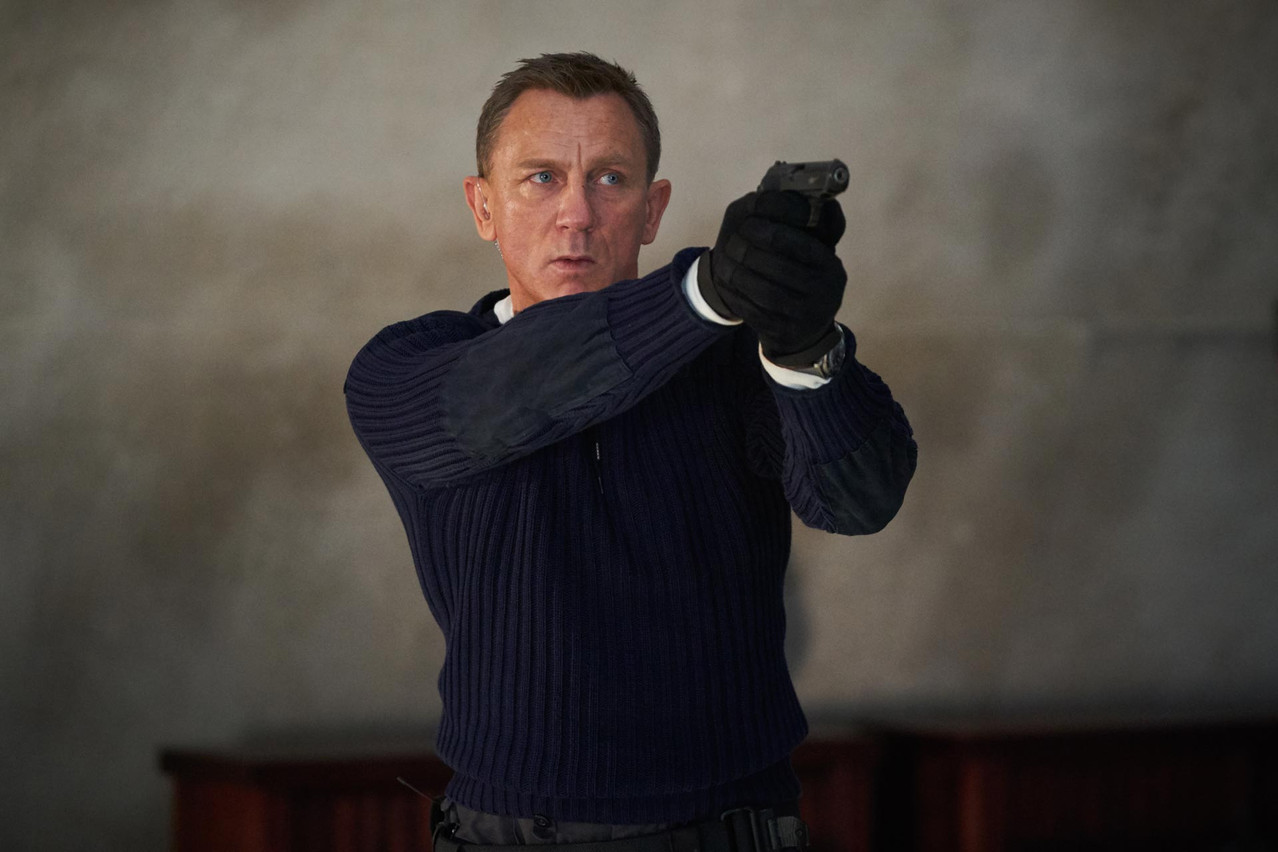
I think that Brosnan’s Bond foregrounded humour. He would always have these single line punch lines, sort of these cool remarks that would aim for laughs and I think that his Bond was more of an action hero. He drew on this stereotypical image of the British gentleman, he would always be immaculately dressed. The suits would always look perfect on him. So he represented a more polished but also more superficial Bond character. And I think that when Craig came along, he linked back to Sean Connery. But he also showed us Bond as a vulnerable character. As far as I know, in the Craig movies, we see blood, we see Bond’s injuries for the first time in time, we really see him suffer whereas in the in the former movies, he could be in a horrible fight scene, and he would just come out of it without any injuries, with a perfect outfit, and no scars. And that changed with Craig and I think that first of all, it makes for a more credible character. But also for me, as an academic, it's interesting to see that Craig really introduced a more complex concept of masculinity.
And what about the Bond villains?
The scars or any other physical abnormality, physical deformation, that’s always been a marker of the Bond film. The Bond villain stands out as the other, as the person who is the opposite of Bond. There are all sorts of bodily deformations. And this marker of otherness, I think, is something that that’s still there. This mark of otherness has often been linked to racial otherness, also to non-British non-white otherness. If you think of Silva in Skyfall, in the middle of the movie he takes out his implants and then we can see that he’s completely physically deformed. Bond films have not yet picked up on that tendency to not to use people with scars as villains or not yet picked up on the tendency not to villainise people who do not fit to the norms of the body that our society is used to.
What can we expect for the next films in terms of character evolution?
That’s a difficult question. Of course, nobody really knows. And the franchise needs to walk a very thin line to satisfy its longstanding fans who like Bond because Bond used to be a male macho--you know, successful with women, an action hero. The franchise has also to be open to innovations, make it less sexist, make it less misogynist, make it more diverse. But it also needs to convince its critics, because if it doesn’t do that, then at some point Bond will become a dinosaur and he will not be interesting anymore. I have the feeling that the next Bond will be a man, maybe a person of colour. Because from my own feminist experience, I have to say that male authority, male power, patriarchal power is not easily shared with women. And the patriarchy is more easily prepared to share its power with men of other ethnic backgrounds, then it is prepared to share its power with women.