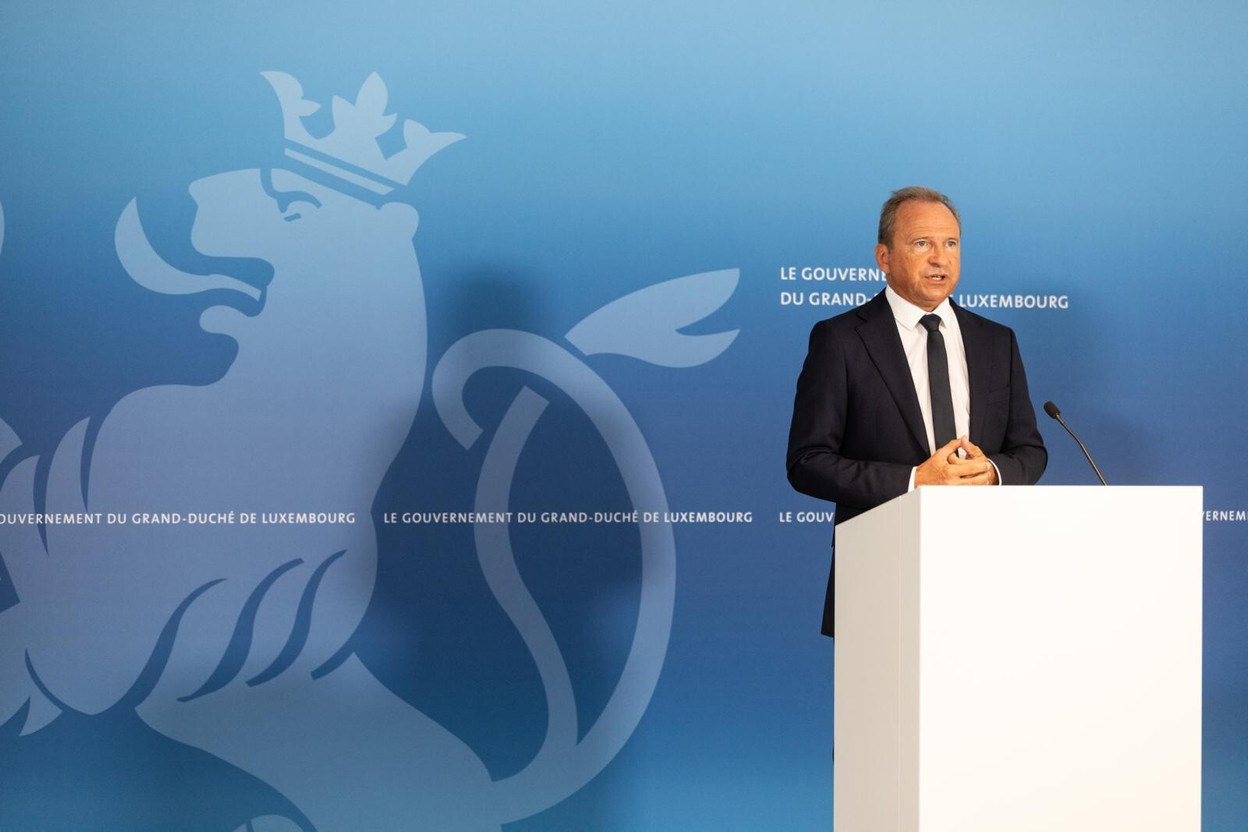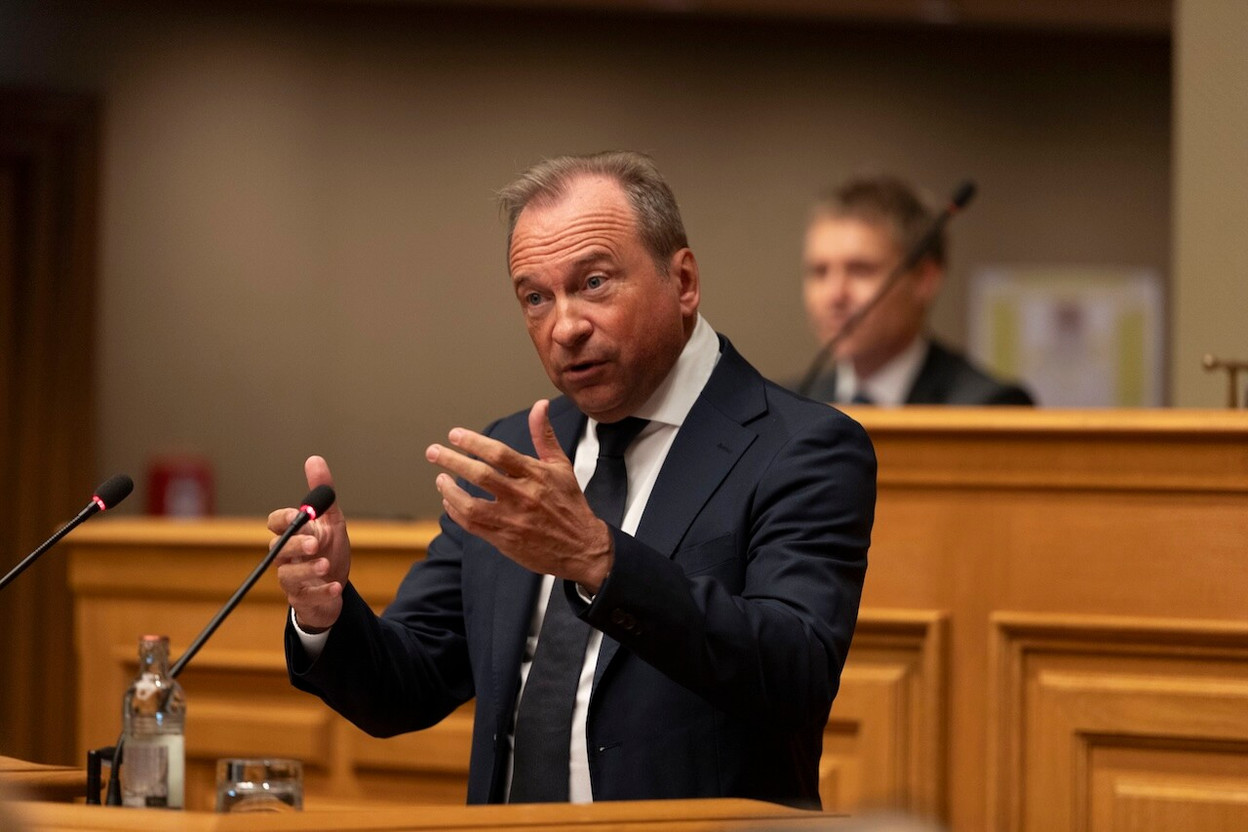
This live coverage has now ended. Paperjam’s editorial team was at the Chamber of Deputies to follow Finance Minister Gilles Roth’s presentation of the fourth budget of the Frieden-Bettel government from 9 a.m. With the presentation now over, the editorial team will gather reactions from stakeholders and analyse the budget’s main announcements, as well as the multiannual financial programme for 2026-2030. Thank you for following our live coverage.
10:00am. “We are creating the conditions for Luxembourg to continue to have opportunities tomorrow. We are approaching this future with cautious optimism. And we are taking everyone with us,” Gilles Roth concludes.
9:58am. On security, the police budget will reach €600m, €72m more than in 2026. Funding for the justice system will amount to €211m, while the prison budget will rise from €141m to €149m.
Efforts on defence will continue. “Over the period from 2024 to 2027 as a whole, this represents around €4.6bn.”
9:55am. SMEs have not been forgotten: the transfer of a business as a gift to a direct descendant or partner will be exempt from tax, in order to safeguard its future. Gilles Roth announces that efforts to develop the country’s business parks will continue.
Investment in agriculture will rise from €225m to €242m. A total of €59m in aid is planned between 2026 and 2030 for processing and marketing.
On climate policy, the Environmental Protection Fund will receive an additional €90m in funding. A further €97m will be allocated to the Water Management Fund, notably for new wastewater treatment plants.
A total of €14.4bn is earmarked over the next four years for the implementation of the Integrated National Energy and Climate Plan, including €3.2bn in 2027.
9:50am. Turning to investment in future technologies, the minister makes a series of announcements. €2.2bn will be invested in research in Luxembourg and in the university. For the space sector, described as “strategic”, €113.7m will go to the Space Test Center in Kockelscheuer.
9:45am. “Strengthening the country’s attractiveness also means remaining attractive to talent and investment. The competition never sleeps.” Tax policy will continue to support Luxembourg’s attractiveness. Gilles Roth confirms a new legal framework for stock options.
A major announcement: corporate income tax will be cut by one percentage point in 2027. The rate will therefore fall from 16% to 15% for large companies, and from 14% to 13% for small and medium-sized enterprises. At the same time, the threshold for the reduced rate will be raised from €200,000 to €250,000.
The tax credit for investments in the digital and energy transition will be expanded, with the rate rising from 18% to 21%. In addition, the current maximum 17-year period for carrying forward losses will be abolished.
9:40am. Digitalisation investments will receive €1.4bn over the 2027-2030 period, including €339m committed in 2027, “an increase of 12%”.
Investment in healthcare will be “massive”. Spending by the fund financing hospital infrastructure will rise from €234m this year to €471m in 2030, “an increase of 101%”. Among the measures detailed, allowances for doctors undergoing specialist training will be increased, at a cost of €18.5m to the budget. New specialisations will also be added to existing training programmes, notably in paediatrics, psychiatry and child psychotherapy.
“Recovery is something we have to go out and seek.” The budget for Luxembourg’s network of representations abroad will rise from €183m to €213m in 2027. New representations are planned in Nairobi and Austin, among other locations. Further offices are scheduled to open in 2028 in Hong Kong, Pretoria, São Paulo and Mumbai.
9:35am. Infrastructure investment continues. The various housing support measures already announced will be financed through a new borrowing programme: a Housing Bond expected to raise €250m. As regards mobility, investment remains at a high level.
9:30am. Gilles Roth returns to the budget’s priorities. “Families are a major priority of this budget.” The first measure is the tax reform, which will cost €880m this year. Spending on child benefits will reach €1.3bn in 2027. Total projected expenditure by the Children’s Future Fund (Caisse pour l’avenir des enfants) amounts to €1.8bn.
The allocation for tackling poverty is substantial: 47% of the budget will be devoted to social transfers. The budget for education and childcare will increase by 10% to €5.2bn.
Funding for employment, described as a “factor of social cohesion”, is also set to rise. Against a backdrop of rising unemployment, the Employment Fund’s budget will increase by €206m to €1.5bn, “with a focus on employment”.
9:27am. The well-being GDP. “A budget for citizens does not stop at prosperity. It extends to well-being.” The figures? €6 billion will be devoted to residents’ well-being, 24% more than in 2026 and equivalent to 6% of GDP. Of this amount, €4.3bn will go towards tackling the risk of poverty, €654m towards addressing excessive housing costs and €630m towards employment.
9:25am. Gilles Roth turns to the financial centre, which accounts for around 40% of direct taxes in a typical year. “By the end of September, corporate income tax revenue had already reached €3.3bn. That is around €600m more than at the same point last year, an increase of 21.4%. For 2027, we expect 25% more revenue from this tax.”
The minister also expects municipal business tax revenue to rise by 25%. Subscription tax revenue will amount to €1.1bn.
9:20am. Public debt will reach 29.3% of GDP. Gilles Roth announces a new bond issue to be launched by the end of the month using blockchain technology. Debt is then expected to decline to 28.6% by 2030. “We have financial room for manoeuvre. And we are using it deliberately.”
The philosophy behind these figures? “We invest; we reduce the burden; we strengthen purchasing power; we strengthen businesses. And we keep public finances under control.”
The minister is openly pursuing a countercyclical policy.
The deficit is lower than forecast in the multiannual financial programme adopted in December 2022 for the years 2024 to 2026. In 2027, it will be around €700m lower than projected in October 2023, when the government took office. “And therefore significantly below the €2.7bn central government deficit announced in the note to the formateur.”
9:15am. Expenditure continues to rise, by 8.9%, “with a slowing trend”. In 2027, revenue will reach €33.9bn, an increase of €2.1 billion, or 6.7%. Projected expenditure will amount to €35.8bn, an increase of €1.8bn, or 6.5%. This will result in a deficit of around €1.9bn in 2027.
A positive surprise: social security is expected to post a surplus of €920 million, “€305 million more than forecast last year”. This is also due to increased transfers from the state budget, up 11% compared with this year. These include an additional €168 million for pension insurance and €89 million linked to a higher health insurance contribution rate. In addition, since this year, the state budget’s contribution to maternity insurance has increased by €39 million, the minister explains.
At municipal level, the government expects a surplus of €459 million. “This development is being driven by higher municipal business tax revenue and an increase in the state allocation.”
9:13am. Here are the key budget figures: the general government deficit is estimated at €570 million, equivalent to 0.6% of GDP. “At a time of weak growth and high investment, we therefore remain well below the thresholds set by the Maastricht criteria.” For central government alone, the deficit will amount to €339 million.
9:10am. These are the macroeconomic assumptions on which the minister has based the budget: growth of 1.2% in 2026 and 1.9% in 2027. “This is below the average of 2.8% recorded over the 1995-2025 period.”
The inflation assumptions are 1.8% for 2026 and 2.1% for 2027. On the labour market, employment growth is expected to rise from 1.7% in 2026 to 1.9% in 2027. The unemployment rate is projected at 6.3%.
9:05am. First announcement: the indexation system will not be touched. “It remains set in stone.”
9:00am. After “Neie Schwong fir eist Land” (“A new momentum for our country”) in 2024; “Kurs op muer. Ee Muer fir Jiddereen” (“Towards a tomorrow for everyone”) in 2025; and “Matenee wuessen” (“Growing together”), the 2027 draft budget is being presented under the banner “Fir d’Leit. Fir Opschwong.” (“For the people. For recovery”). The Frieden-Bettel government is staying the course.
“That is what this budget stands for. That is what our social financial policy stands for. That is what this government stands for. It is also what the Luxembourg model represents, combining economic success with social peace,” Gilles Roth says by way of introduction.
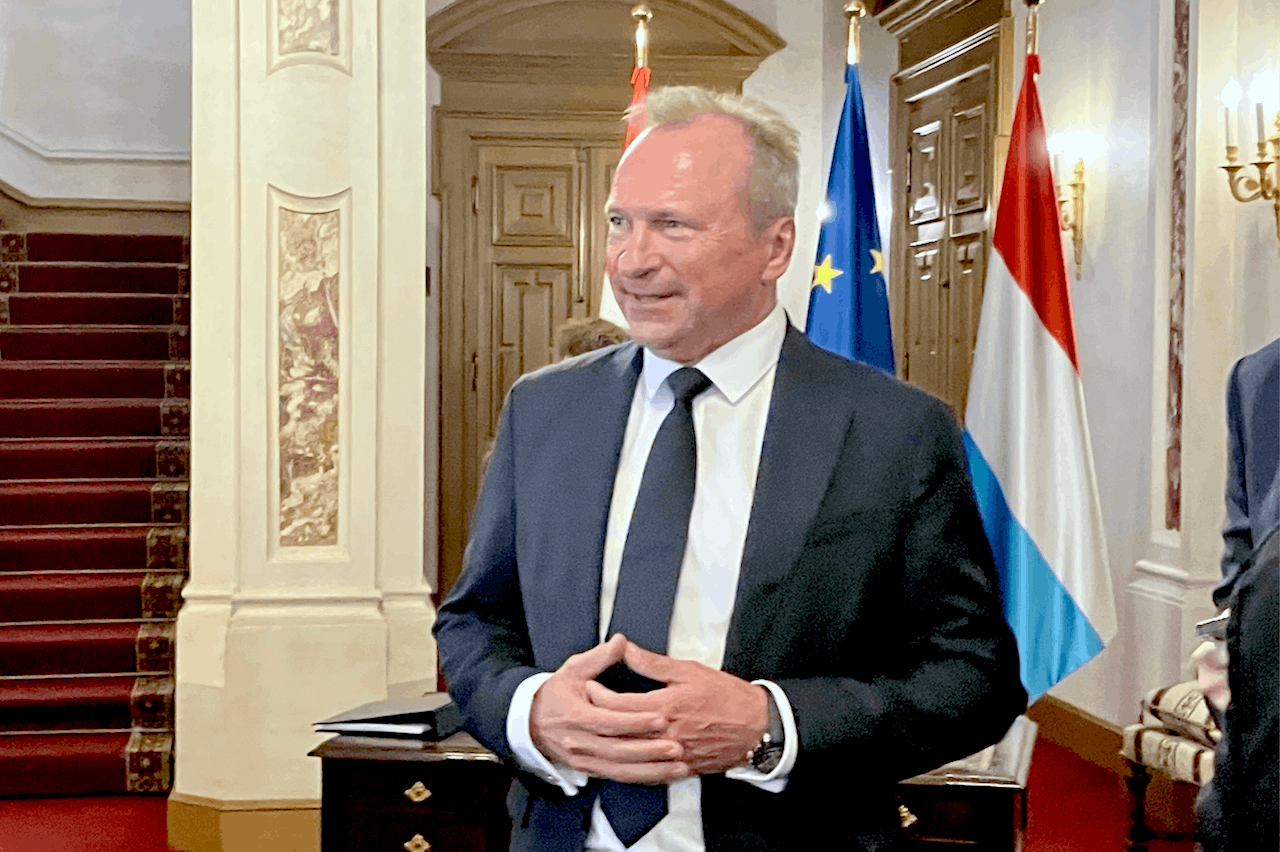
8.45am. Today is the big day for the presentation of the 2027 draft budget and the draft bill on the multi-annual financial framework for the period 2026–2030. Members of Parliament are arriving in scattered groups at the Chamber of Deputies.
The 2027 budget will need to set out the sustainable sources of revenue on which the government intends to rely to fund its commitments. Despite the upturn in tax revenue for the third quarter of 2026,