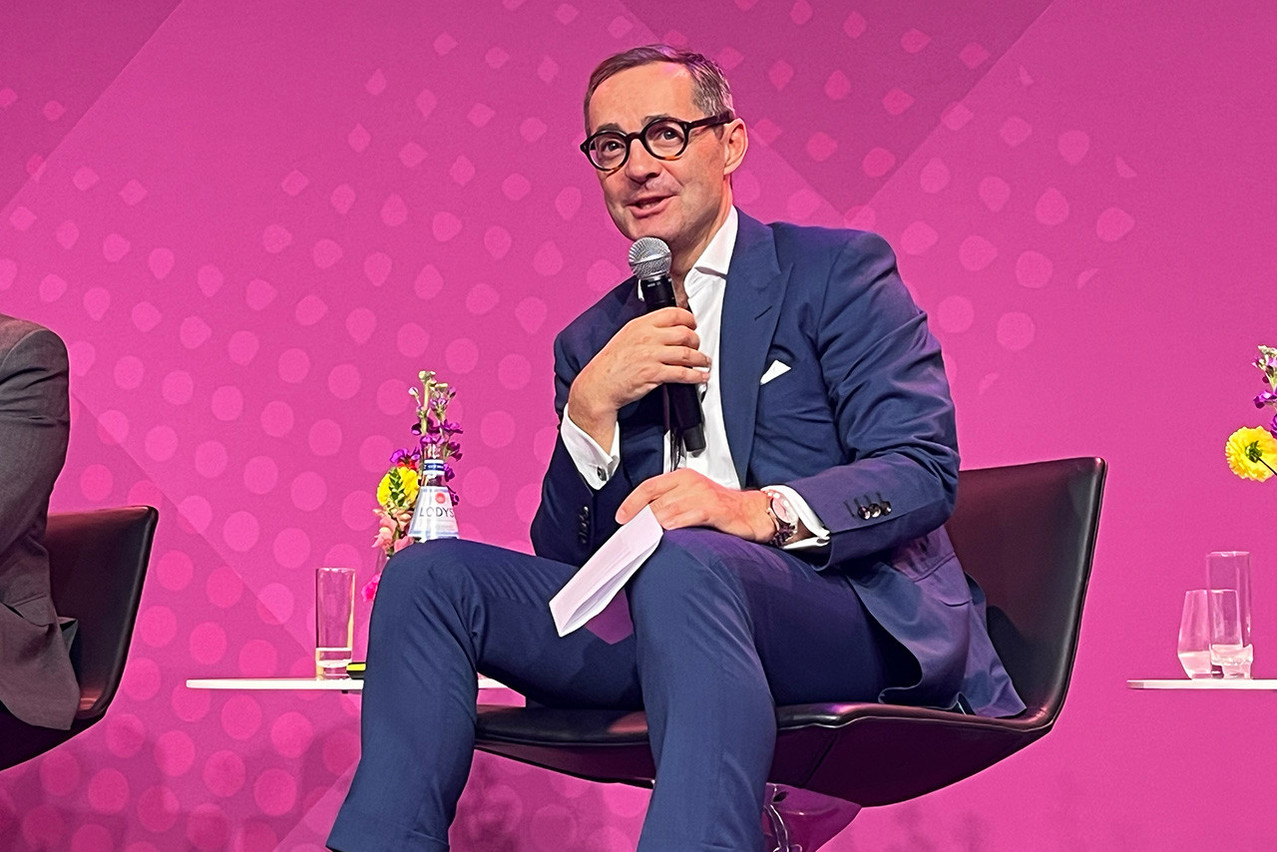
The announced modernisation of Luxembourg’s carried interest regime, applauded by the Luxembourg Private Equity & Venture Capital Association (LPEA), is one of the must-attend topics at the LPEA Insights 2025 conference on Thursday 23 October. Following the announcement by Finance Minister 

Does carried interest really create economic value?
Keith O’Donnell. —“The market seems to confirm this. Today, this system is seen as the best. If very sophisticated investors concede this return to investment managers, it is because carried interest brings value. And if this model has become an industry standard, it’s because it works.
What does academic research say on the subject?
“It remains limited. I only know of a dozen or so papers to date. This research shows that, for the investor—the end client—carried interest is an effective way of achieving outperformance.
Is the government going on the offensive with this carried interest 2.0 regime, or is it simply looking to catch up?
“If we look at competing regimes, several countries have already introduced schemes aimed at the same type of profile: this is the case, for example, with the Swiss flat tax regime, the Italian flat tax or the Spanish regime. Have these regimes attracted talent that Luxembourg might otherwise have attracted? Very probably. From this point of view, we could say that Luxembourg is lagging slightly behind.
But carried interest is a complex subject. We had to take time to think about it and find the right balance. This reform is not a revolution: it confirms, clarifies and improves an already favourable situation. Luxembourg was not a desert in this area: the taxation of carried interest was already competitive.
Some players wondered why, with such an advantageous system, the country did not promote it better…
“The answer lay in the grey areas and the lack of legal certainty. But investors and managers alike need clarity. The great merit of this reform is precisely that it provides this certainty. In fact, it confirms around 90% of the tax practice already in force, but with greater certainty.
The fact that the Conseil d’État made only one comment is very positive.

How do you welcome the Council of State’s request to adapt the planned scheme by further specifying the circle of beneficiaries of the scheme?
“I don’t think this is a major issue. The current text mentions people ‘in the service’ of the manager among the beneficiaries of the scheme. I liked this wording, precisely because it was broad. The term allowed different forms of collaboration relevant to carried interest to be covered. However, I understand the Conseil d’État’s desire for greater precision. The government will take care of this without difficulty.
Given the complexity of the subject, the fact that the Council of State has only made one comment is actually very positive. It shows the quality of the Ministry’s work. In short, it’s a detail to be ironed out, not a fundamental change.
Will this reform really transform the structure of the fund industry by attracting more decision-makers? Or will it remain a marginal tool, reserved for a few profiles?
“I don’t think it will be a revolution. Feedback from our clients is clear: even if Luxembourg adopts this new regime, it doesn’t mean that dozens of senior executives will move there overnight.
The fact remains that the teams concerned are increasingly mobile because they operate on a European rather than a national scale. When they choose a location, several criteria come into play, and taxation is one of them. All other things being equal, this new framework will make Luxembourg more attractive. Ultimately, it will help to create greater critical mass within the existing ecosystem.
When will we be able to measure the effects of this reform?
“A five-year period seems reasonable to me. The cycle of a carried interest is generally between five and ten years, so that’s when we’ll be able to start seeing concrete impacts.
And how do we measure its success? How do we know whether the reform really creates value for the country?
“As with any tax reform, it’s difficult to measure. We can compare the development of the Luxembourg fund industry with that of the European or global market. Has Luxembourg continued to attract private equity funds? Another angle would be employment in this sector. The idea is that the arrival of more senior professionals, who often benefit from carried interest, has a knock-on effect on the teams around them. But defining a precise indicator remains complex.
The risk [to Luxembourg’s image] seems fairly limited to me.

This reform aims to strengthen the front office, a part of the value chain where Luxembourg is weaker. What visibility can we have on the type of profiles attracted?
“This is not an easy statistic to find. Today, it is impossible to know how many senior professionals or front office positions in private equity there are in Luxembourg. We won’t be able to measure an increase of 20 or 50% over three years because this data simply doesn’t exist.
At a time when the tax mobility of individuals is attracting increasing attention—especially with the debate on the Zucman tax—does Luxembourg’s offensive on carried interest pose an image risk for the country?
“This risk seems to me to be fairly limited. Firstly, it should be remembered that there are currently at least a dozen specific carried interest regimes in Europe. This is therefore not unique to Luxembourg, but is common practice.
Secondly, if we look at personal taxation in Europe, it is rare to find a country without an interesting regime to attract certain profiles or support specific activities. Moreover, the debate is less polarised today than it was on corporate taxation.
It is true that there is not yet, for individuals, the equivalent of the BEPS project applied to companies. With the Zucman tax, which proposes global taxation to reduce tax avoidance, we are seeing a counter-movement. But I don’t see the consensus needed to achieve concerted action.”