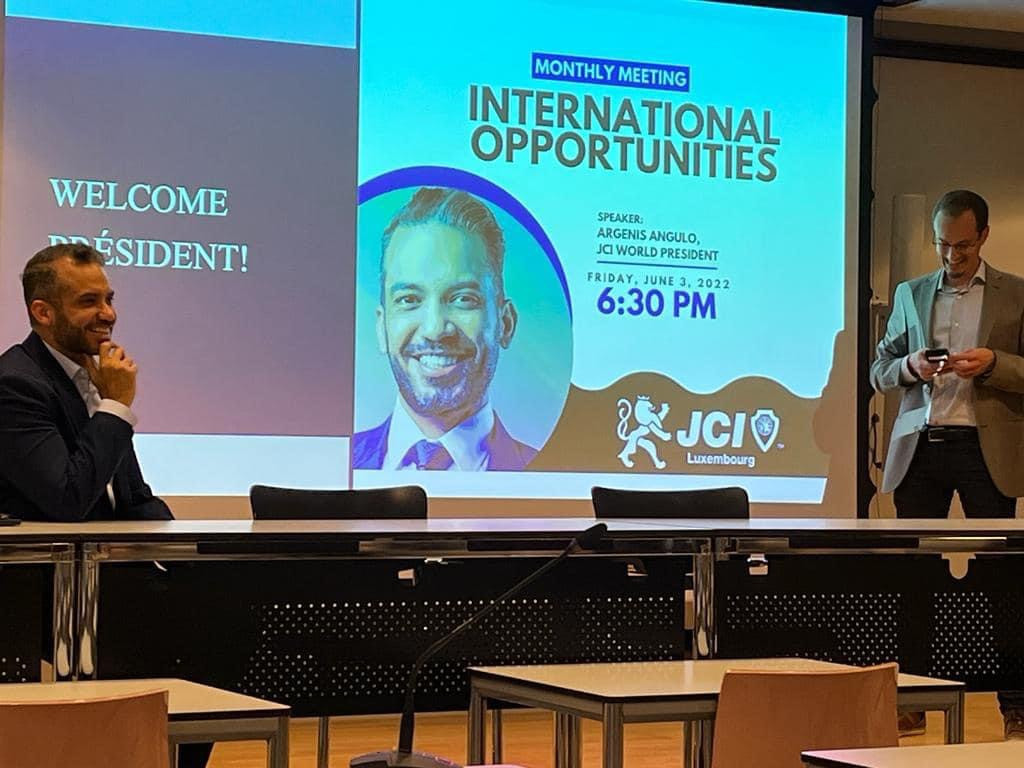
It is not every day that the junior chamber receives its international president. The last time was in 2017 with Paschal Dike, who came from Nigeria.
The international presidency rotates annually between members and is currently occupied by Argenis Angulo. The 38-year-old created his consulting company in Venezuela 15 years ago. On Friday 3 June, he joined Luxembourg for the first time at a round table on the projects of the Junior Chamber International (JCI). Founded in 1915, it has 145,000 members in 100 countries, including 75 in Luxembourg, and claims to be “the world's leading network of young people (aged 18 to 40) who are active citizens”.
Nele Buysmans, JCI vice-president, also joined the conversation.
Mathilde Obert: What message do you want to convey by coming to Luxembourg?
Argenis Angulo: The objective is to keep the link between young leaders, to show them what we are doing in the world and to know the projects they are setting up. Luxembourg is very well connected to the international network. Its young people are doing incredible projects for economic recovery, after the pandemic challenge. I have very good feedback on this.
The main example that Luxembourg gives to Europe and the world, for me, is the way they work with politicians.
What does Luxembourg represent in comparison with the 100 countries where the Junior Chamber International is located?
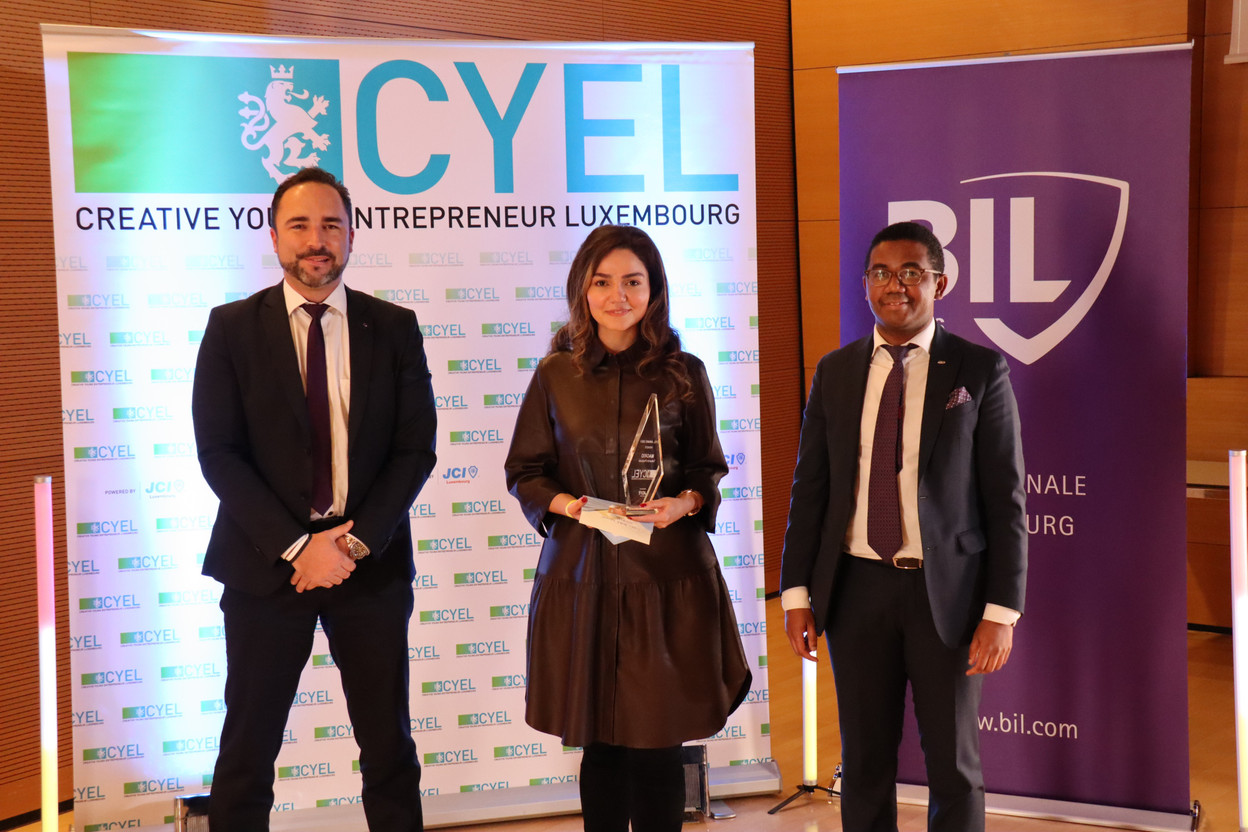
A.A.: Luxembourg is absolutely important for us. For example, we have the Creative Young Entrepreneur programme (Cyel in Luxembourg, editor's note), which aims to reward young entrepreneurs with innovative ideas by offering them mentoring. Luxembourg has done a very good job in launching the project on a national scale and in providing development opportunities for young people in general.
What are the specificities of the country?
Nele Buysmans: The main example that Luxembourg gives to Europe and to the world, for me, is the way they work with politicians and how they connect all parts of society. The junior chamber of commerce Luxembourg also offers a wide range of French-speaking training for eight member countries.
We have grown as an organisation.

After Covid, then the war in Ukraine, how are young leaders doing today?
A.A.: The covid period was challenging. We can say that we have grown as an organisation. We started ‘Rise’ to motivate members to create projects to help businesses, motivate their workforce or increase their capacity, but also to deal with the mental effects of the pandemic, to be part of the economic recovery.
In the midst of this terrible war, members of our organisation are uniting around the world to create initiatives to support Ukraine.
What are the current challenges for young leaders?
A.A.: We believe that young leaders and citizens are aware of their rights, of what governments, companies, bring to them. But we see a gap on the awareness of our responsibility. We want to reduce this gap and inspire them to know their duties as well.
This story was first published in French on Paperjam. It has been translated and edited for Delano.