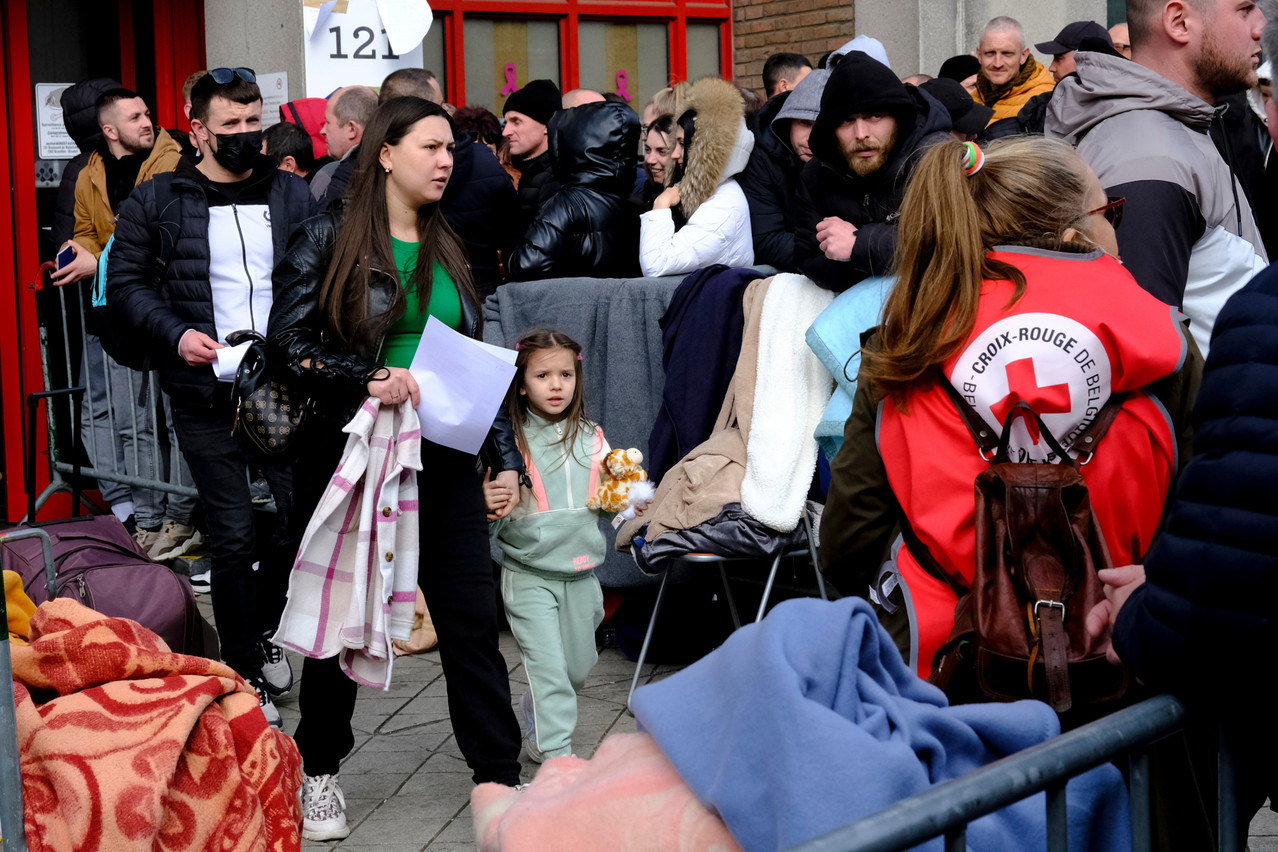
Of the total temporary protection applications received in 2022, the immigration directorate of the Luxembourg foreign ministry approved the requests of 98% of applicants. The mid-year reports shows that Ukrainians accounted for 94.5% of the requests for temporary protection in 2022, followed by Nigerians (0.7%), Algerians (0.6%), Cameroonians (0.6%), and citizens of Morocco (0.4%) in the top five. The high number for Ukraine is not surprising, given the ongoing war in the country.
The figures published by the immigration directorate on 21 July show that citizens of Ukraine (370) Morocco (11), Nigeria (9), Cameroon (8) and other countries (52) also accounted for the total applications for temporary protection in the month of June alone.
Between March and June this year, 5,984 persons expressed their intention to apply for temporary protection Out of these, a total of 4,338 persons finalised their application for temporary protection in Luxembourg, while 435 halted their requests in this period.
Increase in international protection requests
Similarly, the first half of the year also shows the number of requests for international protection also went up compared to 2020 and 2021. A total of 937 applicants filed for international protection as of June 2022, more than double the number of applications received in June 2020.
As of 30 June, most applications for international protection came from Syria (40.2%), Eritrea (15.9%) Afghanistan (7.9%) Venezuela (5.5%) Turkey (2.7%) and Algeria (1.9%), also reflecting the monthly figures for June.
The refugee status of over half of the applicants (404) for the mid-year were approved by the directorate. Subsidiary protection--international protection for persons who cannot be considered a refugee but prove there are strong grounds to believe that a potential repatriation will cause a real risk of suffering serious harm--was granted to 132 persons, while 81 persons were denied refugee status, and the status of 6 persons were revoked.
Applying the Dublin regulation
The Dublin regulation signed in Ireland in 1990 states that an asylum seeker can only have an application considered in one of the Dublin countries--EU member states, Iceland, Switzerland, Liechtenstein and Norway--which should be the country of arrival for the applicant seeking protection.
The Irish government however on 18 July decided to temporarily suspend its initial stance on visa-free travel for refugees for a period of 12 months, contrary to the Council of Europe agreement on the abolition of visas for refugees, for which it is a signatory. It asserted that the decision is driven by a suspected abuse of refugee and asylum statuses by persons who use travel freedoms to launch multiple applications for protection in several countries.
Based on the first country of arrival immigration policy, Luxembourg transferred the requests of 15 applicants to Germany, 11 applicants to Italy and 10 applicants to the Netherlands, while it received the applications of 18 persons from Germany, 15 from Greece and 5 from France.
A total of 33 persons were repatriated in this first half of the year. 29 of those were voluntary repatriations.