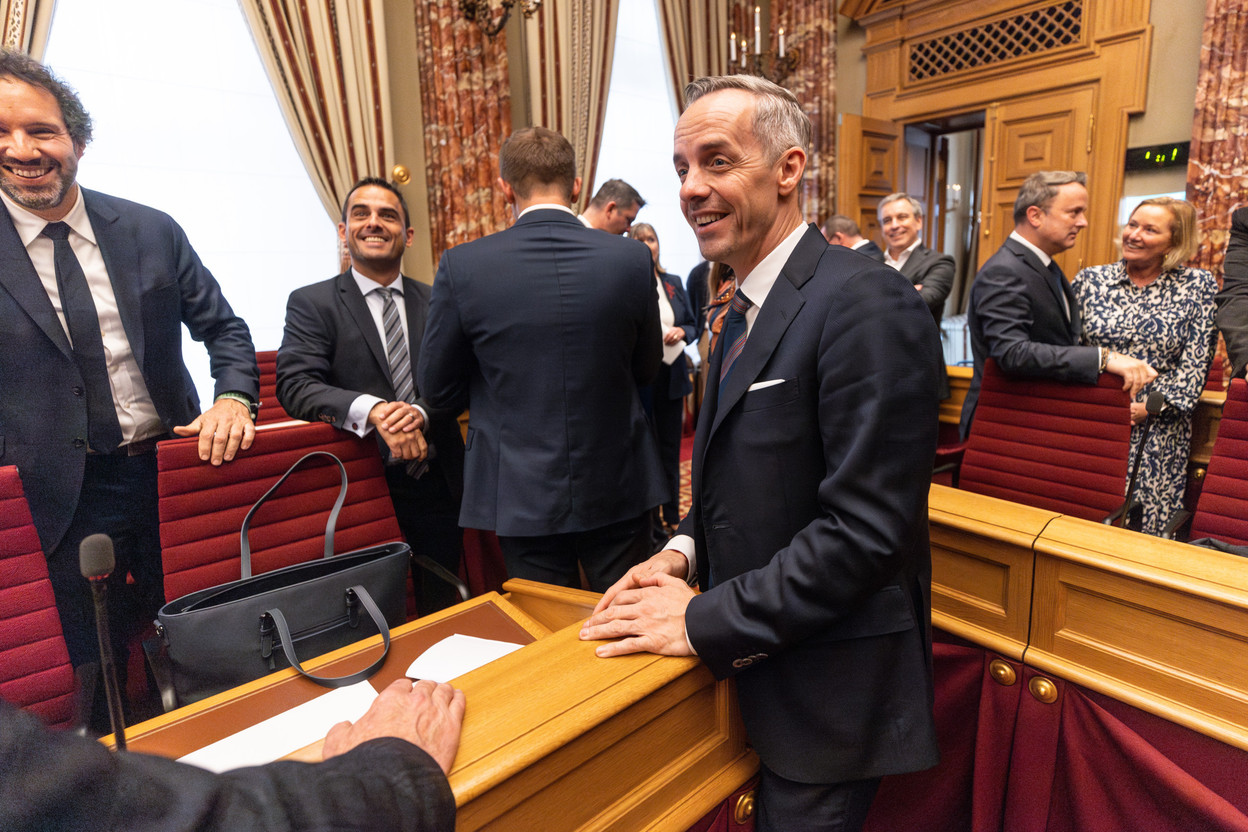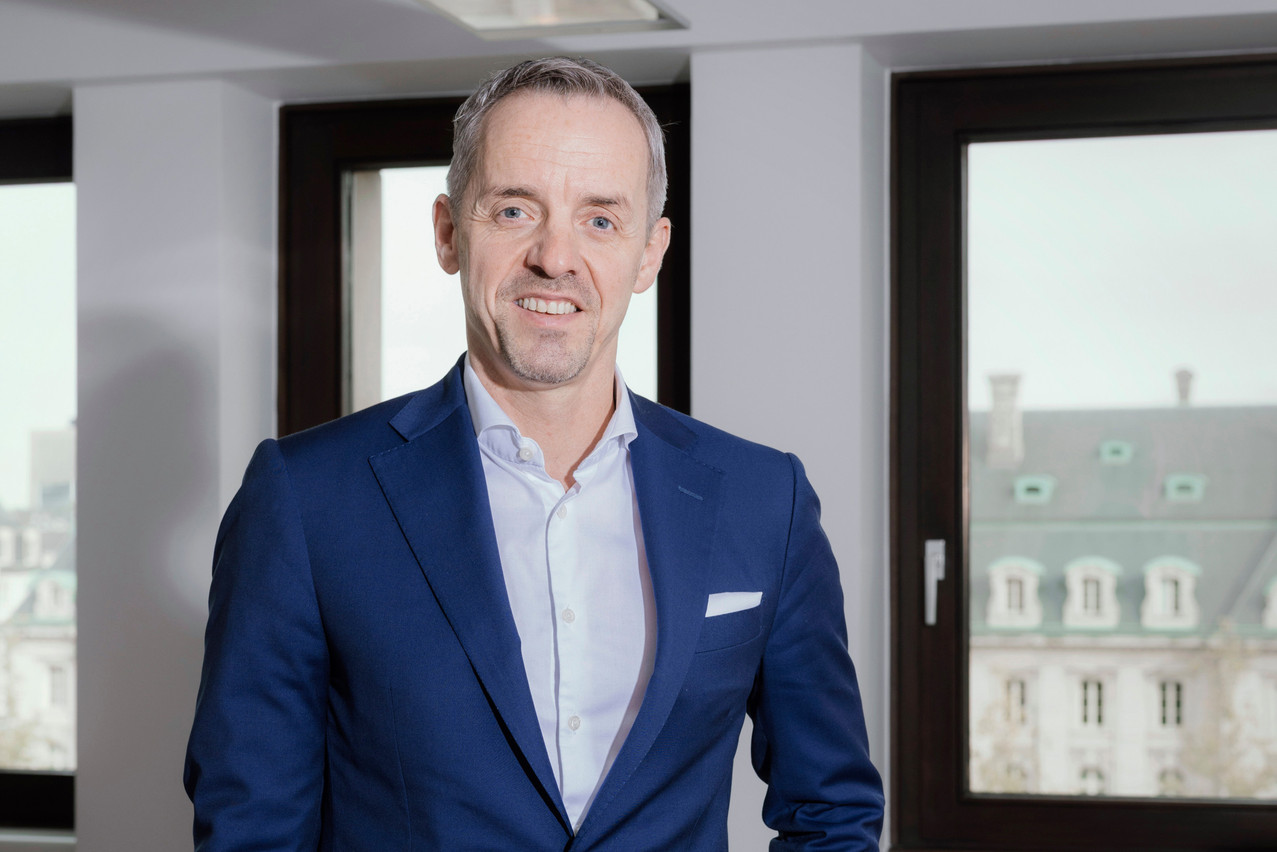
You are one of the government’s most exposed ministers. Why do you think that is?

Did the fact that your ministry has been a Socialist preserve for the past twenty years play a role in the union discontent?
“I think so. I have a different way of working to my predecessors. Everyone has to accept that. I am not the monster minister that some people like to describe.
How would you describe your relations with the unions?
“Dialogue with the unions has never been broken. We must work together, trade unions and employers, for the good of employees and businesses. That is my ultimate goal. That’s what we do on a regular basis, within the Economic Committee, the ArcelorMittal Monitoring Committee, and in monitoring issues such as Liberty Steel and SES. Employees must be able to work in a safe and healthy environment. To say that social dialogue is dead is an exaggeration. In fact, since 28 October, we have entered a new round of bilateral talks.
What is the state of your relations with management?
“I deal with employers in the same way as with the trade unions. I am first and foremost the minister for employees.
How is the labour market doing?
“It’s changing fast. We are facing an increase in the number of jobseekers and a decline in the number of vacancies. We are also facing a shortage of skilled and unskilled labour in all sectors. This really is a huge challenge for us Luxembourgers. Especially as we have 240,000 cross-border commuters out of a workforce of around 500,000, who are increasingly asking themselves whether it’s still worth coming here. Because of traffic and rising wages in other countries.
In this context, can the economy create the jobs needed to balance the social model?
“It’s getting harder and harder. We were used to growth rates of around 3% a year. The current growth rates - 1% this year after two years of negative growth - are not enough. We currently have 18,000 jobseekers for 7,000 vacancies. This worries me. In 2022, we had as many applications as vacancies. Now the gap is widening.
Is this vicious circle a foregone conclusion or are there ways to break it?
“It obviously has to be broken. But how? By upskilling and reskilling jobseekers and existing employees. In June, I had a vote to amend the Labour Code, with a view to introducing a forward-looking employment and skills management programme that allows employees to take training even during working hours. The government covers almost the entire cost of the training. This is a great opportunity for small and medium-sized businesses. It’s up to them to seize it. They need to be motivated to do so.
What about the politically sensitive and central issue of the organisation of working time?
“Discussions began on 28 October with the social partners, whom I met separately and successively. It is still too early to draw any conclusions, as the positions of the various parties may be far apart. We will be meeting twice more on this subject between now and the end of the year, and once at the beginning of the year. The objective set, with the Minister for the Economy 
Another controversial issue is absenteeism from work. What are your plans in this area and where do you stand?
“We are working in an interministerial group that brings together officials from the Ministries of Labour, Health and Social Security. We don’t yet have any concrete proposals, but the objective is clear: to prevent absenteeism from continuing to rise and to bring it down to reasonable levels. The average rate in companies is between 8% and 10%. This is far too high. It puts a strain on business activity, but also on the employees present, who have to make up for these absences with the risk of falling into burn-out and therefore having to take sick leave too.”
6.1%
The number of jobseekers stands at 18.920, giving an unemployment rate of 6.1% at 30 September, an increase of 6.7% (+1,187 people) over one year. The increase was particularly marked for the most highly qualified jobseekers, whose numbers rose by 14.1% over one year.
1.285 million: the cost of absenteeism
68.7% of this amount is borne by employers and the State, and 31.3% by the CNS, according to the October IGSS statistical report. Employers’ and the CNS’s share rose by 7% and 14.5% respectively. In 2024, the absenteeism rate stood at 4.8%, marking a slight increase, which, according to the IGSS, is explained by the frequency of episodes of illness lasting more than 21 days. 60.1% of employees experienced at least one absence, with an average absence time of 25.2 days.
This article was written for the December 2025 issue of Paperjam magazine, published on 19 November. The content is produced exclusively for the magazine. It is published on the site to contribute to Paperjam’s comprehensive archive. Click this link to subscribe to the magazine.
Is your company a member of Club Paperjam? You can request a subscription in your name. Let us know via club@paperjam.lu