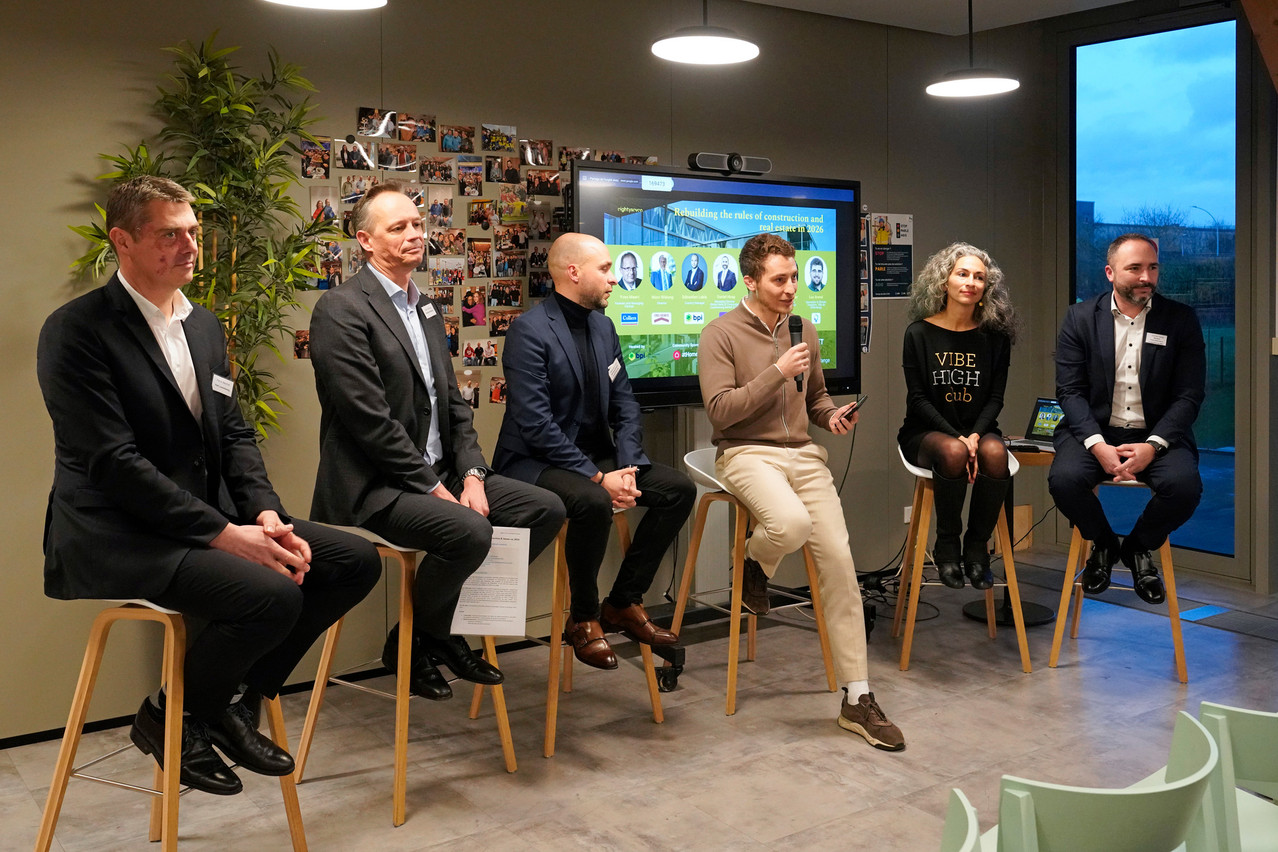
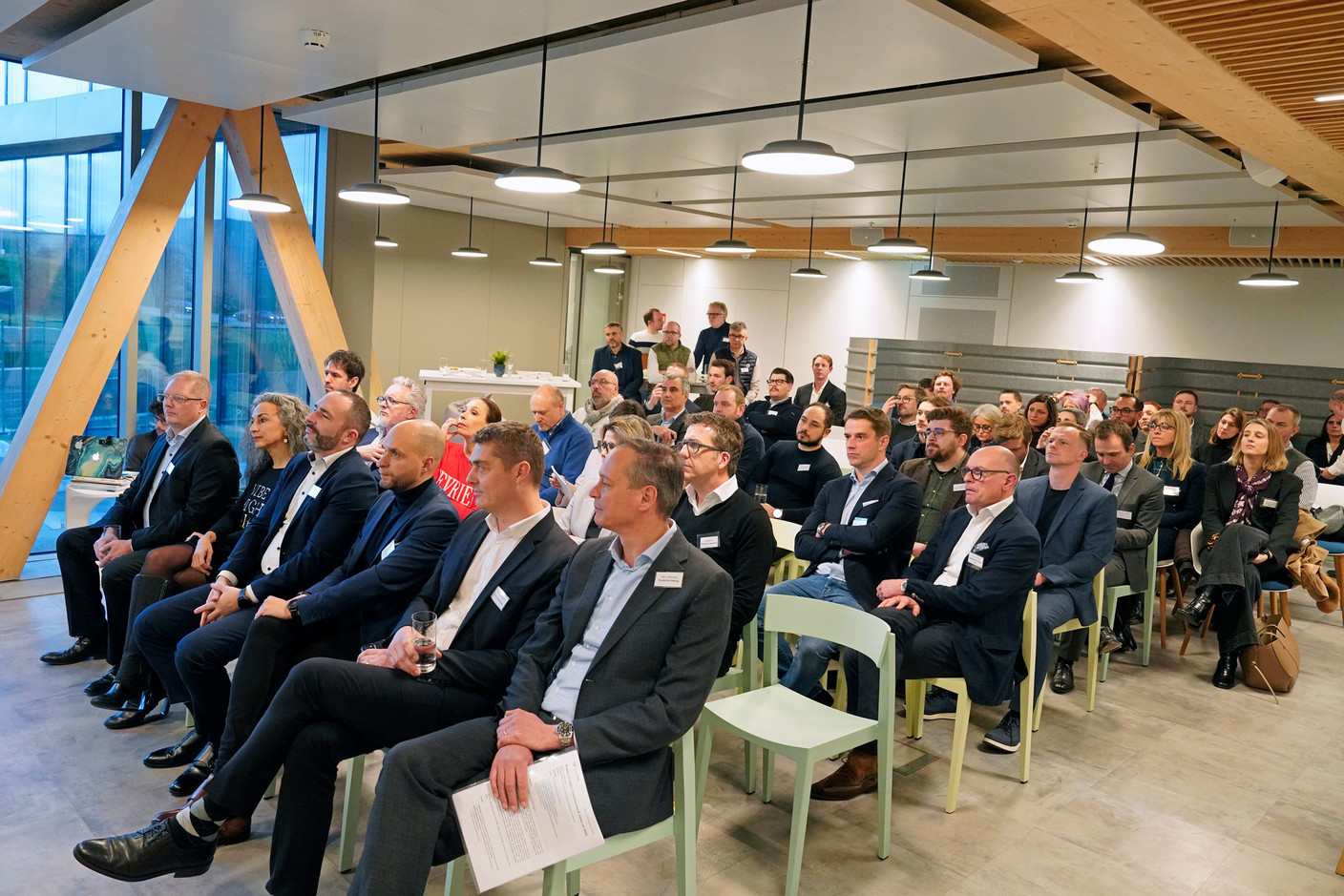
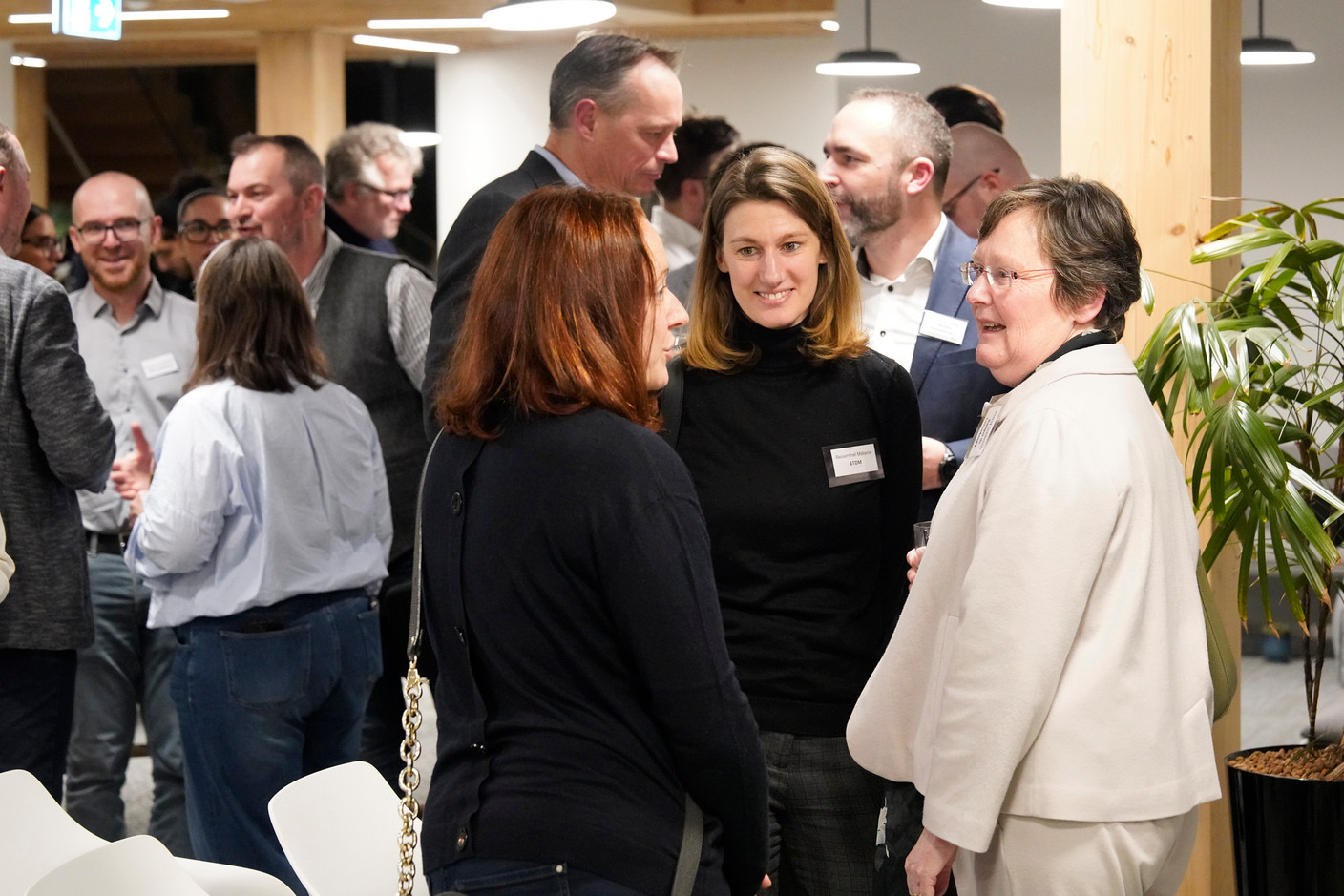
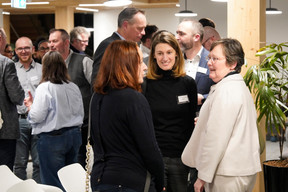
A conference-debate organised by EightySeven, a platform dedicated to innovation players in the world of construction and real estate, brought together institutions and professionals on Thursday 12 February at the BPI offices in Leudelange. A full house, a familiar setting and the evening’s topic, no doubt even more so: interest rates, the cost of materials, investors in retreat, real estate projects.
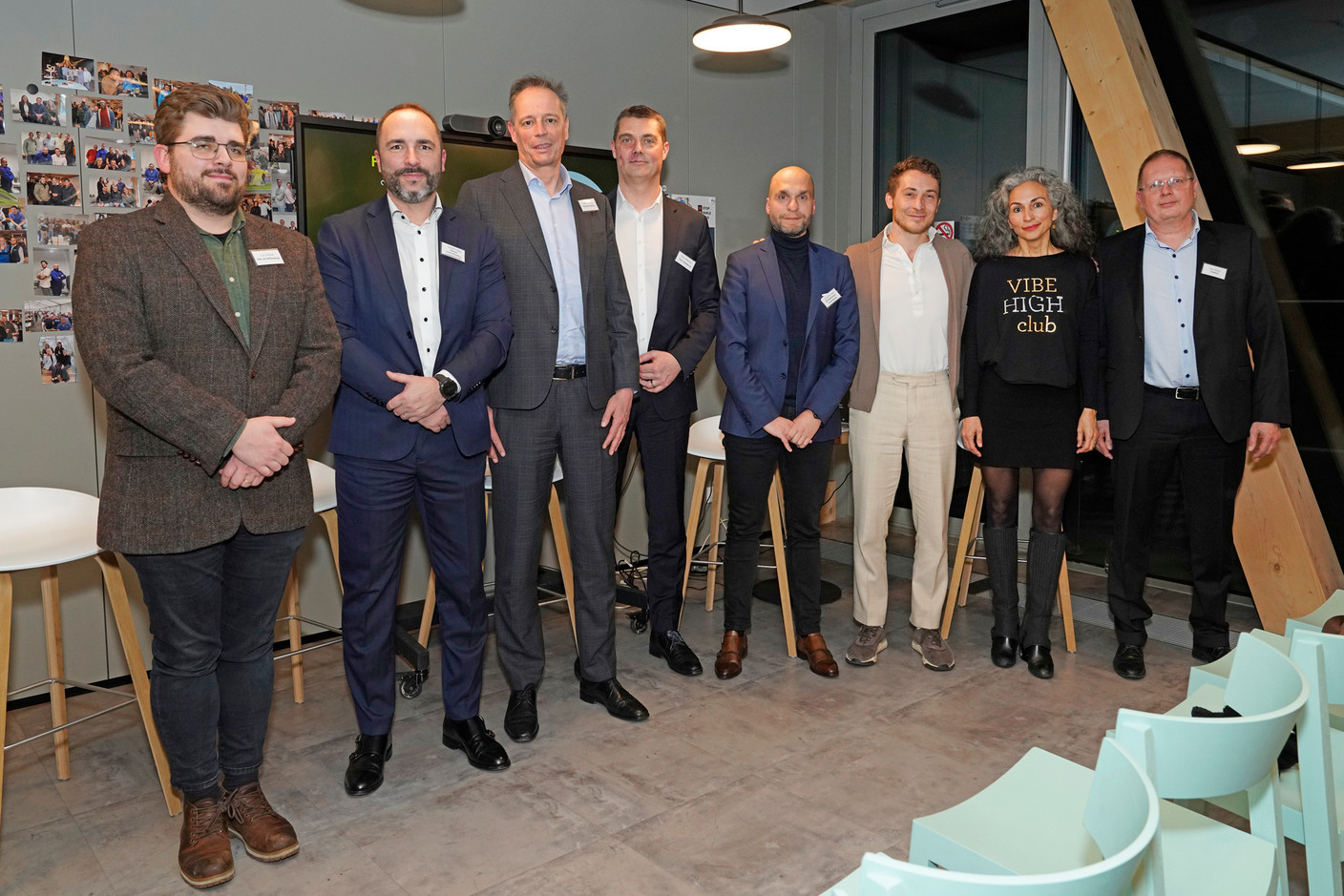
Shaaf Milani-Nia (City of Luxembourg) and Luc Arend (City of Differdange), 


What emerged from the discussions? Does the future really look bleak? Yes, if we were to look only at the risks. Except that the sector seems to have a stock of resources and answers on hand that has rarely been equalled. In a ProTech database “scrutinised day after day”, 8,000 solutions are listed in a market that is estimated to have around 10,000. And one striking figure: 3,500 of these solutions are based in Europe, making the Old Continent the leading breeding ground in this field.
2026 covers the entire value chain
IA, robotics, software, hardware but also low-tech, alternative materials, modular construction, new business models: The good thing about 2026 is that innovation spans the entire value chain. In the top 20 hubs, Europe has several cities at the top of the list: London in first place, then Paris, before New York, Berlin or San Francisco.
In 2015, in Europe, nearly two solutions would have been created every day. Translation 2026: some of these players are now nearly ten years old. No longer start-ups that will go bankrupt tomorrow, but rather vectors of solutions that are seeking to change scale.
The HR snapshot points in the same direction: around 3,000 solutions would have 11 to 50 employees and 1,200 between 51 and 200. Innovation is no longer a buzzword: it is an industrial layer in the process of being structured. In terms of sustainability, 900 solutions would be directly linked to ESG (environmental, social and governance criteria) to help architects, engineers, general contractors and developers measure and improve their impact.
The network gamble: collective intelligence or nothing
This was the rationale behind the presentation of a networking ecosystem: membership, community platform, events, fundraising support and advice for large groups. The model is based on three pillars:
—a social network + knowledge centre type platform;
—around fifteen events per year;
—start-up acceleration and strategic support for corporates.
How will it be deployed? Belgium first, followed by Luxembourg, the Czech Republic, Spain and Portugal. Claimed impact: 1,400 participants last year, 1,000 introductions between members and a platform used monthly by at least 60% of members (including 20% every week). The underlying idea is that, in times of crisis, the value of a network grows faster than the network itself. This is an observation that should serve as a compass.
As far as commercial property is concerned, take-up of office space is reported to have slowed after peaking and then partially recovering, a sign of an active market. In the industrial and logistics sectors, demand is strong, supply is limited and rents are rising.
But the crisis of the moment remains residential: when interest rates rise, activity stalls, and when conditions ease, the market breathes. As far as existing property is concerned, the dominant impression is that of an equilibrium price that is taking hold: buyers and sellers are finding each other again and variations are calming down.
As far as the buy-to-let is concerned, the picture is more paradoxical: volumes are up while prices are rising. The explanation put forward is that the countercyclical role (i.e. a fiscal policy that adopts the opposite trend to that of the economic cycle) of the public sector, via programme acquisitions, is supporting transactions while the private sector remains under pressure. The challenge then remains to avoid the domino effect (developers then banks…).
Investors: an elephant… in a very small room
A consensus among the panel of stakeholders: a new-build market without investors will not last. But the crisis has not only damaged the curves, it has also dented confidence. More informed and cautious buyers are now demanding advanced construction work, a developer with a track record and clear guarantees. Some avenues have been explored, such as partial public guarantees. Or financing right up to the closed shell.
The question is a burning one: should the ground be separated from the building? The emphyteusis model has been advocated as an anti-speculation tool and a lever for affordability with a long-term public heritage rationale. On the bank side, an opening was noted but subject to conditions: mortgage ranking, regulatory treatment, liquidity on resale and exit mechanisms (pre-emption, buy-back obligation, etc.).
And in the background, an observation that stands out, that of a debate that is ultimately cultural: in Luxembourg (as almost everywhere else), land remains a safe haven and a tool for transmission.
The conclusion is, in fact, unsurprising: emphyteusis is making headway, but somewhat wearily and without the same appeal as traditional land.
Concrete remains essential
Limiting new concrete by 2030? The answers put technology back at the heart of the debate, with the conclusion that each material has its own role to play. For foundations, engineering structures and compression, concrete remains indispensable. On the other hand, decarbonisation requires optimisation, hybridisation, and the abandonment of technical “gasworks” when they do not add value.
Should so-called reversible buildings be imposed, right from the design stage? Between philosophy and regulatory reality, the speakers pointed above all to the administrative complexity: dual use, permits, co-ownership, operating constraints.
The discussions concluded with a final, more offbeat sequence and a few ideas:
—opening up certain financing (bonds, funds, diversified vehicles) further beyond just professionals;
—rethink operational planning, in particular multi-owner PAPs and their trigger thresholds;
—relaunch formulas such as “rent-to-buy” or property leasing, provided that the knot of double registration duty is resolved.
The crisis has closed a chapter where “everything was sold before the first shovel was turned”. The next chapter has yet to be written, but it will certainly have a common thread: less automatism, more evidence and cooperation.