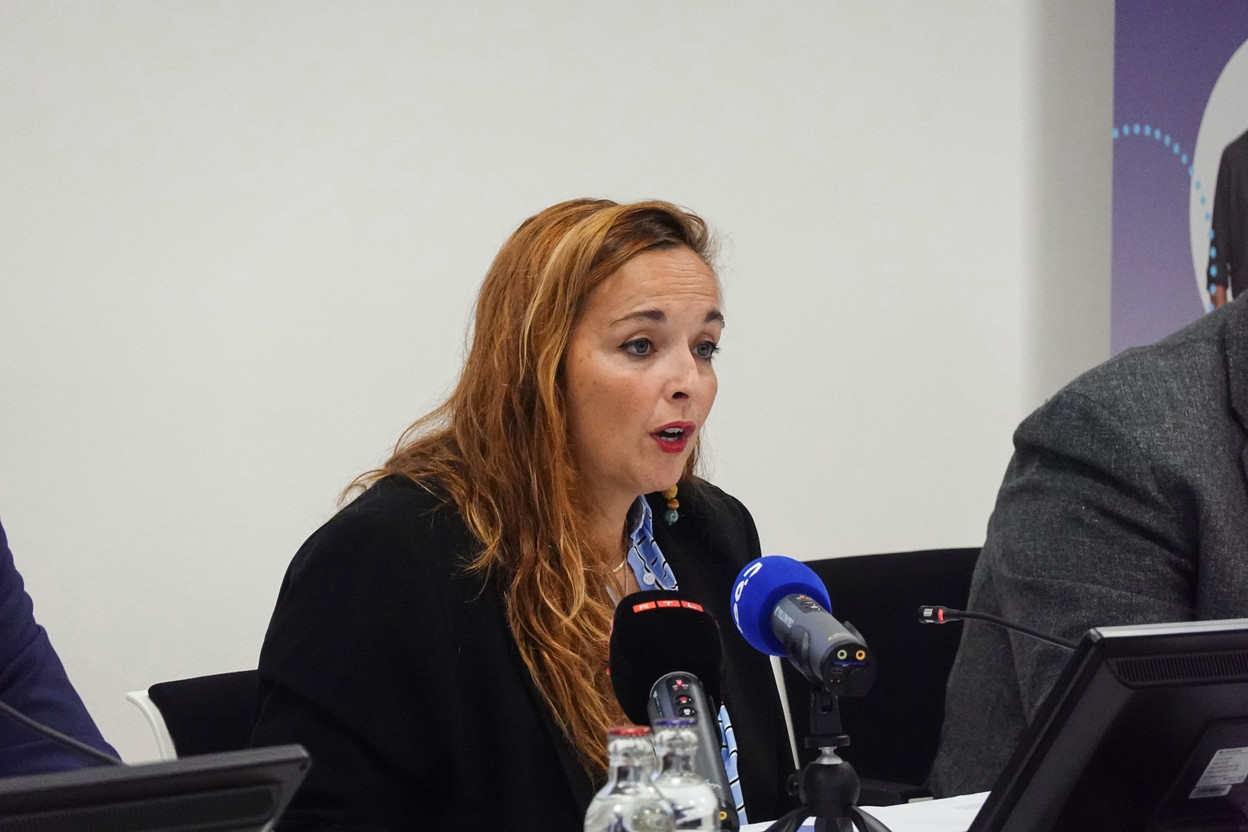
A few days after the Chamber of Employees was once again called to order on the subject of poverty in the country "which has become a normality", according to its president 

As the cursor often cited by both organisations and the government is the at-risk-of-poverty rate published by Eurostat, which was 18.1% in 2024 for Luxembourg, which thus has a higher rate than the eurozone average. "However, this flagship indicator contains numerous biases and only looks at the 'income from social exclusion' dimension, which makes it inadequate for this kind of exercise. Furthermore, what rate should be targeted? Would a simple fall of one or two percentage points validate the success of the long-awaited plan without a stated objective? (...) This exercise is politically delicate, as it is risky for the government, which will not succeed in achieving its own objective. However, it would send out a strong message from a government in power that has made the fight against poverty an absolute priority", analyses Jean-Baptiste Nivet.
The economist does, however, advocate setting quantified poverty targets, which would encourage "impact measurement and the introduction of an ongoing evaluation process", taking as an example the evaluation of Revis in 2021, three years after it was introduced, which would be "an exercise to be repeated". But he concedes that "beyond the political risk involved, setting such an objective remains a delicate matter, particularly in terms of finding a consensus on the indicator to be used. The danger of oversimplification is real, given the multidimensional nature of poverty. It can cause social policies to drift towards quick wins and window-dressing that do not tackle the root causes of social exclusion."
The major impact of housing
Jean-Baptiste Nivet takes as an example Canada, which in its Poverty Reduction Act of 2019 aims to halve the poverty rate by 2030 compared to its 2015 level. "The official threshold used corresponds to the cost of a basket of goods and services that people need to meet their basic needs and achieve a modest standard of living, in other words a reference budget with Canadian sauce. The objective of reducing poverty must meet a number of criteria. If it is to be achieved, it must be capable of making a real difference to the lives of Luxembourgers, and must therefore constitute a result. (...) There are various strategies available to Luxembourg to ensure that setting a poverty reduction target benefits the success of its social policies. The first would be to take hold of the European objective, which is currently well off track (the EU aims to reduce the number of people at risk of poverty or social exclusion by at least 15 million by 2030, i.e. 4,000 fewer than in 2019 in Luxembourg, editor's note). This would require effective policies to reduce inequalities between the most modest households and the middle classes (at-risk-of-poverty rate), to implement new schemes to meet basic needs such as heating, meals with protein or access to a personal vehicle (severe material deprivation rate) and to promote reintegration into the labour market (work intensity)."
"Finally, given the multidimensional nature of poverty, the government could decide on a flagship poverty reduction target, such as reducing the number of people at risk of poverty according to a threshold calculated after deducting the cost of housing and set at the standard of living in 2025, to which it would add a table of indicators incorporating each dimension of social exclusion: persistence of poverty, children, work, education, health... The proposed indicator may appear complex, but it has certain strengths. The deduction of housing costs makes it possible to take account of differences in housing situations, which have a major impact in Luxembourg on household purchasing power", concludes Jean-Baptiste Nivet.