To neutralise a drone, Zero Gauss no longer intends to fire a projectile, but to use an electromagnetic pulse, the cost of which is estimated at one euro. At the other end of the spectrum, BellaPause is analysing the claims made by dietary supplements aimed at women going through the menopause. The 17th cohort of Fit 4 Start illustrates how the Luxembourg programme has expanded well beyond its digital roots.
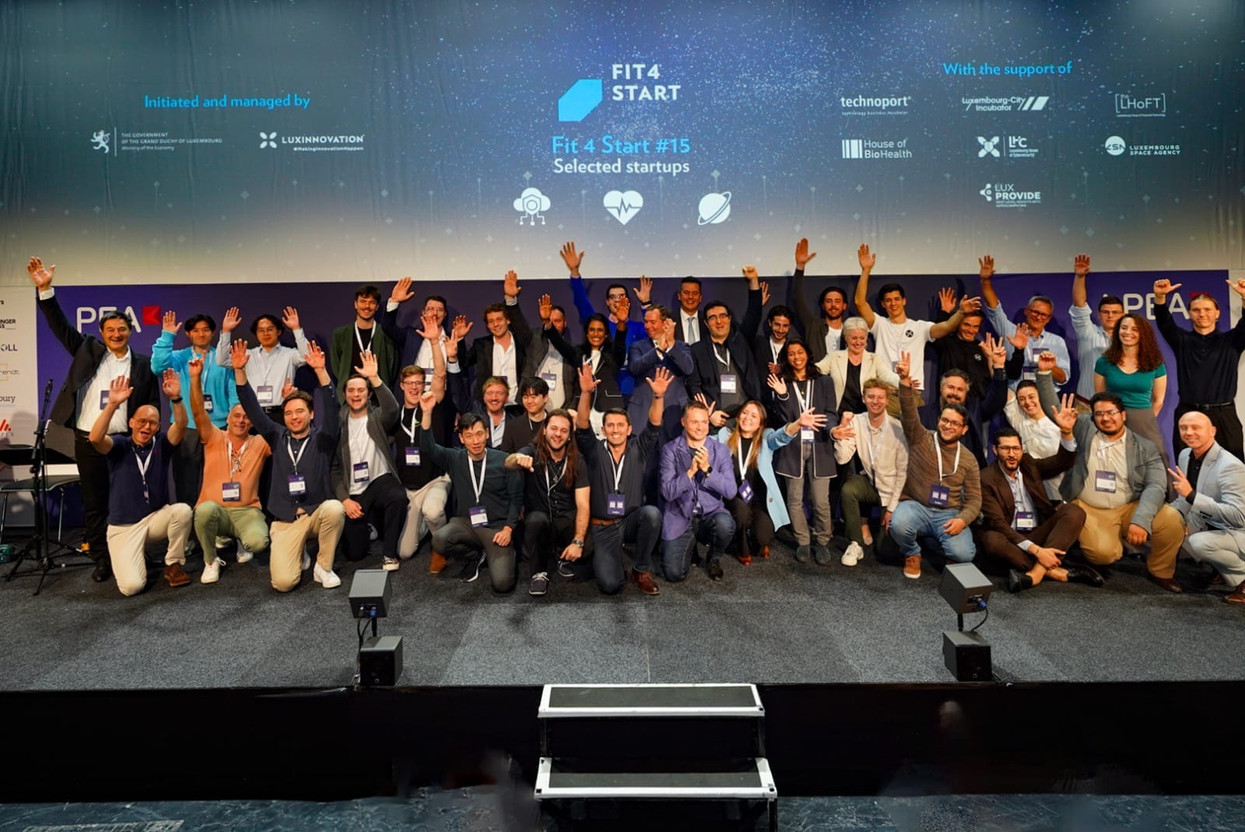
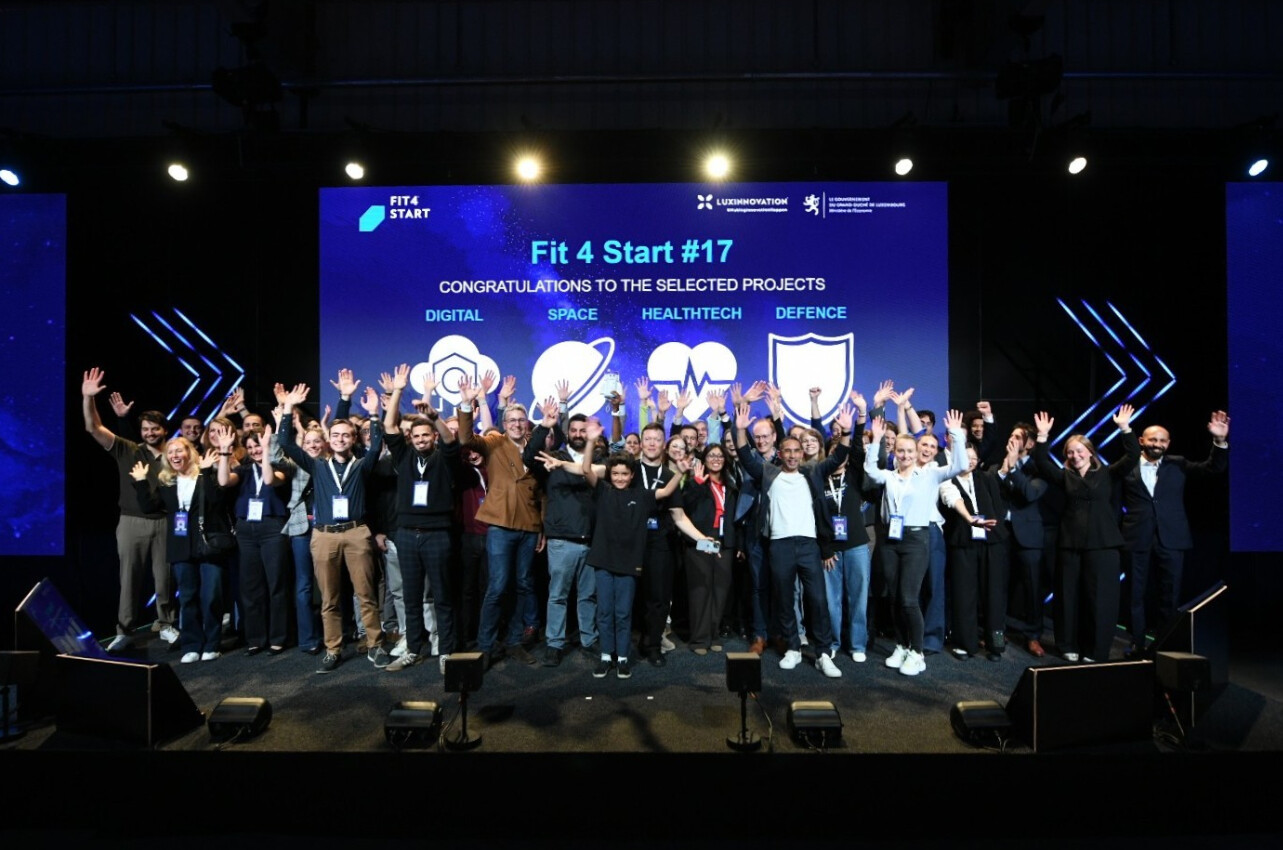
The 24 start-ups were announced on Thursday 15 October, at the close of the Luxembourg Venture Days. They were selected from among 73 finalists, who in turn had been shortlisted from 556 applications from 44 countries. This figure exceeds the previous record of 495 applications set in 2025. After Luxembourg, the countries most represented amongst the applicants were France, the United States, Ukraine, India and the United Arab Emirates.
The selection comprises ten digital projects, five space companies, five healthtech firms and four defence companies. This latter sector is featured in Fit 4 Start for the first time. Luxinnovation links it to Luxembourg’s defence industrial strategy and the future Defence Campus.
The admission of the 24 companies remains subject to a final due diligence process. Once incorporated in Luxembourg, each will be eligible to receive 50,000 euros from the Ministry of the Economy during the six-month support period. Additional funding of up to 100,000 euros is available for those companies that complete the programme, raise private capital and employ at least two people.
The 24 selected projects
DEFENCE
ÆTHERION Space and Defence — Luxembourg. The company is building a network of distributed millimetre-wave radars, linked to its Vigil software, to detect and track drones flying at low altitude around ports, airports, energy sites and military installations. Shakil Perera is co-founder and chief operating officer.
Lanka Robotics — Ukraine. The start-up is developing an autonomy software layer for unmanned ground vehicles, capable of maintaining their course or continuing a mission in the event of a loss of GPS and communications. It has also designed Mamut, a logistics robot capable of carrying up to 200 kilos. A co-founder named Sofia has been identified, although her full name has not been published. The founders have invested around $20,000 in the project, and the company stated that it was seeking $1 million, though it has not announced the completion of this funding round.
USIL Therapeutics — Luxembourg. This biotech company is developing a multi-organ treatment for injuries caused by nuclear or radiological exposure. The solution is aimed in particular at the military, emergency services, civil defence, critical infrastructure and space missions. Frédéric Marin heads the company. In 2026, USIL Therapeutics secured a European grant of 5.2 million euros under the EU4Health programme. This is public funding and not a fundraising round.
Zero Gauss — Luxembourg. This defence company is developing a high-power microwave weapon designed to disable the electronics of drones, including those guided by fibre optics and therefore immune to radio jamming. Its target operating cost is around one euro per shot.
DIGITAL
Blueberry — Luxembourg. Blueberry is developing an infrastructure for the collection and resale of second-hand children’s clothing. Its platform enables families to resell their items and is also set to provide brands and retailers with a technological solution to organise their own second-hand channels. The company is led, in particular, by Stephanie Jabardo.
CloudSoul — Luxembourg. Its software analyses a company’s cloud infrastructure, identifies the relevant regulatory requirements and draws up a roadmap for cybersecurity, compliance and audit preparedness. The company was founded by Daniel Grigorovich, CEO, and Eric Gray.
Enidia AI — Luxembourg. Founded by graduates of the University of Luxembourg, Enidia is developing legal artificial intelligence designed to analyse documents, complete forms and generate verifiable responses. It is aimed in particular at law firms, fund professionals and compliance teams who cannot expose their confidential data to public models. Its founder is the researcher Tomer Libal.
Enstic — United Kingdom. The company develops tools for observing and managing insects, including Looka, a portable microscope, and Patrick, an automated remote detection and classification system. Frederick Sarathchandra and Lea Jung are listed as co-founders; Jess Stokes is also part of the founding team. In 2026, Enstic won a prize of 20,000 pounds awarded by Tech4All and the Worshipful Company of Engineers.
FiberSight — Portugal. This technology spin-off develops sensors that transform ordinary optical fibres into measuring instruments spanning several kilometres. The technology can monitor temperature, humidity or deformation to detect water leaks, control industrial processes, manage irrigation or monitor the integrity of infrastructure. Tiago Neves is the founder and CEO. Portugal Ventures acquired a stake in the company in 2024, though the amount was not disclosed.
Infratailors — Luxembourg. This SnT spin-off compares artificial intelligence models, graphics processing units, cloud providers, costs and sovereignty constraints in order to produce an architecture that can be deployed directly within the client’s environment. It was founded by Mats Brorsson, CEO, Nohayla Ajmi, CTO, and Romit Choudhury, Head of Business Development. The project was funded by the National Research Fund as part of the Jump programme.
Karimi — Luxembourg. The platform uses artificial intelligence to match candidates with employers based on their skills, career paths and expectations, rather than simply matching keywords in CVs. Marcos Da Silveira is one of the executives publicly associated with the project.
LXplorer — Luxembourg. Its LXVerse platform enables lawyers and other legal professionals to practise on simulated transactions before working on real-life cases. The company also develops tools for analysing legal and corporate data, notably as part of a collaboration with Erasmus University Rotterdam. Thomas Biermeyer is the founder.
Monnett — Luxembourg. This European, ad-free social network aims to put personal relationships back at the heart of the user experience and limit the passive consumption of content dictated by algorithms. It was founded by Christos Floros and claimed to have over 100,000 registered users in September 2026.
Superpositions — Luxembourg. The company is developing a platform that translates industrial problems into quantum or hybrid algorithms, compares their results with the best classical methods, and tests their portability across different quantum hardware providers.
SPACE TECHNOLOGIES
Antscape — Estonia. This company combines environmental data, satellite remote sensing and planning tools to help towns and cities design green spaces tailored to the actual conditions of specific sites. Its platform is designed, in particular, to assess biodiversity, climate resilience and the long-term performance of developments. A manager named Marja-Liisa acts as the company’s public spokesperson. Antscape has joined the European Space Agency’s space incubator in Estonia.
Aperio Space Technologies — Germany. This spin-off from TU Darmstadt is developing software that connects satellites from different operators within a flexible network. Its aim is to reduce the time it takes to transmit data to Earth – which can be as long as 90 minutes – to near real-time. Thomas Hoffmann is the company’s managing director.
NaubotiX — Luxembourg. The Luxinnovation press release refers to ‘NobautiX’, but the company’s official name is NaubotiX. This spin-off from the SpaceR group at the University of Luxembourg and SnT is developing NaubrAIn, an on-board autonomy module that enables space or terrestrial robots to plan their operations, respond to faults and continue their mission without waiting for instructions from the ground. The management team comprises Vittorio Franzese, CEO; Matteo El Hariry, CTO; Miguel Olivares-Mendez, Chief Scientific Officer; and Nora Buol, Chief Financial and Legal Officer.
Nova Lux Orbital — Luxembourg. The company aims to deploy a shared layer of artificial intelligence computing and optical communication in low Earth orbit. This would enable the satellites to transmit pre-processed information rather than large volumes of raw data to ground stations. It was founded by Sven Clement, who heads the company, with Joshua Westbrock as CTO. Its launch was funded by its founder, and the company states that it has not yet opened up its capital to external investors.
Ovia Qore — France. This company, founded in July 2026, develops projects and technologies for the space sector. It is chaired by Ovia Corp. The information made public does not yet allow us to specify the product presented at Fit 4 Start.
HEALTH TECHNOLOGIES
BellaPause — Luxembourg. This app, designed for women going through perimenopause or the menopause, scans dietary supplements, compares their ingredients against scientific data, searches for cheaper equivalent products and allows users to track changes in their symptoms. It was co-founded by Sue Bratteson Samsonov and Hayley Allam.
LuxAvenor — Luxembourg. The company is developing a platform for care homes that combines management tools, an AI-powered app for nurses, automated report generation and radar-based fall detection – without the use of cameras. It was founded in 2026 by Adonis Fetahu and Frank Oliver Konga and is still described as a company at the ‘pre-funding’ stage.
Proskope — France. The company is developing TumorScreen, a blood test that uses the immune system’s response as a biosensor to detect certain cancers at an early stage. It is working on an automated device for use at the point of care, capable of providing a result within an hour. Meghan Perkins is the director publicly associated with the project.
Slippery Saints — Luxembourg. The start-up is developing medical-grade biodegradable condoms to replace non-biodegradable materials and reduce the product’s environmental footprint. Noah Pop, Lara Prost and Sky Boughdachi make up the founding team. The company was preparing a funding round in 2026, though it had not announced the closing of the round.
Venture Robot Solutions — Switzerland. This Zurich-based company builds service robots designed to carry out repetitive, non-clinical tasks in hospitals and care homes. Perception and decision-making are handled by the robot, whilst the images remain within the facility. Salim Benamira is the founder and CEO; Anatole Conrad is the co-founder and CTO. The company is seeking investors for pre-seed funding.